
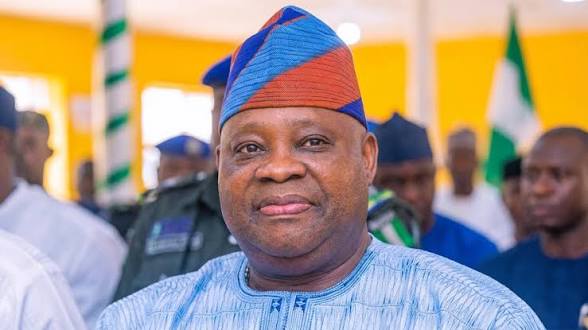
With Osun State heading into a closely watched governorship election on Saturday, August 15, Governor Ademola Adeleke has announced plans for an independent inquiry into killings and other acts of violence recorded during the election period. The proposed investigation comes as competing political camps trade accusations over violence, raising questions about whether the state can move from election-day security to credible accountability once the votes are counted.
Adeleke said on Friday, August 14, that his administration would constitute an Independent Commission of Inquiry on Monday, August 17, immediately after the election, to investigate reported killings and acts of violence connected with the electoral period.
The governor's statement was delivered by Osun Commissioner for Information and Public Enlightenment, Kolapo Alimi.
According to the statement, the commission would establish the circumstances surrounding the incidents and recommend appropriate action, with the stated objective of ensuring that anyone found responsible faces justice regardless of political affiliation or influence. PUNCH independently reported the same announcement, describing the proposed inquiry as an investigation into reported extrajudicial killings and other election-related violence.
Adeleke also expressed condolences to families who had lost relatives, stressing that political competition should not result in deaths.
“Every life lost is an Osun life.”
He said the state government would also create a framework to support and compensate families of victims and ensure that their memories are appropriately honoured.
The announcement comes only hours before the governorship election, which the Independent National Electoral Commission has scheduled for August 15, 2026.
The reporting across Nigerian media broadly confirms Adeleke's announcement, but the emphasis differs.
Advertisement
Vanguard focused on the governor's pledge to investigate the killings and compensate affected families, presenting the inquiry principally as an accountability measure.
PUNCH placed greater emphasis on the nature of the incidents, describing the proposed commission as an investigation into reported extrajudicial killings and other acts of violence during the election period.
The Guardian framed the announcement around politically motivated killings and reported that the inquiry is expected to begin after the election.
Meanwhile, TVC News provided a wider political picture, reporting that the final hours of campaigning were dominated by accusations of killings, intimidation and political violence, with supporters of Adeleke and APC candidate Bola Oyebamiji trading blame.
That wider context is important. The proposed inquiry is not emerging from an isolated incident. It follows a campaign period in which allegations of violence have increasingly become part of the political contest itself.
The immediate challenge for Osun will not simply be conducting Saturday's election. It will be establishing what happened before, during and potentially after the vote — and whether those responsible can actually be identified and prosecuted.
PUNCH reported on Friday that another Osun resident, Dele Ayegbo, was reportedly shot dead in Esa Oke, with the incident adding to concerns over escalating violence shortly before the election. Adeleke had condemned that killing and directed security agencies to intensify operations in the area.
Political accusations, however, are not the same as proven culpability. Several parties and political figures have made allegations against opponents, meaning any post-election investigation will need to distinguish verified evidence from campaign claims.
That is where the credibility of the proposed commission becomes important.
If it is genuinely independent, properly empowered and transparent about its findings, it could provide a mechanism for establishing responsibility beyond the immediate political contest. If victims' families are compensated without perpetrators being identified and prosecuted, however, the process could address the consequences of violence without fully addressing its causes.
The concern is particularly significant because electoral violence is not new to Osun politics.
Research into Nigeria's 2022 election cycle identified Osun as one of the country's major hotspots for political violence. One analysis citing SBM Intelligence recorded 11 election-related political violence incidents and five deaths in Osun in 2022.
A separate investigation by the Foundation for Investigative Journalism found that Osun recorded the highest number of election-violence incidents among Nigeria's 36 states in a study covering January 2022 to January 2023. The report documented attacks, intimidation, shootings and killings involving political actors and supporters.
The pattern matters because the 2022 governorship election itself was ultimately described by observers as largely peaceful on voting day. Channels Television reported that the Civil Society Situation Room recorded no violence during its preliminary election-day assessment. Adeleke subsequently defeated incumbent Gboyega Oyetola by 403,371 votes to 375,027.
In other words, a relatively peaceful polling day did not erase the violence and political tensions that surrounded the wider electoral cycle.
That history makes the 2026 inquiry more consequential. The question is whether the state can prevent the violence surrounding political competition from becoming an accepted feature of future elections.
Advertisement
The timing also matters.
Saturday's election is a major contest involving incumbent Adeleke and opposition candidates, including APC's Bola Oyebamiji and ADC's Najeem Salaam. With the election only hours away, accusations of political violence have become part of the final campaign narrative.
For residents, particularly in communities where violence has reportedly occurred, the issue goes beyond party politics. Fear can discourage voters from reaching polling units, while attacks on campaigners and supporters can distort political participation long before election day.
For Lagos, Abuja and other parts of Nigeria watching the Osun contest, the election also offers a broader test of whether increasingly competitive state elections can remain peaceful when political stakes are high.
The outcome will therefore be measured in more than votes. It will also be judged by the ability of security agencies to protect voters, the capacity of INEC to conduct the poll credibly, and the willingness of authorities to investigate allegations regardless of which political camp is implicated.
The first test is Saturday's election itself. The second comes after the results.
Adeleke's proposed commission is expected to begin work on Monday, August 17. Its credibility will depend on its membership, mandate, access to evidence, treatment of witnesses and whether its recommendations lead to actual prosecutions rather than becoming another political report that fades after the election.
The deeper issue for Osun is whether the state's political actors can compete fiercely without making violence part of the price of power. The votes will determine who governs Osun; what happens to the allegations of killings and violence could determine how much confidence residents place in the state's political system after the election.
You must log in to comment or reply.
Comments