
Political movements often face their biggest tests not from external opponents but from disagreements within their own ranks. As Nigeria's opposition forces position themselves for the 2027 presidential election, questions about leadership, influence and party cohesion are becoming increasingly difficult to ignore.
The latest exchange involving activist Aisha Yesufu and NDC national leader Seriake Dickson highlights a challenge that many opposition parties have historically struggled to overcome: balancing strong personalities with a unified political objective.
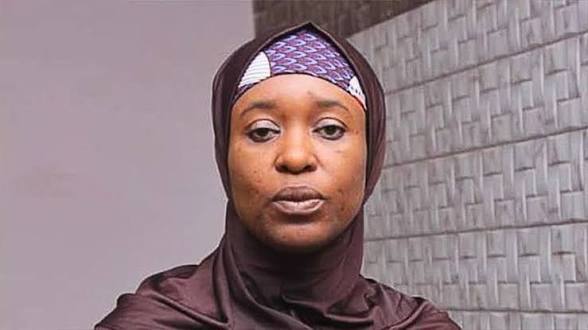
On Thursday, human rights activist Aisha Yesufu publicly criticized Seriake Dickson following his appearance on national television, where he addressed controversies surrounding the Nigeria Democratic Congress (NDC) and reactions from supporters of the party's presidential candidate, Peter Obi.
Responding through her verified X account, Yesufu argued that Dickson appeared to be placing excessive focus on his own position within the party rather than the broader task of preparing for the 2027 elections.
According to her statement, no one was challenging Dickson's leadership of the party, and attention should instead be directed toward securing electoral victory and addressing Nigeria's numerous political and economic challenges.
"The focus should be on securing victory in the 2027 elections and addressing Nigeria’s challenges," she wrote.
Her comments came amid ongoing discussions following the NDC primaries and growing debate among party supporters over the future direction of the opposition coalition.
Advertisement
Beyond the immediate exchange, the disagreement points to a larger issue facing opposition politics in Nigeria.
Political parties seeking to challenge an incumbent government often rely on broad coalitions that bring together activists, politicians, regional power brokers and grassroots supporters. While such alliances can strengthen electoral prospects, they can also create friction when questions emerge about influence, authority and strategic direction.
Yesufu's criticism appears less focused on a personal dispute and more on what she sees as a misplaced priority. Her argument suggests that opposition leaders should devote their energy to presenting a compelling alternative to the ruling establishment rather than engaging in internal contests over status or recognition.
Whether that criticism is entirely fair is open to debate. However, it reflects a growing concern among some supporters that opposition unity could be weakened by internal disagreements long before voters head to the polls.
Supporters of Dickson may argue that party leaders have a responsibility to defend the integrity of their organization and respond to criticism when controversies arise.
From this perspective, addressing concerns about the NDC primaries and clarifying the party's position is part of maintaining discipline and confidence within the movement.
On the other hand, supporters of Peter Obi and activists like Yesufu appear to believe that excessive attention on internal disputes risks distracting the party from its primary mission: building a credible challenge for 2027.
The contrast is therefore not simply about personalities. It reflects two different approaches to political leadership—one focused on institutional authority and party management, and another focused on electoral mobilization and public messaging.
Both sides ultimately share a common objective, but they differ on how that objective should be pursued.
What This Means for Nigerian Politics
The significance of this dispute extends beyond the NDC itself.
Nigeria's political landscape has repeatedly shown that opposition parties face enormous pressure to maintain unity once presidential ambitions, regional interests and ideological differences begin to collide.
For voters frustrated by economic hardship, insecurity and governance challenges, internal conflicts within opposition movements can create doubts about their readiness to govern.
Advertisement
At the same time, healthy internal debate is not necessarily a weakness. Political parties that encourage open discussion may be better positioned to address concerns before they become deeper crises.
The real challenge lies in ensuring that disagreements strengthen strategic thinking rather than undermine public confidence.
As political activity intensifies ahead of 2027, how the NDC manages competing voices within its ranks may become just as important as its ability to criticize the government.
Ultimately, the question remains whether Nigeria's opposition can transform its growing popularity into lasting political unity.
Aisha Yesufu's remarks may have been directed at Seriake Dickson, but the broader message resonates far beyond one interview or one party official. The real issue may be whether opposition leaders can keep their focus on the national contest ahead rather than the internal battles unfolding behind the scenes.
What happens next could help define not only the future of the NDC but also the shape of Nigeria's political competition heading into 2027.
You must log in to comment or reply.
Comments