
Economic activity in Anambra is slowly returning to Mondays — but the roads remain the missing link. While markets, banks and civil service offices are reopening, the state government now says commercial transporters are holding back a full recovery.
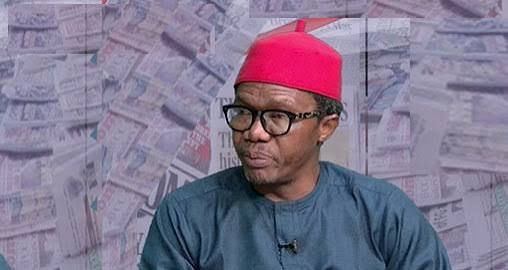
At a public training session in Awka on Tuesday, Information Commissioner Dr. Law Mefor urged transport operators to resume full Monday operations, describing the transport sector as the “last weak point” in efforts to dismantle the long-running sit-at-home compliance.
The Anambra State Government’s message was direct: traders are ready, civil servants are reporting to duty, schools are open, and even major markets — including the Main Market — are reportedly functioning at full capacity on Mondays.
Yet commuters and traders continue to face difficulty moving goods and people across the state due to limited commercial transport availability.
“The traders are complying, but they are complaining that the lack of adequate commercial vehicles makes it difficult for them and their customers to operate optimally,” Mefor said.
Advertisement
The remarks came during a retraining programme for drivers and riders organized by the Ministry of Transport in partnership with Rotary International District 9142. Transport Commissioner Patricia Igwebuike said the training was also aimed at improving road safety standards.
However, beyond the official statements lies a deeper economic and security tension.
The sit-at-home order — originally linked to pro-Biafra agitation — evolved into a broader economic drag across several Southeast states. Although official backing for the directive has waned, informal enforcement, sporadic violence, and public anxiety have kept compliance levels uneven.
Transport operators operate on thin daily margins. A single disrupted Monday can wipe out earnings for drivers, bus owners, and riders. For many, the decision not to operate fully is not ideological but financial risk management.
That framing leaves out a critical point: restoring economic normalcy requires more than government directives. It requires credible security guarantees and visible enforcement that reassures transport unions and passengers alike.
According to regional economic data, the Southeast already suffers from lower formal investment inflows compared to Lagos and Abuja corridors. Recurrent Monday shutdowns compound that perception of instability, affecting supply chains, SME revenue, and inter-state commerce.
If transport remains inconsistent, the ripple effects extend beyond traders. Perishable goods distribution, inter-state haulage, and informal sector workers — who make up a significant share of Anambra’s workforce — all feel the strain.
The state government’s public push suggests a desire to signal stability — both to residents and investors. The emphasis that banks, schools, and markets are open appears designed to reshape public perception.
Yet perception shifts slowly when lived experiences lag behind announcements.
Advertisement
What makes this more complex is that transport unions wield significant grassroots influence. A confrontational approach risks backlash. A collaborative one demands trust-building.
The training and retraining initiative could be a starting point — but safety, enforcement consistency, and stakeholder dialogue will determine whether Mondays fully normalize.
What will ultimately determine success is whether transport unions openly back the state’s position and organise coordinated, visible Monday operations across key routes. Without that level of commitment, compliance may remain uneven — creating the appearance of progress while falling short of restoring full economic momentum.
What authorities do next — especially regarding security assurance and union engagement — will determine whether Anambra’s “take back our Mondays” campaign becomes policy success or another announcement without traction.
You must log in to comment or reply.
Comments