
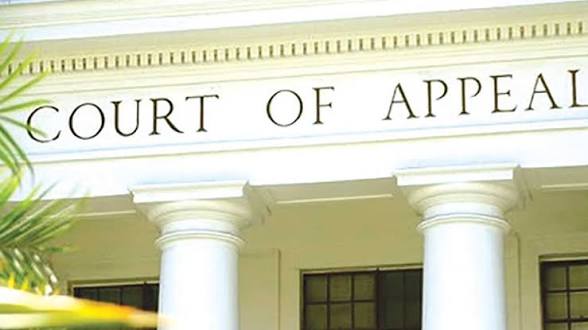
A fresh twist has emerged in Nigeria’s political and judicial landscape after the Court of Appeal in Abuja suspended the enforcement of a Federal High Court judgment that ordered the deregistration of five political parties, including the African Democratic Congress.
The appellate court’s intervention not only preserves the legal status of the affected parties for now but has also sparked wider questions about judicial procedure, electoral stability, and the balance of authority within Nigeria’s court system ahead of crucial electoral activities.
The Court of Appeal in Abuja on Tuesday granted a stay of execution of a Federal High Court judgment that directed the Independent National Electoral Commission to deregister five political parties.
The parties affected by the original ruling are the African Democratic Congress (ADC), Action Peoples Party (APP), Action Alliance (AA), Accord Party, and Zenith Labour Party (ZLP).
In a unanimous decision delivered by a three-member panel headed by Justice A.B. Mohammed, the appellate court faulted the conduct of the trial judge, Justice Peter Lifu, for proceeding to deliver judgment despite an earlier appellate order directing him to suspend proceedings pending the determination of an appeal.
According to the appellate panel, the lower court’s decision represented a direct challenge to judicial hierarchy and constitutional order. The court subsequently ordered that enforcement of the deregistration judgment be suspended until the appeal is fully determined.
The ruling means the five political parties remain legally registered and eligible to participate in political activities while the appeal process continues.
The Independent National Electoral Commission also informed the court that it was surprised by the delivery of the original judgment, stating that it became aware of the decision through media reports rather than official court communication.
Counsel representing the ADC further told the court that notification of the judgment was allegedly communicated through WhatsApp, a revelation that drew attention from members of the appellate panel during proceedings.
Advertisement
Different media organisations have approached the controversy from varying angles.
Reuters largely focused on the political significance of the Federal High Court’s decision to deregister opposition parties, highlighting concerns about political competition and electoral participation.
Nigerian political and legal affairs platforms concentrated on the procedural dispute surrounding the appeal, emphasizing claims that the trial court proceeded despite an existing order from a higher court.
Punch, meanwhile, placed significant attention on the Court of Appeal’s criticism of the trial judge and the broader implications for judicial discipline and compliance with appellate directives.
What many reports have only briefly touched upon, however, is the potential institutional impact of the dispute. Beyond the fate of the affected parties, the case raises important questions about how courts interact within Nigeria’s judicial hierarchy and how conflicts between trial and appellate courts can affect confidence in legal processes.
At first glance, the dispute appears to concern only a handful of smaller political parties. Yet the implications extend far beyond the organizations directly involved.
Nigeria operates a multi-party democracy in which political parties serve as the foundation of electoral competition. While larger parties often dominate national elections, smaller parties frequently influence coalition-building, regional politics, candidate negotiations, and legislative representation.
Had the deregistration order been immediately enforced, the affected parties could have faced serious operational disruptions, particularly with by-elections scheduled in multiple states later this month.
The timing is especially significant because electoral disputes close to election periods often create legal uncertainty for candidates, voters, and election administrators.
The appellate court’s decision therefore prevents an immediate constitutional and administrative challenge while preserving the status quo pending final judicial determination.
The controversy also places the spotlight on judicial accountability. Nigeria’s legal system is structured around a hierarchy in which lower courts are expected to comply with binding directives from appellate courts. Any perceived deviation from that principle risks generating uncertainty regarding the enforceability of court orders and the predictability of legal outcomes.
This is not the first time Nigeria has witnessed legal disputes over political party registration.
In 2020, INEC deregistered dozens of political parties following constitutional and electoral reforms designed to reduce the number of inactive parties. Several of those decisions generated legal challenges that reached appellate courts.
Supporters of deregistration often argue that reducing the number of inactive parties strengthens electoral administration and reduces confusion for voters.
Critics, however, contend that aggressive deregistration can narrow democratic participation and weaken political pluralism, particularly in a country as diverse as Nigeria.
The current case revives many of those debates, especially as political stakeholders prepare for future elections and realignments ahead of the next electoral cycle.
Advertisement
Perhaps the most consequential aspect of the case is not the political dimension but the judicial one.
The unusually strong language reportedly used by the Court of Appeal underscores concerns about compliance with court orders and respect for judicial hierarchy.
Legal analysts note that disagreements between courts are not uncommon. However, allegations that a lower court proceeded after receiving a directive from a higher court elevate the matter beyond routine legal disagreement and into questions about institutional discipline and judicial credibility.
At a time when public trust in institutions remains a critical issue, disputes involving the courts often attract heightened scrutiny because they affect perceptions of fairness, due process, and constitutional governance.
The legal battle is far from over.
The Court of Appeal’s decision does not determine whether the affected political parties should ultimately remain registered. Instead, it temporarily freezes enforcement of the Federal High Court judgment while substantive appeals are heard.
The next phase of proceedings will likely focus on whether the original deregistration order was legally justified and whether the procedural disputes surrounding the judgment affected its validity.
What authorities, political parties, and the judiciary do next could have consequences extending beyond this case. The outcome may influence future party regulation, electoral administration, and public confidence in Nigeria’s judicial system as the country moves toward another critical phase in its democratic journey.
You must log in to comment or reply.
Comments