
A prolonged legal battle between teachers and the Rivers State Government has ended with a major court victory that could reshape labour disputes involving public institutions in Nigeria. After years without pay, affected teachers of Demonstration Secondary School linked to Ignatius Ajuru University of Education are now set to recover salary arrears dating back to 2016.
The ruling also revives questions about compliance with labour judgments by state authorities and the financial consequences of prolonged legal standoffs in Nigeria’s education sector.
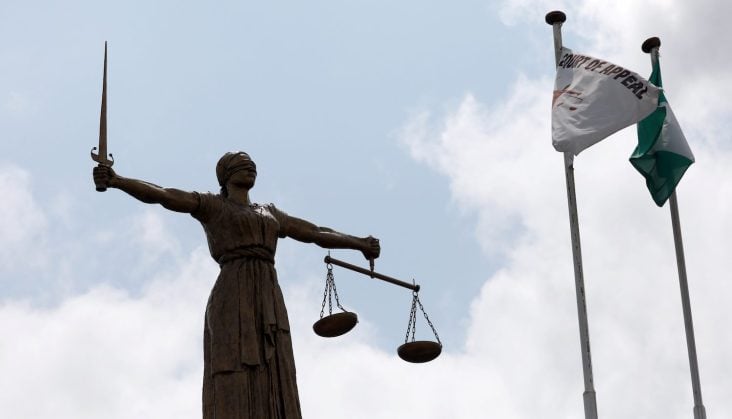
The Court of Appeal sitting in Port Harcourt has ordered the Rivers State Government and the management of Ignatius Ajuru University of Education to pay outstanding salaries owed to teachers of the institution’s Demonstration Secondary School from February 2016 until full compliance with the judgment.
The three-member appellate panel upheld an earlier decision of the National Industrial Court, which had ruled that the stoppage of salaries was unlawful.
The dispute dates back to 2016 during the administration of former Rivers State governor Nyesom Wike. Following a directive reportedly issued at the time, salaries of nearly 97 teachers attached to the Demonstration Secondary School were discontinued.
Advertisement
Despite repeated appeals by the affected teachers, the university management did not reverse the decision, forcing the workers to seek legal redress.
However, a closer look at the case shows the legal battle extended far beyond a simple salary dispute. While the National Industrial Court ruled in 2018 that the teachers remained lawful employees of the institution, it stopped short of ordering immediate payment of the withheld salaries. The court argued that variations in salary structures and allowances among the workers made the claims difficult to calculate as general compensation.
That aspect of the ruling became the central issue at the Court of Appeal.
Counsel to the affected teachers, Emeka Dite Ojoko, confirmed after the judgment that the appellate court dismissed the Rivers State Government’s appeal and granted the teachers’ cross-appeal challenging the refusal to order salary payments.
He said:
“The Court of Appeal gave judgment dismissing the appeal against the judgment of the National Industrial Court and also granted our cross-appeal against the refusal of the National Industrial Court to order the government to pay the staff salaries.”
Ojoko described the judgment as a significant victory for the affected teachers, many of whom reportedly spent years without stable income while the legal dispute dragged on.
Beyond the official ruling, the case highlights a wider issue affecting Nigeria’s education sector — delayed compliance with labour judgments and prolonged disputes involving teachers in government-owned institutions.
While some reports focused mainly on the courtroom victory, the deeper issue is the economic and social impact such disputes create for educators and public schools. In many cases across Nigeria, prolonged salary disputes have contributed to declining morale among teachers, disrupted academic calendars, and increased pressure on families already struggling with inflation and rising living costs.
What makes this case more complex is that it does not apply broadly to all affected teachers in Rivers State. Ojoko clarified that the judgment strictly concerns staff of Demonstration Secondary School under Ignatius Ajuru University of Education. Separate legal cases involving teachers from institutions such as Rivers State University’s International Secondary School and Comprehensive Secondary School, Bori, are still being handled independently.
Advertisement
That distinction could prove important financially for the Rivers State Government. If similar rulings emerge from other pending cases, the state may face mounting compensation obligations linked to years of unpaid wages.
The judgment also carries legal significance because the Court of Appeal serves as the final court for matters originating from the National Industrial Court. This effectively closes the litigation window unless exceptional constitutional questions emerge.
Nigeria has witnessed similar labour disputes in the past, particularly in the education sector where salary delays and employment disputes frequently escalate into lengthy court battles. Analysts say the Rivers case may encourage more public sector workers to challenge salary suspensions through the courts rather than rely solely on negotiations.
The real test now is whether the state government complies swiftly with the judgment or faces renewed pressure from labour groups and public scrutiny over enforcement.
You must log in to comment or reply.
Comments