
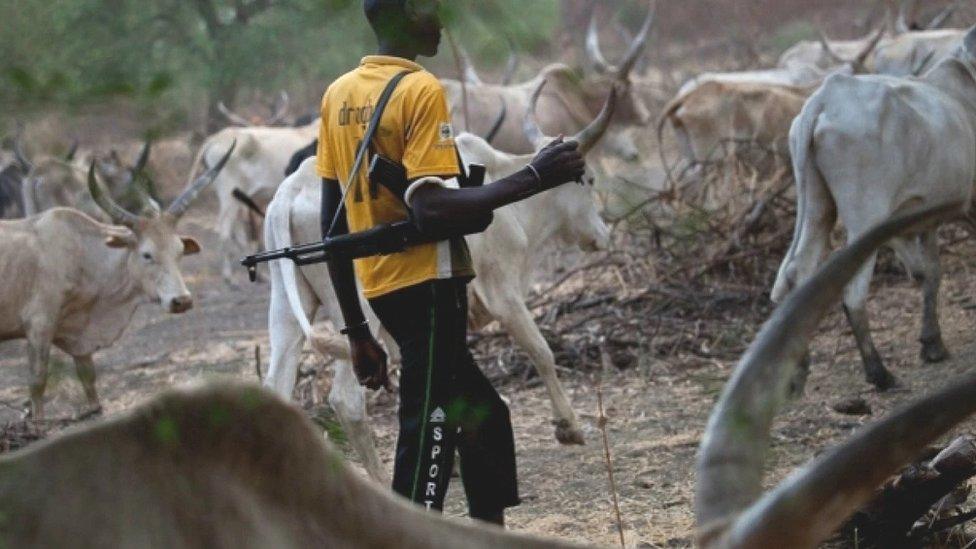
Rising tension is spreading across parts of Kogi East as residents report an unusual influx of armed and unidentified groups settling in rural forest corridors. Community leaders and local security networks say the presence is already disrupting farming activities and raising fears of potential violence. While authorities have yet to fully respond, the situation is increasingly being framed as a developing rural security crisis.
Residents across several communities in Kogi East Senatorial District, including Ofu, Dekina, Idah, and Igalamela, have raised alarm over what they describe as the arrival of “strange groups” settling in forest areas and rural settlements.
According to local accounts reported by The Guardian, the affected areas include Igala-ogba district in Alloma (Ofu LGA), where residents say groups of suspected herders have moved into forest areas between Okula Alloma and Ewune. Community members claim these groups are now competing with farmers for land and water resources.
Similar reports emerged from Ofakaga, Ugwolawo district, where residents say unknown herders—some reportedly without cattle or clear family structures—have been seen around Ofakaga, Alade, and Ojuwoajonuchegbo communities.
In Dekina LGA, including Egume, Ochaja, Ukwaja, and Ogbulu, residents also reported “large numbers of unfamiliar settlers” establishing presence in rural areas. Additional sightings were reported around Ukwaja forest in Idah and Odolu axis in Igalamela.
The Kogi East Neighborhood Watch (KENW) confirmed it had received distress calls from affected communities:
“This is farming season and members of the communities are already scared of going to their farms because the intentions of the invaders is unknown to them, especially when the strangers are bearing arms… the development is frightening and scaring.”
Advertisement
Beyond the immediate alarm, the situation reflects a recurring pattern in Nigeria’s rural security landscape—where early warning signals often come from local vigilante structures before formal state verification.
The KENW warning highlights a critical vulnerability:
“The invasion by strange looking armed men is already a threat and danger signals… the intentions of the invaders is unknown.”
What makes this more sensitive is timing. The reports coincide with the farming season, a period when rural land use intensifies across Kogi’s agrarian communities. Any disruption to farming routes or access to water sources can quickly escalate into economic and communal strain.
Historically, Kogi and other North-Central states have experienced similar tensions involving:
• Farmer–herder competition over land and water
• Rural bandit infiltration into forest corridors
• Delayed security response in remote communities
The report also notes additional violent incidents in the same period, including the abduction of a traditional ruler, Iye Ebule of Igo Ward, and the killing of a farmer along the Avrugo–Odolu axis. While these incidents are not confirmed as directly linked, their proximity in time increases local anxiety and perception of coordinated insecurity.
From a governance perspective, the key gap remains coordination—between local security networks like KENW, traditional rulers, and formal agencies such as the police and state government. Without verified profiling of new settlers, community fear tends to escalate faster than official clarification.
Kogi State sits at a strategic crossroads linking Nigeria’s North and South, with extensive forest belts often used for farming, transit, and informal settlement. Over the past decade, rural forest zones in the North-Central region have increasingly become flashpoints for:
• Armed bandit movement corridors
Advertisement
• Displacement-driven migration
• Informal settlement disputes
Security analysts have repeatedly noted that delayed intelligence verification in rural Nigeria often creates “information gaps,” where community reports circulate faster than official response, increasing panic even before threat confirmation.
The immediate test for authorities is not only whether these reported settlements represent a security threat, but how quickly verified intelligence can be deployed to separate fear from fact. In rural regions like Kogi East, delayed clarity often becomes part of the crisis itself.
For now, residents remain on alert, farmers are reportedly avoiding farmlands, and local security networks continue to demand formal intervention before the situation escalates further.
You must log in to comment or reply.
Comments