
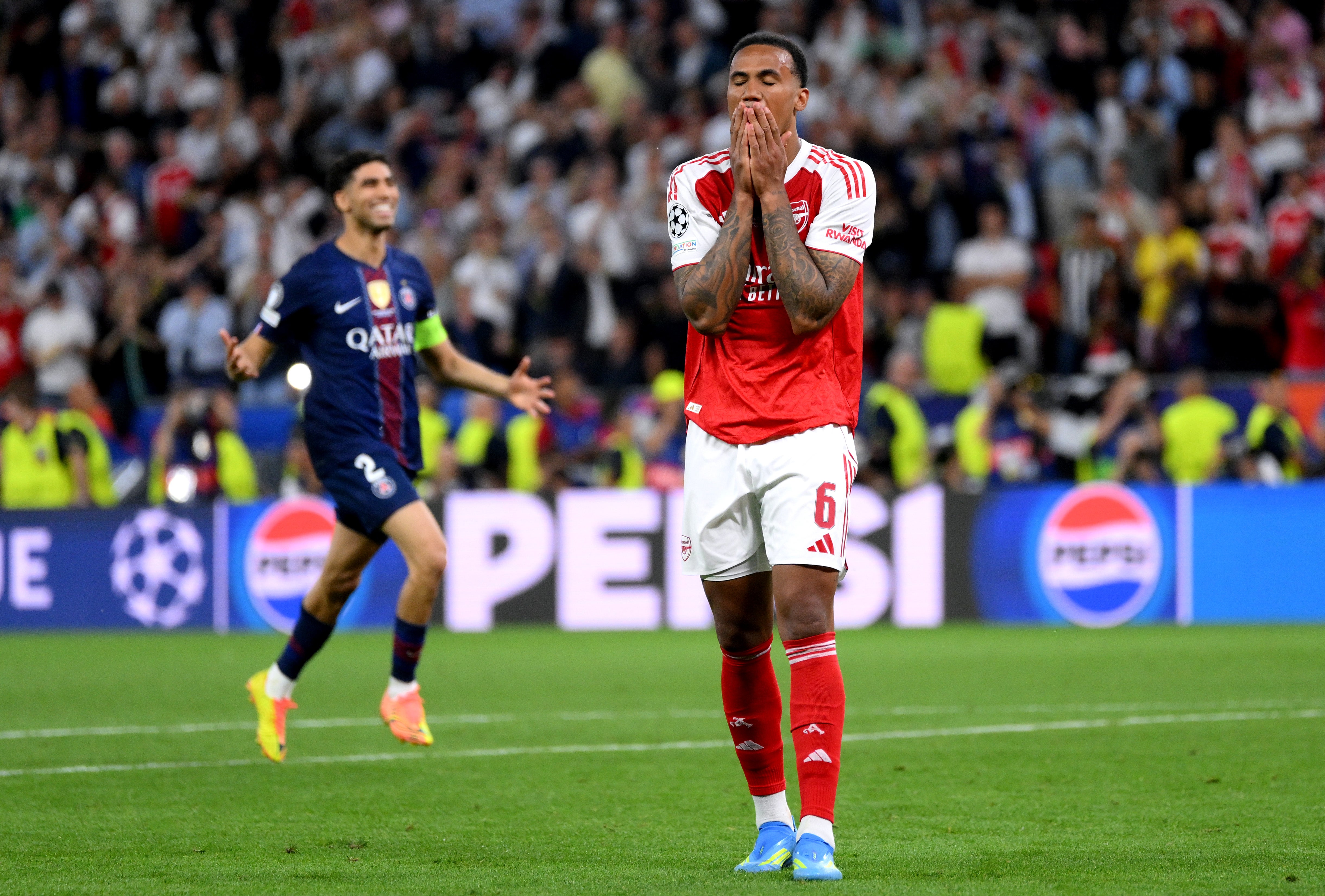
 There are matches where dominance does not translate into destiny, and the Arsenal vs PSG Champions League final fits squarely into that category. On paper, Arsenal had structure, discipline, and an early breakthrough — yet football at this level often rewards efficiency over aesthetics. PSG, once again, showed that control of moments matters more than control of possession.
The UEFA Champions League final between Arsenal and Paris Saint-Germain took place in Budapest on May 30, 2026. Arsenal opened the scoring in the 6th minute through Kai Havertz, setting an early tone of confidence. PSG responded in the second half when Ousmane Dembélé converted a penalty to level the match. After extra time ended 1–1, PSG went on to win 4–3 on penalties, securing back-to-back Champions League titles.
PSG dominated possession with over 75% of the ball and registered significantly more attempts on goal, while Arsenal relied on compact defending and counterattacks throughout the match.
This final highlights a recurring modern football reality: possession without penetration is often sterile at elite level. Arsenal’s tactical discipline limited PSG’s rhythm for long spells, but their inability to sustain attacking pressure ultimately left them exposed to PSG’s superior depth and experience in decisive moments.
Advertisement
PSG, by contrast, did not need to dominate emotionally to dominate structurally. Their approach reflected a mature European champion — patient in circulation, aggressive in transition phases, and composed under pressure during penalties. The difference was not just talent, but familiarity with winning high-pressure finals.
PSG will see this as confirmation of their evolution into a European powerhouse capable of winning even when not at their fluent best. Their control of possession and eventual penalty composure reflects tactical maturity under Luis Enrique.
From Arsenal’s side, the narrative will likely focus on missed opportunities and fine margins. Scoring early in a final usually shifts momentum, yet their inability to extend the lead or disrupt PSG’s rhythm became decisive. Critics may argue they became too passive after the opening goal.
The divergence lies in interpretation: PSG see control and resilience, while Arsenal will likely see regret and missed chances.
For Arsenal, this defeat raises familiar questions about converting progress into silverware on the biggest stage — a challenge that has followed them into European competition despite domestic improvements. For PSG, it strengthens their claim as the defining European force of this era, built on depth, technical control, and psychological strength in knockout football.
The broader implication extends beyond Europe. Clubs in leagues like the Premier League continue to invest heavily in structure and possession systems, but this match reinforces a growing truth: elite finals are often decided by efficiency in both boxes rather than stylistic dominance.
Advertisement
Even for Nigerian football audiences in Lagos and beyond, the match reflects a wider lesson seen in African club competitions as well — dominance without clinical finishing often collapses under pressure.
Ultimately, the question remains whether Arsenal’s model is incomplete at the final stage or simply still evolving toward maturity. PSG, meanwhile, continue to demonstrate that winning at the highest level is less about controlling games and more about controlling decisive moments. What happens next will define whether Arsenal’s project becomes a dynasty in waiting or another example of near perfection without ultimate reward.
You must log in to comment or reply.
Comments