
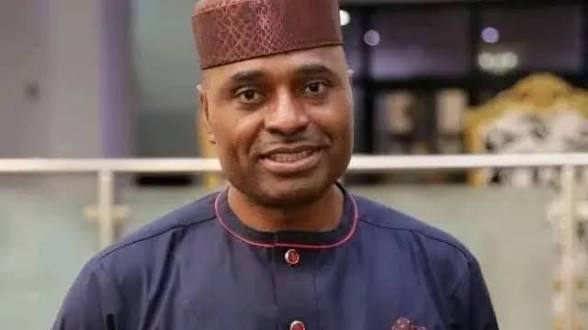
In Nigeria, debates over petrol prices are rarely just arguments about economic policy. They are also tests of political credibility, public trust and the willingness of leaders to address the daily financial pressures facing households. Kenneth Okonkwo’s reported endorsement of Atiku Abubakar brings these questions into sharper focus as political competition builds towards the 2027 general election.
Kenneth Okonkwo, a chieftain of the African Democratic Congress (ADC) and spokesperson for Atiku Abubakar’s presidential campaign, has praised the former vice-president’s economic record and defended his proposal to restore petrol subsidy, according to a report published by Punch Newspapers on October 9, 2026.
Okonkwo reportedly described Atiku as the country’s “clear leader”, arguing that his experience in government and concern for citizens’ welfare made him a suitable presidential candidate.
He also defended Atiku’s record during his tenure as vice-president under former President Olusegun Obasanjo between 1999 and 2007. According to Punch, Okonkwo credited Atiku with helping to build a strong Nigerian economy and argued that the payment of subsidies and the repayment of international debt formed part of that record.
Okonkwo further maintained that Atiku’s promise to bring back subsidy reflected a commitment to protecting citizens from economic hardship.
The remarks come amid renewed political debate over petrol affordability and the Federal Government’s approach to easing the cost-of-living burden.
Atiku has proposed support for domestic petrol production as a means of reducing pump prices. The Federal Government has questioned the legal and fiscal basis of his proposal.
The government’s announcement of a 30-day petrol discount through the Nigerian National Petroleum Company Limited has added another dimension to the debate. Atiku has criticised the initiative, arguing that temporary relief does not resolve the deeper pressures affecting household finances.
The statements attributed to Okonkwo in this article are based on the Punch report. The exact quotations should be checked against his original social media post before publication.
Petrol has become one of Nigeria’s most politically consequential economic issues because its cost extends far beyond the filling station.
Higher fuel prices can increase the cost of transporting food, moving goods and providing services. Businesses that depend on petrol-powered generators may also face higher operating expenses, while transport operators must decide whether to absorb rising costs or pass them on to passengers.
For households already managing limited incomes, these pressures can reduce the money available for food, education, healthcare and other essentials.
Consequently, any presidential candidate who presents a credible plan for reducing fuel costs has an opportunity to connect economic policy with the everyday experiences of voters.
This explains why Atiku’s proposal matters politically. It offers an alternative to the current approach and invites Nigerians to consider whether a different combination of government intervention and domestic production could make petrol more affordable.
However, a proposal should not be judged solely by the relief it promises. Its credibility depends on the mechanism through which that relief would be delivered, its cost to public finances and the safeguards that would prevent the policy from creating new economic problems.
Advertisement
That is where the debate needs to move beyond political endorsements.
Okonkwo’s reported defence of Atiku places considerable emphasis on the former vice-president’s experience in government and his record between 1999 and 2007.
Experience is relevant in a presidential contest. It can provide evidence of a candidate’s understanding of government institutions, economic management and the challenges of implementing national policy.
Yet experience alone does not establish that a proposed policy will succeed under different economic conditions.
Nigeria’s current economic circumstances, including petrol pricing, foreign-exchange pressures, government revenue constraints and the cost of living, must be considered when evaluating any proposal to restore subsidy or introduce alternative support mechanisms.
A credible plan should explain who would receive assistance, how much it would cost, how the government would finance it and how the public could verify that the intended benefits were reaching consumers.
It should also distinguish between a general subsidy that lowers prices for a broad group of consumers and a targeted intervention designed to assist households or sectors facing the greatest pressure.
Each approach involves trade-offs. Broad subsidies may offer visible and immediate price relief, but they can create substantial fiscal obligations. Targeted support may concentrate assistance on those who need it most, but its success depends on reliable identification systems, effective administration and safeguards against abuse.
The central question is therefore not whether Nigerians deserve relief from high petrol prices. It is whether a proposed intervention can deliver that relief sustainably.
The debate presents Nigerians with two broad political arguments.
The first is the case for intervention. Supporters of Atiku’s proposal argue that government action can help make petrol more affordable and reduce the economic pressure facing households and businesses. From this perspective, the cost of leaving consumers exposed to high fuel prices also deserves serious consideration.
The second is the case for fiscal and market discipline. Critics of subsidy restoration question whether the government can sustain the financial burden without creating competing demands on public resources. They also argue that proposals must have a clear legal foundation and a workable funding structure.
The Federal Government’s 30-day petrol discount introduces a further distinction. A temporary discount may offer short-term relief without necessarily committing the government to a permanent subsidy arrangement.
However, the value of that intervention depends on its actual effect on pump prices, its availability to consumers and whether it meaningfully reduces transport and business costs.
Atiku’s criticism of the temporary measure highlights the difference between immediate assistance and a longer-term economic strategy. Nevertheless, a permanent alternative must demonstrate how it would work beyond the campaign period.
These positions should not be reduced to a simple choice between a government that cares about citizens and one that does not. Economic policies can have different consequences even when their stated objectives are similar.
The more useful test is whether each approach produces measurable benefits at a cost the country can reasonably sustain.
Okonkwo’s praise for Atiku’s record under the Obasanjo administration forms an important part of the endorsement.
Atiku served as vice-president from 1999 to 2007, a period that included significant economic and institutional developments. Supporters may point to that experience when arguing that he understands the challenges of managing Nigeria’s economy.
But broad claims about a candidate having built the country’s strongest economy require evidence and careful qualification.
Economic performance cannot be measured through a single statement or one policy outcome. Relevant indicators include economic growth, inflation, employment, household purchasing power, public debt sustainability and the quality of public services.
The roles played by the president, vice-president, economic management teams, the National Assembly and external economic conditions must also be considered.
Similarly, claims about subsidy payments and debt repayment should be assessed against the specific policies implemented, their costs and their longer-term consequences.
For voters, the more important question is what lessons a candidate has drawn from previous administrations and how those lessons would shape future decisions.
A past record can offer useful evidence, but it should be examined rather than treated as conclusive proof of future success.
The discussion around Atiku’s proposal reflects a wider challenge facing Nigeria’s political class: translating economic promises into policies that improve living standards.
Fuel affordability is particularly sensitive because its effects spread across the economy. A reduction in petrol prices could ease some transportation and operating costs, although the extent of the benefit would depend on market conditions and how businesses respond.
Conversely, an intervention that proves too expensive or poorly administered could put additional pressure on public finances and limit resources available for other priorities.
Advertisement
The implications are especially significant for low-income households, informal workers, small businesses and transport operators, many of whom have limited capacity to absorb sudden increases in operating costs.
For political parties, this creates an incentive to offer policies that voters can understand and evaluate. It also creates a risk that complicated economic questions will be reduced to slogans about restoring subsidies or maintaining market-based pricing.
Nigerians need more than competing assurances. They need transparent cost estimates, credible implementation plans and clear explanations of who benefits and who pays.
The 2027 election will provide political parties with an opportunity to present competing economic programmes. The quality of those programmes should be measured by their practicality and expected outcomes, not merely by the confidence with which their supporters defend them.
Atiku’s supporters should explain the precise form of intervention he proposes, how it would be financed and how its benefits would be measured. They should also clarify whether the policy would involve a return to a broad subsidy, support for domestic refiners or a combination of different mechanisms.
The Federal Government, meanwhile, should demonstrate whether its temporary discount delivers meaningful relief and explain how the initiative fits into its wider strategy for managing petrol prices and the cost of living.
Both sides should also address the consequences for government revenue, public investment and consumers if their preferred approach fails to produce the expected results.
These are not technical details that can be postponed until after an election. They are central to determining whether a promise is economically credible.
Kenneth Okonkwo’s reported endorsement reinforces the political importance of Atiku Abubakar’s economic message. It also illustrates how fuel affordability has become a key issue in the contest over Nigeria’s economic direction ahead of 2027.
But an endorsement, however emphatic, cannot settle the argument over subsidy policy. Nor can criticism of the government’s temporary discount establish that an alternative would necessarily deliver better results.
Ultimately, Nigerians need to know which policies can reduce economic pressure without creating unsustainable financial obligations or shifting the burden elsewhere.
The strongest presidential economic programme will not simply promise cheaper petrol. It will explain how lower costs can be achieved, how the benefits will reach ordinary citizens and how the policy can remain viable over time.
As the 2027 election approaches, that is the standard both the government and the opposition should be prepared to meet.
You must log in to comment or reply.
Comments