
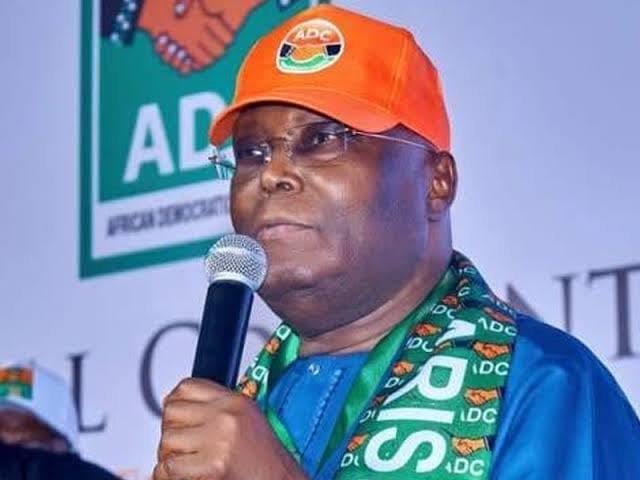
Former Vice President Atiku Abubakar has challenged President Bola Tinubu’s administration to explain how the financial gains associated with the removal of petrol subsidy are being reflected in Nigeria’s education system, as university lecturers threaten to revive a nationwide strike.
The accusation comes at a particularly sensitive moment for public universities. The Academic Staff Union of Universities (ASUU) says unresolved salary arrears, unremitted deductions and incomplete implementation of the December 2025 agreement with government could lead to the reactivation of its suspended industrial action.
Atiku’s argument is therefore built around a question that goes beyond the immediate strike threat: if subsidy reform was partly justified by the need to free resources for national development, how much of that fiscal benefit has actually reached education, and through what programmes?
Atiku, the African Democratic Congress presidential candidate, made the criticism in a statement issued through his Senior Special Assistant on Public Communication, Phrank Shaibu, on September 13.
He argued that Nigerians had absorbed higher transportation, food, energy and education costs following the removal of the petrol subsidy, while public universities continued to face funding and labour disputes.
Atiku specifically questioned what had happened to the money he described as savings from subsidy removal and argued that the government had promised Nigerians improvements in areas including education, healthcare, infrastructure and social welfare.
His comments were prompted partly by ASUU’s latest warning that it could reactivate its suspended nationwide strike.
That warning is independently documented. Following an emergency National Executive Council meeting on September 5, ASUU President Christopher Piwuna said the union could resume industrial action if outstanding issues were not addressed.
The immediate university crisis is not simply a dispute over whether subsidy savings were spent on education.
ASUU says several separate obligations remain unresolved.
The union says 3.5 months of salaries withheld during the previous administration are still outstanding. It also alleges that pension contributions, cooperative deductions and union check-off dues deducted from lecturers' salaries have not been fully remitted.
ASUU is additionally demanding fuller implementation of the December 2025 Federal Government-ASUU agreement, which followed years of negotiations.
The union has acknowledged that the Tinubu administration paid four of the 7.5 months of salaries withheld during the Buhari administration, but wants the remaining 3.5 months released.
This means that even if the government demonstrates substantial education spending, that would not automatically settle ASUU's complaints. The outstanding issues involve specific employment obligations, deductions and implementation commitments.
The government's position creates another part of the debate
The Federal Government's defence of subsidy removal has not been that every naira previously spent on subsidy would simply be transferred into the education budget.
Advertisement
President Tinubu has repeatedly presented the policy as part of a wider effort to restore Nigeria's fiscal position.
In a May 2026 statement marking three years in office, the President said Nigeria had previously been spending as much as ₦18.4 billion daily on petrol subsidies and more than ₦4 trillion in 2022. He argued that those resources had denied critical sectors opportunities for investment.
The administration has also pointed to specific education interventions. The State House said in May that NELFUND had provided access to higher education for more than 1.5 million students, with more than ₦282 billion disbursed.
NELFUND's own platform describes the student-loan programme as a Federal Government initiative intended to reduce financial barriers to higher education. Its current portal provides for institutional-fee and upkeep support, subject to eligibility and approval.
These programmes are relevant to the debate because they demonstrate that government has directed resources toward higher education. They do not, however, by themselves answer Atiku's specific question about the accounting and allocation of subsidy-related fiscal gains.
A crucial distinction: savings are not necessarily a cash fund
There is an important fiscal issue behind the political argument.
In April 2026, the Director-General of the Budget Office of the Federation, Tanimu Yakubu, rejected the idea that subsidy removal automatically created a large pool of free cash for government to spend.
He argued that subsidy removal should instead be understood as the removal of a fiscal distortion and an improvement in the government's financial trajectory. In other words, increased fiscal capacity is not necessarily the same thing as a separately identifiable bank account labelled “subsidy savings.”
That distinction complicates the political question.
Atiku is asking the administration to account for the benefits associated with the reform, particularly in education. The government's fiscal position is that subsidy removal improved public finances and created room for broader government spending rather than creating a single pot of money that could be traced directly into individual sectors.
The administration did, however, explicitly connect subsidy reform with social investment.
In a 2023 national broadcast following the subsidy removal, President Tinubu said the government had saved more than ₦1 trillion within the first two months and said the money would be used more directly for Nigerians.
He specifically linked the reform to making education more affordable and providing loans to higher-education students.
The Federal Government also established an Infrastructure Support Fund for states in July 2023. The fund was intended to help states invest in areas including transportation, agriculture, health, education, power and water resources, partly in response to the financial effects of subsidy removal.
This provides important context to Atiku's criticism: there was indeed a stated policy connection between the fiscal effects of subsidy removal and investment in public services.
But that is different from proving that the government failed to spend subsidy-related resources on education.
Where the political disagreement lies
Atiku's position is that Nigerians accepted substantial economic pain after subsidy removal and should therefore be able to see clear improvements in essential public services.
The administration's position is broader: subsidy removal was necessary to prevent fiscal deterioration and has enabled increased revenues, social interventions and investment across multiple sectors.
The Federal Government said in May that the reforms had helped stabilise Nigeria's finances and that states had benefited from increased revenue. The State House also pointed to education, infrastructure and other programmes as evidence of investment arising from the administration's reforms.
The two arguments are not necessarily mutually exclusive.
A government can increase education spending while still facing serious university-sector problems. Similarly, a university can experience unpaid obligations even while government is funding other education programmes.
The more precise question is therefore whether the scale, timing and destination of public spending are sufficient to meet the government's stated education objectives and its specific obligations to university workers.
The immediate consequence is potentially significant for students.
ASUU has made clear that its latest statement is not itself an immediate declaration of a nationwide strike. Instead, the union warned that its suspended strike could be activated if the outstanding matters are not resolved.
Several university-level disputes are already adding pressure.
For example, ASUU's Sule Lamido University branch issued a two-week ultimatum over outstanding implementation issues and arrears, with industrial action threatened from September 15 if the demands were not addressed.
ASUU has also identified states where implementation of the 2025 agreement has begun and others where governments have pledged to begin implementation.
The situation therefore involves both federal and state responsibilities, making the dispute more complicated than a single disagreement between ASUU and the Presidency.
Several questions remain unresolved.
Advertisement
How much fiscal benefit has accrued specifically from the removal of petrol subsidy since 2023? Government figures on increased revenues and fiscal improvement exist, but that is not necessarily the same as a separately tracked pool of “subsidy savings.”
How much has been spent specifically on university education as a result of the reform? The government has announced education interventions, including NELFUND, but a direct accounting connecting each expenditure to subsidy savings has not been established in the material reviewed for this report.
Will the government settle the remaining 3.5 months of withheld salaries? ASUU continues to demand payment.
Will all components of the December 2025 agreement be implemented? ASUU says implementation remains incomplete.
Will the threatened nationwide strike actually occur? That has not been decided. ASUU has warned that it may activate its suspended action if the outstanding issues remain unresolved.
These questions matter because they separate political accusations from measurable government obligations.
The immediate focus is on negotiations between ASUU and the Federal and state governments.
The union has left the door open for further engagement but has warned that continued delays could result in the reactivation of its suspended nationwide strike.
The government has also continued implementing parts of the 2025 agreement. Channels reported that the Federal Government announced funds for payment of the Consolidated Academic Tools Allowance to academic staff in federal universities, polytechnics and colleges of education for January to August 2026. ASUU maintains that other major issues remain unresolved.
The next meaningful development will therefore be whether outstanding salary obligations, deductions and agreement provisions are resolved sufficiently to prevent another nationwide disruption.
Atiku's intervention has turned an existing university labour dispute into a wider argument over the economic justification for one of Nigeria's most consequential reforms.
The evidence establishes that the government has linked subsidy removal to improved fiscal capacity and has introduced education interventions, including NELFUND. It also establishes that ASUU continues to report serious unresolved obligations affecting lecturers.
What the available evidence does not establish is Atiku's broader conclusion that subsidy savings were not invested in education.
That question requires a clearer public accounting of government revenues, expenditures and the specific programmes financed since the subsidy was removed.
For students and lecturers, however, the immediate issue is more concrete: whether the government and ASUU can resolve the outstanding obligations before another nationwide strike disrupts public universities.
You must log in to comment or reply.
Comments