
For Nigerians preparing for another presidential election cycle, the latest dispute over President Bola Tinubu’s age is more than a disagreement between political figures. It is another example of how questions about the personal records and fitness of those seeking to govern the country can become part of the national political conversation.
The controversy began after former Vice President Atiku Abubakar said in a BBC interview that Tinubu is 90 years old and that he has evidence to support the claim. Tinubu’s publicly stated date of birth, however, is March 29, 1952, which would make him 74 in 2026.
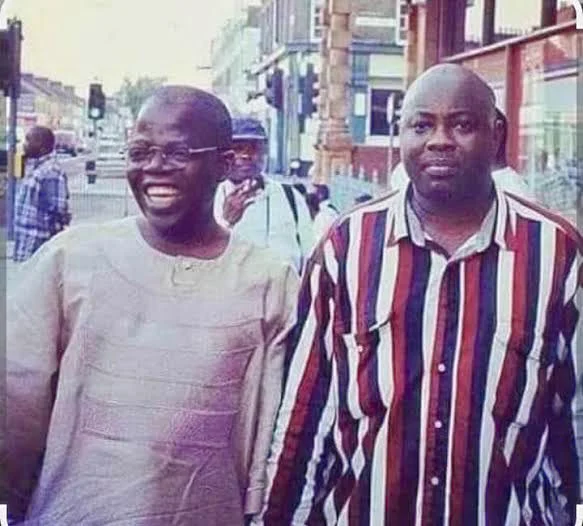
The disagreement has now drawn in businessman and journalist Dele Momodu after Reno Omokri circulated a photograph said to show Tinubu and Momodu together in London in 1996.
Atiku, who is preparing to contest the 2027 presidential election as the candidate of the African Democratic Congress, made the age claim during an interview with the BBC.
Asked about Tinubu’s age, Atiku said: “I have a president who is 90 years old now, and who is sick, and I am healthy, I am strong, so why would I not make my services available to my fellow countrymen?”
When challenged over the claim, Atiku said he had evidence and would present it in court.
No such evidence was publicly produced in the interview.
Reno Omokri subsequently challenged the claim by publishing a photograph purportedly taken in London in 1996 showing Tinubu with Dele Momodu.
Omokri argued that if Tinubu were 90 in 2026, he would have been 60 when the photograph was taken.
Advertisement
He also asked Momodu to confirm the authenticity, date and location of the photograph.
The photograph itself is not new. Historical references to the image and the 1996 event have circulated publicly for years, while accounts associated with Momodu have also linked Tinubu to a 1996 family naming ceremony in London.
The existence of the photograph therefore provides historical context, but a person's appearance in a photograph cannot independently establish their exact age.
The available reports contain statements from the political figures involved, but there is no verified testimony from an ordinary Nigerian directly describing a personal impact from the age dispute.
Atiku has defended his own fitness to contest the presidency, saying:
“I am strong, I am healthy, I am agile.”
He has also argued that his experience, competence and patriotism make him qualified to lead Nigeria.
Omokri, meanwhile, criticised the focus on age and urged political actors to concentrate on issues affecting Nigerians.
He said political campaigns should address problems facing the country rather than what he described as attempts to “age-shame” political opponents.
The dispute comes as Nigerian political parties and presidential contenders begin positioning themselves ahead of the 2027 election.
For voters, questions about a presidential candidate's age can intersect with broader questions about health, capacity, experience and fitness for office. However, those questions are different from establishing a person's actual date of birth.
In this case, there are three separate issues that should not be confused.
First, Atiku has made the allegation that Tinubu is 90.
Second, Atiku says he possesses evidence, but that evidence has not been publicly presented in the BBC interview.
Third, Tinubu's publicly stated date of birth is March 29, 1952, making his stated age 74 in 2026.
The 1996 photograph involving Tinubu and Momodu adds historical material to the discussion, but it does not by itself resolve the dispute.
Advertisement
The presidency affects decisions that reach far beyond political circles, including security, employment, education, infrastructure, healthcare and the economy.
That makes the credibility of information surrounding presidential candidates important to voters.
At the same time, voters need to be able to distinguish between an allegation, evidence and an established fact.
The current dispute has produced a clear allegation from Atiku and a response from Omokri, but the central claim about Tinubu being 90 remains an assertion by Atiku unless and until supporting evidence is publicly presented and independently assessed.
Atiku has said he has evidence that he would present in court.
The next significant development would therefore be the public presentation and examination of whatever evidence he says supports his claim.
Until then, Tinubu's publicly stated date of birth remains March 29, 1952, while the 90-year-old allegation remains a political claim that has not been established by the material currently available.
The age dispute illustrates why factual verification matters during an election period. Nigerians have a legitimate interest in knowing the background and qualifications of those seeking the country's highest office, but claims about candidates should be separated from evidence before they are treated as established facts.
You must log in to comment or reply.
Comments