
When a major security success quickly turns into a political argument, it says as much about the country's political climate as it does about the event itself. The debate surrounding the rescue of abducted schoolchildren in Oyo State has shifted from celebrating a security achievement to questioning leadership, communication, and accountability at the highest level of government.
That transition reflects a broader challenge in Nigeria's politics, where even moments of national relief are increasingly filtered through competing political narratives ahead of the 2027 general election.
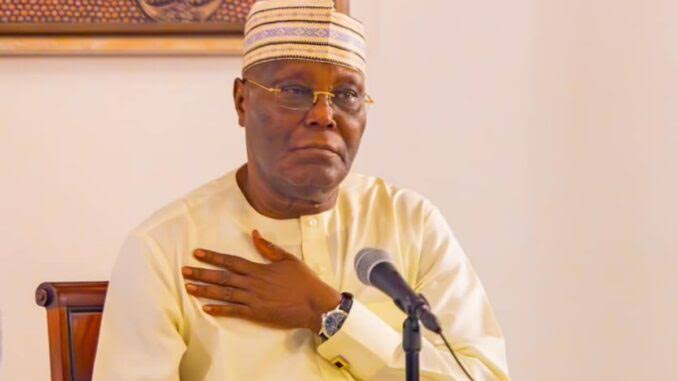
Former Vice President and African Democratic Congress (ADC) presidential candidate Atiku Abubakar has rejected claims by the Presidency that he remained silent following the rescue of 39 pupils and seven teachers abducted from schools in Oriire Local Government Area of Oyo State.
The Presidency, through Special Adviser on Information and Strategy Bayo Onanuga, accused Atiku of failing to acknowledge the successful operation, while noting that Labour Party leader Peter Obi had publicly reacted to the development.
Responding through his spokesman, Phrank Shaibu, Atiku insisted that he had already issued a statement welcoming the rescue and commending the security agencies involved. He described the Presidency's accusation as either a failure to verify publicly available information or a deliberate attempt to ignore his remarks.
Atiku maintained that while he praised the military and other security personnel for securing the victims' freedom after nearly two months in captivity, he chose not to commend President Bola Tinubu, arguing that the President remained focused on political engagements instead of personally leading national communication after the operation.
Advertisement
The rescued victims had been kidnapped on May 15, 2026, and were freed after approximately 57 days in captivity. According to the Presidency, the operation was carried out without negotiations with the kidnappers.
The disagreement is about more than whether Atiku issued a statement. It highlights how security has become one of the defining political battlegrounds ahead of the next presidential election.
For the Tinubu administration, successful rescue operations reinforce its argument that security agencies are making measurable progress against kidnappers and armed groups. Public recognition of such achievements is viewed as important in maintaining confidence in government efforts.
For the opposition, however, isolated successes do not erase wider concerns about persistent insecurity across different parts of Nigeria. Atiku's argument is that while the rescue deserves recognition, it should not overshadow the continuing captivity of many other victims or the broader security crisis.
This explains why both sides are focusing on different aspects of the same event. One celebrates operational success; the other questions overall national leadership.
Two Competing Political Narratives
The Presidency's position is straightforward. It argues that the rescue demonstrated effective security coordination and that opposition figures should acknowledge successful government actions when they occur. Officials also contend that recognising achievements helps build public confidence in security institutions.
Atiku's position is equally clear but framed differently. He insists that he praised the security agencies while deliberately withholding praise for President Tinubu, arguing that a Commander-in-Chief should personally reassure Nigerians after such a significant operation rather than remain engaged in political activities.
Neither side disputes that the rescue occurred. Their disagreement lies in who deserves political credit and how leadership should be demonstrated during moments of national significance.
The exchange illustrates how security achievements are increasingly becoming political currency.
Advertisement
As campaigns ahead of the 2027 elections gradually intensify, major security developments are likely to be interpreted through partisan lenses. Government successes will be presented as evidence of effective leadership, while opposition figures will continue evaluating those successes against the broader national security picture.
For ordinary Nigerians, however, the primary concern remains consistent: reducing kidnappings, protecting schools, and ensuring that every abducted citizen returns home safely.
Families affected by insecurity are less interested in political arguments than in seeing sustained improvements that extend beyond individual rescue operations.
Ultimately, the question is not whether the Oyo rescue deserved praise—it clearly did. The more important issue is whether Nigeria can convert individual security victories into lasting improvements that reduce kidnappings nationwide.
As political leaders debate who said what and when, the measure that will matter most to Nigerians is whether fewer families face the trauma of abduction in the months and years ahead.
You must log in to comment or reply.
Comments