
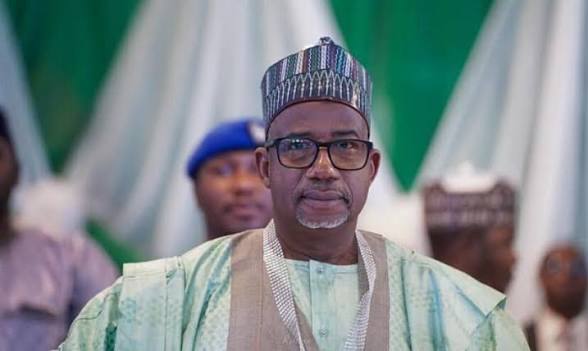
Governor Bala Mohammed’s public praise of President Bola Tinubu’s role in tackling insecurity in Bauchi State comes at a moment when citizens across northern Nigeria are increasingly anxious about the persistence of banditry and violent crime. What might sound like political civility on its surface also underscores deeper tensions, shifting security dynamics and the fragile balance of federal‑state cooperation in Nigeria’s northeast.
On March 22, during Eid‑el‑Fitr festivities in Bauchi, Governor Bala Mohammed — a leading figure in the opposition Peoples Democratic Party (PDP) — thanked President Tinubu for the federal government’s “swift intervention” and security deployments that helped push back armed bandits in parts of the state’s Alkaleri Local Government Area. His remarks, echoed by multiple outlets, highlighted the involvement of military units and the Nigeria Security and Civil Defence Corps (NSCDC) in restoring order.
That tone of gratitude sets this report apart from more partisan narratives. While Daily Post Nigeria kept the quotes tight and ceremonial, outlets like Realnews Magazine and The Nation fleshed out specific operations — for instance, naming security units and explaining how the reinforced deployments compelled criminal elements to retreat.
The original Daily Post article frames the governor’s praise as a simple acknowledgement of federal support. However, deeper reporting shows this praise was situated within a broader context of insecurity that has plagued Bauchi, especially in districts like Alkaleri where bandit attacks have scarred communities for months. Recent reports indicate that Islamist‑linked criminal groups continue to operate with enough freedom to launch deadly raids on villages, forcing state and federal stakeholders into reactive deployments.
Advertisement
Moreover, Governor Mohammed’s commendation did more than celebrate action — it reflected a political calculation. As one of the most visible PDP governors in the northeast, his bipartisan commendation serves two purposes:
• It signals to voters that public safety — not party rivalry — takes precedence when lives are at stake.
• It helps defuse critics who accuse the federal government of ignoring security conditions outside APC strongholds.
This nuance is absent from the original Daily Post narrative, which sticks to ceremonial praise without unpacking the strategic layers beneath it.
The governor’s remarks didn’t occur in a vacuum. Nigeria’s northeast has endured persistent violence, and attacks near Bauchi State — such as the deadly Maiduguri bombings that left dozens killed just days before this speech — amplify public frustration around national security policy.
In Bauchi itself, recent events include requests for federal assistance after attacks forced local leaders into emergency action and strengthened calls for improved vigilance from community leaders.
What makes Governor Mohammed’s statement more consequential is less the praise itself and more the political and security crosswinds it navigates:
• Former criticisms from Bauchi’s leadership had included declarations that federal efforts were inadequate, even as local vigilante groups struggled for resources.
Advertisement
• Endorsing federal security action while maintaining opposition credentials helps Mohammed maintain political balance ahead of election year posturing.
The governor’s tribute also subtly echoes a broader expectation across Nigeria: that the federal government must provide effective security not only through rhetoric, but through consistent deployments, logistics, intelligence sharing, and community engagement. Leaders across states have lately highlighted that internal security cannot fall solely on overstretched local forces, especially when extremist and criminal networks adapt quickly.
Citizens watching this exchange — especially those directly affected by violence — are likely parsing more than gratitude: they’re watching for measurable improvements in safety, and for accountability in how security initiatives are implemented.
You must log in to comment or reply.
Comments