
Football finals are often framed around favourites and underdogs, but the biggest matches rarely follow such simple narratives. As Paris Saint-Germain and Arsenal prepare to meet in the UEFA Champions League final, Luis Enrique’s insistence that there is “no favourite” may say more about modern elite football than it does about either team.
In an era where margins are increasingly small at the highest level, the contest appears less about reputation and more about which side handles pressure, expectation and opportunity better on the night.
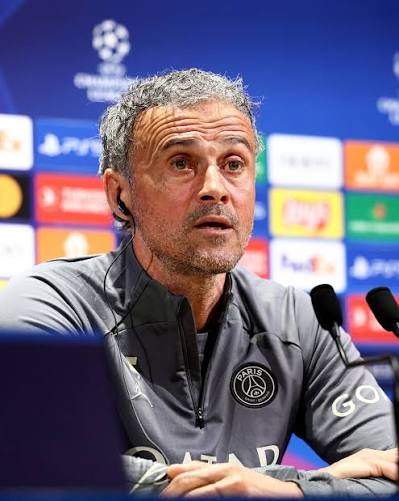
Paris Saint-Germain manager Luis Enrique has dismissed suggestions that his side enter Saturday's UEFA Champions League final against Arsenal as favourites.
Speaking ahead of the match, the PSG coach described the encounter as a "very close call" and stressed that success would be determined by fine details rather than status or previous achievements.
The French champions are aiming to retain the European title they won last season, while Arsenal are seeking to secure the Champions League trophy for the first time in the club's history.
"I don't think that there is a favourite, to be honest. For us the devil is in the details, and I think it will be a very close call," Enrique said.
He also emphasized the importance of managing the emotional and psychological demands that accompany a final of this magnitude.
Advertisement
At first glance, Enrique's comments may appear to be standard pre-match diplomacy. Managers frequently avoid accepting the label of favourite in order to reduce pressure on their players.
However, his assessment reflects a broader reality surrounding this final.
PSG may enter as defending champions, but Arsenal's rise under Mikel Arteta has transformed them into one of Europe's most tactically disciplined and competitive teams. The gap between the established European elite and emerging contenders has narrowed significantly, making knockout football increasingly unpredictable.
Enrique's focus on "details" highlights a truth that often defines Champions League finals. Individual mistakes, tactical adjustments, substitutions, set pieces and moments of composure frequently outweigh season-long statistics or perceived superiority.
In that sense, PSG's experience may offer an advantage, but Arsenal's hunger and pursuit of a historic first title create a different kind of motivation that cannot easily be measured.
One perspective supports Enrique's claim that there is no clear favourite.
Supporters of this view point to Arsenal's performances throughout the season, their tactical organization under Arteta, and their ability to compete against Europe's strongest teams. From this angle, the final is genuinely balanced despite PSG's recent European success.
Another viewpoint suggests PSG should naturally be considered favourites. They are the reigning champions, possess a squad with greater experience in high-pressure European finals, and have already navigated the demands of winning the competition.
For many analysts, the defending champions carry an intangible advantage that only experience can provide.
The contrast highlights a recurring debate in elite football: does recent success create momentum, or does the pressure of defending a title create additional vulnerability?
The outcome of this final could shape the direction of both clubs for years.
For PSG, back-to-back Champions League titles would strengthen their position among Europe's dominant football institutions and reinforce Enrique's project as one of the most successful eras in the club's history.
Advertisement
For Arsenal, victory would represent the culmination of a rebuilding process under Arteta and finally remove one of the most persistent gaps in the club's achievements.
The wider implications extend beyond the clubs themselves. European football has increasingly become a contest between established financial powerhouses and ambitious challengers seeking to break into the elite circle. Arsenal's pursuit of a first title reflects that broader struggle.
For football fans across Nigeria, including major supporter communities in Lagos, Abuja and Port Harcourt, the final also represents a clash between two contrasting football projects: one seeking to preserve dominance and another chasing a historic breakthrough.
Ultimately, the question may not be whether PSG or Arsenal are favourites.
The real issue is which team can best manage the pressure that comes with opportunity. Champions League finals are remembered not for predictions made beforehand but for decisive moments that reshape football history.
Luis Enrique may be correct that the "devil is in the details." If so, those details could determine whether PSG extends an emerging dynasty or Arsenal finally writes the chapter its supporters have waited decades to see.
You must log in to comment or reply.
Comments