
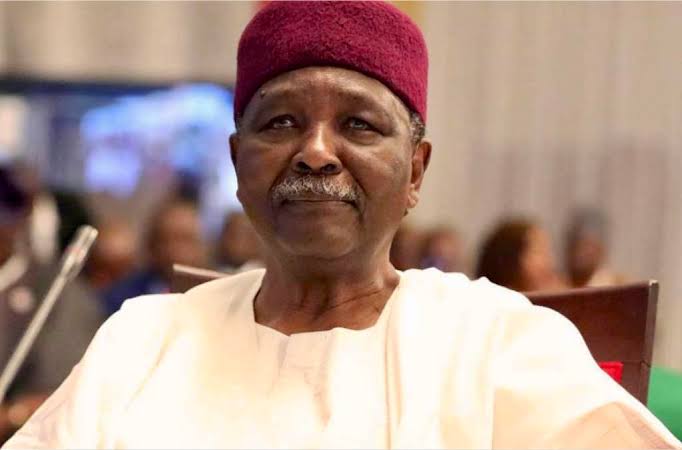
Internal command decisions during the Nigerian Civil War continue to reshape public understanding of how senior military officers interacted behind the frontlines. In newly published excerpts from General Yakubu Gowon’s autobiography, a disputed episode involving Olusegun Obasanjo and Murtala Muhammed has resurfaced, raising fresh questions about hierarchy, loyalty, and wartime command structure.
Former Head of State, General Yakubu Gowon, in his autobiography My Life of Duty and Allegiance, revisited events from the Nigerian Civil War period (1967–1970), claiming that a young Colonel Olusegun Obasanjo resisted a posting arrangement that would place him in a supporting role under then-Colonel Murtala Muhammed.
According to Gowon, the arrangement was part of a wider operational restructuring during the war, where Obasanjo was expected to serve in a rear support capacity linked to the 2nd Division operations. Gowon stated that Obasanjo was uncomfortable with the idea of serving under someone he viewed as junior in service hierarchy at the time.
Gowon wrote that as Commander-in-Chief, he insisted on the redeployment, arguing that wartime decisions had to be based on operational necessity rather than personal sentiment.
Advertisement
What makes this account significant is not only the claim itself, but what it reveals about how post-war narratives are shaped.
Military historiography of Nigeria’s Civil War has long depended on a limited set of senior officers’ memoirs, meaning personal interpretation often blends with recorded fact. In this case, Gowon’s framing places emphasis on authority, discipline, and loyalty within a highly centralized command structure.
Yet, historians of civil-military relations note that the Nigerian Army during the war operated under extreme pressure, with rapidly shifting battleground realities forcing commanders to adapt roles beyond formal rank expectations. In such environments, resistance to postings—if it occurred informally—may never have been officially documented.
What is also notable is how post-war political trajectories influence interpretation. Both Obasanjo and Murtala Muhammed later became Heads of State, meaning their wartime interactions are frequently re-examined through the lens of later political authority rather than wartime necessity.
From an analytical standpoint, this creates a recurring pattern in Nigerian political history: wartime operational decisions are often reinterpreted decades later as personality conflicts, even when they may have originally been administrative or tactical adjustments.
During the Nigerian Civil War, command restructuring was frequent due to shifting frontlines and operational shortages. Historical studies of the war indicate that Nigeria’s federal forces underwent multiple reorganizations between 1967 and 1970, particularly in southern and eastern theaters.
Advertisement
Military historians note that centralized command under the Federal Military Government meant officers were often reassigned without negotiation, although formal records of dissent are rare.
This gap between official documentation and memoir accounts is a recurring issue in African post-conflict historiography, where written records were limited and personal recollections later became primary sources of narrative reconstruction.
The renewed attention to these memoir excerpts highlights how Nigeria’s Civil War history continues to be reinterpreted through personal accounts rather than archival consensus. As more political figures publish memoirs, the challenge for historians and the public will be separating operational history from retrospective narrative framing. What remains clear is that the relationships forged during the war continue to shape how leadership, loyalty, and authority are understood in Nigeria’s political memory.
You must log in to comment or reply.
Comments