
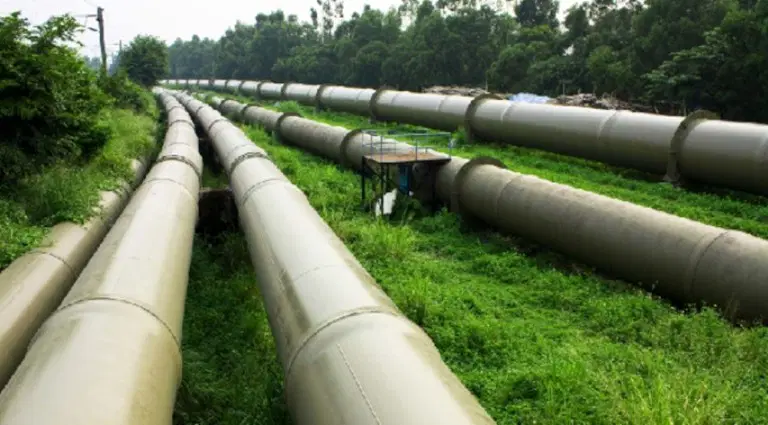
For nearly two decades, Cross River watched billions in oil revenue slip away. Now, a federal panel’s final report could change everything. Here’s what most people are not paying attention to — and why this decision could reshape Nigeria’s revenue map.
Cross River State may be on the brink of a historic comeback.
The Revenue Mobilisation, Allocation and Fiscal Commission (RMAFC) has received the final report of the Federal Government’s Inter-Agency Technical Committee on Nigeria’s Oil-Producing States — and the findings reportedly recommend re-listing Cross River as an oil-producing state.
If approved by President Bola Ahmed Tinubu, the move could restore the state’s eligibility for the 13% oil derivation revenue, a constitutional allocation granted to oil-producing states.
But here’s the bigger question:
1. Why did Cross River lose its oil-producing status in the first place?
In 2008, following a Supreme Court ruling that ceded oil-rich Bakassi Peninsula territories to Cameroon, Cross River effectively lost access to offshore oil wells tied to that region. Since then, the state has been excluded from derivation revenue, significantly affecting its fiscal strength.
For years, the debate simmered quietly.
Until now.
2. What changed?
According to reports by Vanguard, The PUNCH, and BusinessDay, the federal committee conducted a six-month verification exercise (August 2025 to February 2026), reviewing oil well coordinates across Nigeria’s maritime boundaries.
More than 1,000 oil and gas coordinates were reportedly examined using updated geological and hydrographic mapping.
Advertisement
And here’s the twist:
Over 100 oil wells were identified within Cross River’s maritime territory, particularly around Oil Mining Lease (OML) 114.
That finding could legally justify restoring the state’s oil-producing classification.
3. Why does this matter financially?
Under Nigeria’s revenue-sharing formula, oil-producing states receive 13% derivation revenue from crude oil proceeds extracted within their territory.
For states like Akwa Ibom, Rivers, and Delta, this derivation runs into hundreds of billions of naira annually.
If Cross River is officially re-listed, it could unlock:
• Increased federal allocations
• Greater budget capacity
• Infrastructure expansion opportunities
• Improved internally generated revenue leverage
But implementation is not automatic.
The RMAFC chairman, reportedly Mr. M. B. Shehu, will now await presidential approval before updating the official oil-producing states list.
4. Could this spark regional disputes?
Possibly.
Some oil wells remain under legal interpretations tied to the 2012 Supreme Court adjustments favoring neighboring Akwa Ibom State. However, the committee’s report appears to rely on updated coordinate data rather than historical assumptions.
This is where fiscal politics meets geospatial science.
And that’s why this development is bigger than Cross River alone.
5. The strategic angle nobody is talking about…
Nigeria is currently recalibrating revenue frameworks amid subsidy reforms, foreign exchange restructuring, and economic diversification efforts.
Reclassifying oil-producing states could:
• Redefine derivation allocations nationwide
Advertisement
• Prompt other states to demand fresh verification
• Reshape fiscal federalism debates ahead of 2027 political realignments
In other words, this is not just a technical adjustment.
It’s a potential political and economic pivot.
What happens next?
The President must approve the committee’s recommendations.
Once endorsed, RMAFC will formally update its allocation structure.
Until then, Cross River remains in anticipation mode.
But if the approval comes through, the state could witness its most significant fiscal transformation in nearly 20 years.
And that would be a headline far beyond oil.
You must log in to comment or reply.
Comments