
Political campaigns are increasingly shaped not only by rallies and policy debates but also by the influence of celebrities and the speed of social media. The latest exchange involving Afrobeats star Davido and Edo State Governor Monday Okpebholo illustrates how personal remarks can quickly become part of a wider political conversation, sometimes overshadowing the issues voters are expected to decide at the ballot box.
As campaigns intensify ahead of the August 15 Osun State governorship election, Afrobeats singer Davido appeared to respond to comments made by Edo State Governor Monday Okpebholo about Osun Governor Ademola Adeleke.
During a campaign event for the All Progressives Congress (APC) candidate, Bola Oyebamiji (AMBO), Okpebholo criticised Governor Adeleke's well-known dancing, suggesting it reflected his approach to governance.
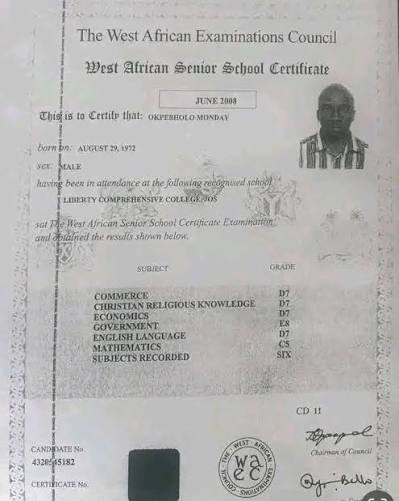
Soon afterwards, Davido—who has openly campaigned for his uncle, Governor Adeleke—shared what was described as Okpebholo's purported West African Examinations Council (WAEC) result on his Instagram Story without any accompanying caption. While the singer did not explain the post, many social media users interpreted it as a response to the governor's remarks.
Davido has remained an active supporter of Adeleke throughout the campaign and has also publicly called for a peaceful and credible election in Osun State.
Advertisement
Whether intentional or not, this episode reflects a broader trend in Nigerian politics, where public perception is increasingly shaped by viral moments rather than extended policy discussions.
Governor Adeleke's dancing has become one of his defining public images. Supporters view it as evidence of an approachable leader who connects easily with ordinary people, while critics argue that it distracts from governance. Governor Okpebholo's comments appear to tap into that criticism, using personality as a campaign talking point rather than focusing solely on administrative performance.
Davido's apparent response also highlights the growing political influence of entertainers. With millions of followers across social media platforms, celebrities can shape conversations almost instantly. A single post can generate more public attention than a traditional campaign speech, demonstrating how digital influence has become an important factor in modern elections.
From the APC's perspective, highlighting Adeleke's public image may be an attempt to question his leadership style and persuade voters to consider governance over personality.
On the other hand, supporters of Adeleke argue that dancing has little bearing on administrative performance. They contend that elected officials should be judged by their policies, projects and delivery of public services rather than personal habits or public appearances.
Davido's supporters similarly view his involvement as a family member exercising his democratic right to participate in political campaigns. Critics, however, believe celebrity interventions can intensify political divisions and shift attention away from substantive issues affecting voters.
It is also important to note that while reports have described Davido's Instagram post and Okpebholo's remarks, aspects of the reported exchange have not yet been independently confirmed by multiple major news organisations.
As election day approaches, political messaging in Osun is likely to become even more competitive, with social media continuing to play a central role.
Advertisement
The growing overlap between politics and entertainment presents both opportunities and challenges. High-profile endorsements can increase voter engagement, especially among younger Nigerians, but they can also amplify personality-driven narratives at the expense of discussions about the economy, education, healthcare and security.
For political parties, the challenge will be balancing effective communication with issue-based campaigning. For voters, the task remains separating campaign rhetoric from the policies that will directly affect their daily lives.
Ultimately, the debate is not about whether politicians dance or celebrities speak out. The more important question is whether public attention remains focused on the decisions that shape governance. As Osun heads toward election day, viral exchanges may dominate headlines, but voters will ultimately decide whether personality or performance carries greater weight at the ballot box.
You must log in to comment or reply.
Comments