
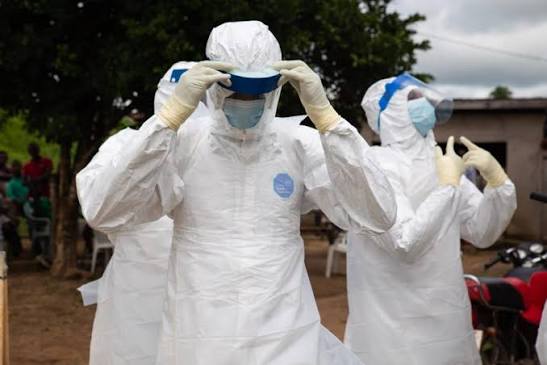
More than a month after the Democratic Republic of Congo declared a new Ebola outbreak, the epidemic has crossed another grim milestone: over 300 people have died and more than 1,100 infections have been confirmed.
The rapidly rising figures are raising concerns among global health authorities, not only because of the speed of transmission but also because the outbreak is being driven by a strain of the virus for which there is currently no approved vaccine or treatment. The developments are once again exposing the vulnerabilities of health systems in conflict zones and testing international preparedness against cross-border disease threats.
Health authorities in the Democratic Republic of Congo (DRC) said on Friday that the Ebola outbreak has now killed 304 people and infected 1,115 others since it was first detected on May 15.
According to the National Public Health Institute (INSP), the outbreak has a mortality rate of 26.3 percent, significantly higher than many infectious disease outbreaks and an indication of the severity of the current crisis.
The figures represent a sharp increase from June 18, when the Africa Centres for Disease Control and Prevention (Africa CDC) reported 202 deaths and 875 confirmed infections.
The outbreak is linked to the Bundibugyo strain of Ebola, one of the less common forms of the virus. Unlike the Zaire strain, which has approved vaccines and treatment protocols, the Bundibugyo variant currently lacks licensed vaccines and targeted therapies, complicating efforts to contain its spread.
Health authorities have reported some encouraging developments, including the recovery of several patients earlier this month. However, aid agencies and international responders warn that the outbreak has not yet reached its peak and could take up to a year to bring under control.
International outlets have approached the crisis from different angles.
Reuters and AFP focused largely on the escalating case numbers and the challenges of controlling an outbreak caused by a virus strain with no approved vaccine. Their reports highlighted the role of conflict and weak healthcare infrastructure in worsening the situation.
Advertisement
The World Health Organization, meanwhile, emphasized the risk assessment, stressing that the likelihood of widespread transmission outside Africa remains low despite the first confirmed case in Europe.
The Guardian and other humanitarian-focused publications have drawn attention to the social dimensions of the crisis, particularly the inability of authorities to trace hundreds of potential contacts and the impact of mistrust between local communities and health workers.
What many reports have underplayed, however, is the broader implication of another major Ebola outbreak occurring in one of Africa's most unstable regions at a time when global public health systems are still recovering from the economic and institutional strain left by the COVID-19 pandemic.
The overwhelming majority of infections have been recorded in Ituri province, a mineral-rich region in eastern Congo that has been plagued by violence and armed conflict for decades.
More than 91 percent of all infections and over 82 percent of deaths have occurred in the provincial capital, Bunia.
Frequent displacement of civilians and population movements between conflict zones have made traditional containment strategies such as contact tracing and isolation significantly more difficult.
Healthcare facilities are also struggling with shortages of protective equipment, chlorine, and other basic supplies. Many treatment centers established by the World Health Organization and humanitarian agencies are reportedly operating near full capacity.
The outbreak is also taking a heavy toll on medical personnel. At least 78 healthcare workers have been infected, and 18 have died.
The loss of trained health workers creates a dangerous cycle: fewer personnel mean reduced treatment capacity, slower contact tracing, and greater risks of further community transmission.
Although the outbreak remains concentrated in eastern DRC, it has already crossed borders.
Uganda has reported 20 confirmed cases and two deaths, with most infections linked to people arriving from Congo.
France this week confirmed the first case associated with the outbreak outside Africa—a Congolese doctor who had been working in the DRC for the humanitarian organization ALIMA.
The World Health Organization says the risk of transmission in Europe remains minimal and does not recommend travel restrictions. Nevertheless, Air France suspended flights to Kinshasa for several days, highlighting how disease outbreaks can rapidly influence international travel and business decisions even when official risk assessments remain low.
For African economies, including Nigeria, the outbreak is a reminder of how health emergencies can quickly evolve into economic concerns. Cross-border trade, aviation, tourism, and supply chains often face disruptions whenever major infectious disease outbreaks emerge on the continent.
Nigeria's successful containment of Ebola in 2014 remains a global case study in rapid response and contact tracing. However, public health experts warn that the country's experience also demonstrated how quickly a single imported case can create national anxiety and economic consequences.
Health officials in Congo continue to battle misinformation and mistrust among sections of the population.
Advertisement
Some families have reportedly demanded the return of bodies from hospitals without understanding that direct contact with deceased victims can spread the virus.
Others have resisted post-mortem examinations, leading authorities to suspect that the true scale of infections may be higher than official figures suggest.
This challenge mirrors previous Ebola outbreaks in West and Central Africa, where cultural practices, distrust of government institutions, and misinformation complicated emergency responses.
Public health experts increasingly argue that containing Ebola requires not only medicine and logistics but also community trust and effective communication.
The current epidemic is the 17th Ebola outbreak to hit the Democratic Republic of Congo, underscoring a recurring pattern in which conflict, poverty, and weak healthcare systems create conditions for infectious diseases to spread rapidly.
The latest surge in cases suggests that containment efforts remain under enormous pressure, and international agencies are warning that the emergency could persist for months.
What authorities in Congo and neighboring countries do next may determine whether this outbreak remains a regional health crisis or becomes another global reminder that infectious diseases do not respect borders.
You must log in to comment or reply.
Comments