
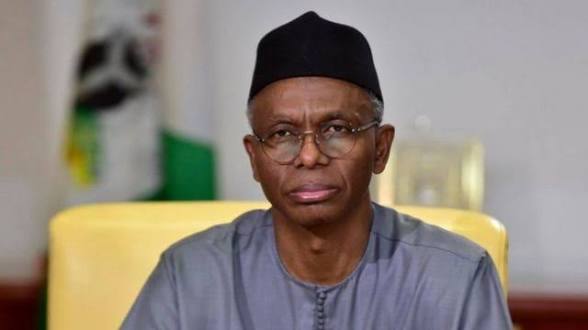
Grief and legal uncertainty have converged around one of Nigeria’s most prominent political figures, raising questions not just about personal loss but about due process and public accountability. The reported temporary release of Nasir El-Rufai has added a sensitive layer to an already emotional moment for his family.
The former Kaduna State governor is mourning the death of his mother, Hajiya Umma El-Rufai, who passed away in Cairo at an advanced age after a period of illness. Her death was confirmed by family members, with tributes pouring in from top political figures including Bola Tinubu, Atiku Abubakar, and Kaduna State Governor Uba Sani, all of whom described her as a matriarch whose life spanned generations of influence and service.
However, a closer look shows the story extends beyond condolences. El-Rufai’s son, Bashir, stated on social media that his father had been released from detention to enable him attend funeral rites. Yet, the Independent Corrupt Practices and Other Related Offences Commission has not publicly confirmed any such release, leaving the exact legal status of the former governor unclear at a critical moment.
Advertisement
While Punch Newspapers emphasized the emotional and political weight of the loss alongside the reported release, other credible Nigerian platforms have largely focused on the death and tributes, with less certainty around the detention and bail narrative. That gap in framing is significant. In high-profile legal matters, the difference between a court-approved bail, administrative release, or unverified claim is not just technical—it shapes public perception of institutional credibility.
Beyond the official silence, the situation highlights a recurring tension in Nigeria’s justice system: how humanitarian considerations intersect with ongoing corruption cases involving political figures. El-Rufai was reportedly facing charges linked to alleged financial misconduct, with proceedings still underway. Yet moments like this—where personal tragedy meets legal scrutiny—often test how institutions balance compassion with consistency.
What makes this more complex is the timing. The reported release, whether formal or informal, comes amid heightened public sensitivity around anti-corruption enforcement. For many Nigerians, especially in cities like Abuja and Lagos where trust in institutions is frequently debated, such cases reinforce long-standing concerns about whether high-profile defendants are treated differently from ordinary citizens.
Historically, Nigeria has seen similar situations where politically exposed persons receive temporary relief on health or humanitarian grounds during investigations or trials. While such decisions can be legally justified, the absence of transparent communication often fuels speculation, weakening public confidence. Current trends suggest that perception now matters as much as process—particularly in an era where social media narratives can outpace official statements.
Advertisement
The loss itself remains deeply personal. Hajiya Umma El-Rufai was described by those close to her as a figure of quiet strength and influence, whose legacy extends beyond her immediate family. Her passing, coming shortly after another bereavement within the family, underscores the human dimension often overshadowed by political headlines.
You must log in to comment or reply.
Comments