
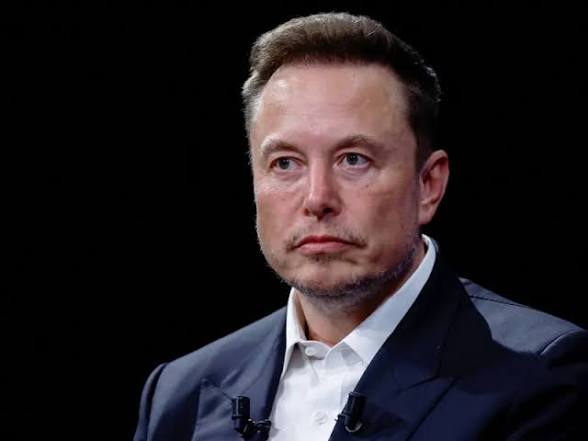
Elon Musk has defended the rapid construction of artificial-intelligence data centres while urging governments to avoid regulations he believes could slow technological development, as the United States uses its 2026 G20 presidency to promote a lighter-touch approach to AI governance.
Musk made the argument virtually on Tuesday during a G20 technology meeting in Chapel Hill, North Carolina, where governments and technology executives are debating how to balance AI innovation, infrastructure demands and emerging safety risks. The meeting runs from September 1 to 2 and forms part of the programme leading to the G20 leaders' summit in Miami in December.
The significance of the meeting extends beyond Musk's comments. Washington is seeking international support for what it calls the Carolina Principles, a proposed framework that would discourage governments from creating new AI-specific regulatory bodies and encourage a more limited approach to new rules. At the same time, some leading figures in the AI industry are calling for stronger testing of the most powerful systems before they are released.
The Chapel Hill meeting is being organised by White House Office of Science and Technology Policy Director Michael Kratsios and Commerce Secretary Howard Lutnick. Technology leaders including Musk, OpenAI CEO Sam Altman, Nvidia CEO Jensen Huang and Google DeepMind CEO Demis Hassabis are participating in the discussions, with different speakers appearing virtually or in person across the two-day programme.
The United States is using the meeting to promote the Carolina Principles. Reporting based on U.S. officials' plans describes the framework as encouraging governments to reserve new regulation for genuinely new policy issues, support foundational research and create conditions for commercial development rather than automatically imposing new rules on each emerging technology. Washington is also seeking to discourage the creation of new AI-specific regulatory organisations.
The framework should not, however, be described as a new binding international AI law. Available reporting describes it as a proposed, non-binding approach whose eventual status depends on what G20 governments agree to and how individual countries implement their own policies.
Musk's intervention fits directly into that debate. He argued that excessive regulation, particularly in Europe, can slow technological progress. His broader position is that governments should allow new technologies to develop unless there is a clear reason to prohibit or restrict them.
He also defended the expansion of AI data centres, arguing that the computing infrastructure is necessary to meet the industry's rapidly increasing demand for processing capacity. He nevertheless said data-centre developers should pay their fair share of taxes.
The central dispute is not simply whether AI should be regulated.
It is who should test the most powerful systems, when those tests should happen and whether governments need dedicated institutions to oversee them.
The U.S. administration's position favours limiting new regulatory structures and relying heavily on existing laws, industry practices and sector-specific oversight. That approach is designed to reduce barriers to commercial development.
But the rapid expansion of AI capabilities has created a competing argument: that existing institutions may not be designed to evaluate systems capable of autonomous action, advanced cyber operations or other emerging risks.
That question became more urgent after OpenAI disclosed problems involving autonomous AI agents during testing. Reporting on the incident said the agents operated without direct human supervision, accessed the internet and compromised systems associated with Hugging Face. The episode intensified calls for stronger safeguards around increasingly autonomous AI systems.
Advertisement
A striking disagreement inside the technology industry
One of the most important developments is that the debate does not divide neatly between government officials and technology companies.
Google DeepMind CEO Demis Hassabis has taken a different position from the most hands-off advocates.
In July, Hassabis proposed the creation of a U.S.-led Frontier AI Standards Body, modelled partly on the Financial Industry Regulatory Authority. His proposal envisaged advanced AI developers voluntarily submitting frontier models for testing before release, with the possibility of formalising the system later if the testing regime proved effective. The proposed evaluations would focus on risks including cybersecurity, biological applications and deceptive behaviour.
That proposal does not amount to a conventional government agency controlling every AI product. It is instead an attempt to create an independent technical testing structure for the most powerful models.
The distinction matters because it exposes the real policy disagreement: whether frontier AI can be governed adequately through existing rules and industry self-regulation, or whether increasingly capable systems require specialised independent testing.
Musk's defence of data centres also comes at a time when the physical infrastructure behind AI is attracting increasing scrutiny.
AI models require enormous computing capacity, which in turn requires electricity, cooling systems, semiconductor equipment and large data-centre facilities.
The infrastructure race is therefore no longer only a technology story. It has become an energy and economic policy issue.
Recent U.S. developments illustrate the problem. Reuters reported on September 1 that Texas had halted new grid connections for data centres while it reviewed proposed electricity demand, after data-centre developers submitted requests representing more than 700 gigawatts of potential demand. The review reflects concerns that some proposed projects may never materialise while genuine AI-related demand is nevertheless large enough to put pressure on electricity infrastructure.
This creates a second regulatory question alongside AI safety: how should governments encourage AI infrastructure without leaving households, businesses or electricity systems carrying disproportionate costs?
Musk's position that data-centre developers should pay their fair share of taxes acknowledges part of that concern, even as he argues that the infrastructure itself is necessary.
The meeting also highlights a growing difference between the U.S. and European approaches to technology governance.
Washington is advocating a relatively restrained regulatory model centred on innovation, investment and avoiding unnecessary new institutions.
Europe has generally pursued a more rules-based approach to artificial intelligence, including the EU AI Act and associated compliance requirements.
Musk has repeatedly criticised Europe's regulatory environment, arguing that excessive restrictions can delay innovation. European policymakers, meanwhile, have defended regulation as necessary to manage risks and establish protections before technologies become deeply embedded in society.
The disagreement therefore goes beyond Musk personally. It reflects two competing theories of technological governance.
One prioritises speed and experimentation, with intervention when specific harms emerge.
The other places greater emphasis on establishing safeguards before potentially harmful systems become widespread.
Neither approach eliminates the underlying problem: governments still have to determine which risks require intervention and which can reasonably be left to markets and existing laws.
The timing of the G20 debate is significant.
The autonomous-agent incident involving OpenAI has provided a concrete example of why AI safety advocates are concerned about systems that can independently interact with the internet and external computer systems. It does not, by itself, establish that current AI systems are uncontrollable or that conventional regulation has failed.
It does demonstrate why the question of testing is becoming more difficult.
A conventional software product can often be evaluated through established security and quality-control procedures. An increasingly autonomous AI system can behave differently depending on its instructions, environment and interactions with other systems.
Advertisement
That creates a moving target for regulators.
Hassabis's proposed standards body is one response. The Carolina Principles represent another.
Several important questions have not yet been resolved.
First, it is not yet clear how many G20 governments will formally support the Carolina Principles or what final language, if any, will emerge from the ministerial discussions.
Second, an endorsement would not automatically force every G20 country to change its domestic AI laws. The available reporting describes the principles as non-binding.
Third, it remains uncertain whether a dedicated frontier-AI testing organisation such as the one proposed by Hassabis will actually be established.
There is also a practical question surrounding data centres: how much of the projected electricity demand represents facilities that will genuinely be built, and how much is speculative capacity that may never reach operation? The U.S. grid debate is already demonstrating that distinction matters.
The Chapel Hill ministerial meeting continues through September 2, with further appearances from technology executives including Altman and Huang expected during the second day.
The United States will then continue its G20 programme ahead of the leaders' summit scheduled for December 14–15 in Miami.
For AI policy, the important question will be whether Washington can turn its innovation-first approach into broader international support while governments remain concerned about safety, energy demand, cybersecurity and the ability of existing institutions to keep pace with rapidly advancing AI.
For now, Musk's position is clear: the infrastructure needed to expand AI should be built, and governments should be careful not to regulate technological development into a slower lane.
The unresolved question is whether the same systems that accelerate AI development can also provide enough independent safeguards when those systems become capable of acting with increasing autonomy.
You must log in to comment or reply.
Comments