
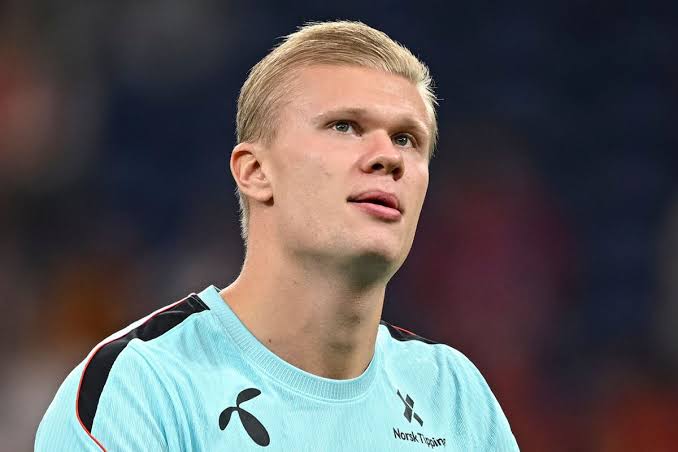
Erling Haaland has urged Manchester City’s players, staff and supporters to remain united as the club prepares to return to Premier League action while challenging an independent commission’s findings that it breached the league’s financial regulations over a nine-season period.
The Norwegian striker’s comments come less than two weeks after the Premier League announced that an independent commission had found City guilty of serious financial-rule breaches covering the 2009/10 to 2017/18 seasons. The commission found that the club used commercial arrangements that artificially increased reported revenue and reduced costs by more than £900 million.
But the case is not yet finished. City has appealed the commission’s decision, denies the accusations and says the judgment contains material errors of law, principle and fact. No final sporting punishment has been imposed while the appeal process continues.
Speaking ahead of City's Premier League meeting with Liverpool, Haaland called for supporters and the club to remain positive despite the uncertainty surrounding the financial case.
The Manchester City striker said the club needed to “stick together”, stay positive and focus on winning football matches. He also said he cared deeply about the club and its supporters.
The comments represent Haaland's first significant public response since the commission's verdict became public.
His position is important because the uncertainty concerns a period that predates his arrival at Manchester City. Haaland joined the club in 2022, while the financial breaches considered by the commission relate to seasons between 2009/10 and 2017/18.
The immediate sporting consequences, however, could affect the current club, including players who were not involved in the period examined by the commission.
The Premier League's September 29 statement provides the central evidence behind the current dispute.
According to the league, the independent commission found that Manchester City:
breached the Premier League's financial rules during a nine-season period from 2009/10 to 2017/18;
arranged or relied on what the commission described as “sham” commercial contracts;
artificially inflated the club's revenues and reduced its reported costs by more than £900 million;
submitted misstated accounts and concealed the true state of its finances from auditors and football regulators;
would have substantially exceeded Premier League and UEFA spending limits if the relevant financial arrangements had been reported accurately; and
breached its obligations to cooperate with the Premier League investigation in three of four allegations relating to cooperation.
The Premier League says the commercial arrangements involved sponsorship payments in which the club's owner, Abu Dhabi United Group Investment & Development Ltd, allegedly funded portions of payments that were recorded as coming from commercial partners. The commission also found other arrangements that, according to the league, reduced the club's reported operating expenses.
Advertisement
The significance of that finding is not simply the amount of money involved. The commission concluded that the arrangements helped City appear compliant with financial regulations when, according to its findings, the club would otherwise have exceeded the applicable spending limits by a substantial margin.
The major unresolved issue is now not whether the independent commission reached a guilty verdict. It did.
The immediate question is whether that verdict survives City's appeal and, if it does, what sanction should follow.
Manchester City maintains that it is innocent and has challenged the commission's findings. In its appeal statement, the club said it had “irrefutable evidence” supporting its position and argued that the commission's opinion contained material errors.
The Premier League, meanwhile, says the commission's decision establishes its findings about the club's conduct during the period investigated.
Those positions will now be tested through the appeal process.
Why the case has taken so long
The financial case has been developing for years.
The Premier League formally referred the allegations against Manchester City to an independent commission in February 2023 after a lengthy investigation. Manchester City had consistently denied wrongdoing and said it welcomed examination of the evidence by an independent body.
The eventual commission decision therefore represents the outcome of a process that began well before Haaland joined the club.
The Premier League says its investigation lasted four years and that the commission also found multiple breaches of City's duty to cooperate with the investigation.
The timeline matters because the current Manchester City squad is dealing with the consequences of historical allegations involving previous periods of the club's administration.
Manchester City's position
City has not accepted the commission's conclusions.
After the verdict, the club said it was disappointed and surprised by the decision and maintained that it was innocent of the accusations. It said it would pursue the available appeal avenues because it considered the commission's opinion unsafe and affected by errors of law, principle and fact.
On October 1, the club formally lodged its appeal. The Premier League subsequently confirmed that the appeal had been submitted to the chair of its Judicial Panel and that the independent Appeal Board process would be private and confidential until publication of its outcome is permitted.
This means some of the most important arguments in the next stage may not be publicly known while the appeal is being considered.
The precise punishment remains unresolved.
Reports have discussed possibilities ranging from financial penalties and points deductions to much more serious sporting consequences. But none of those sanctions should currently be described as confirmed.
The distinction is important: the independent commission has reached its findings, but the club has appealed and the eventual consequences depend on the outcome of that process and subsequent disciplinary decisions.
That uncertainty also explains why it would be premature to conclude that current players such as Haaland will leave the club or that Manchester City will definitely be relegated.
Those are possible scenarios being discussed around the case, not established outcomes.
Why Haaland's comments matter
Haaland's immediate message is about maintaining stability inside a club facing uncertainty outside the pitch.
Manchester City have continued playing despite the verdict. Reuters reported on October 8 that the club had won its first five Premier League matches of the season and remained at the top of the table ahead of the Liverpool fixture.
That creates an unusual situation: the club's competitive position remains strong while its legal and regulatory position is unsettled.
Haaland's comments therefore do not resolve the financial dispute. They reflect how the current squad is approaching the uncertainty while the legal process continues.
The timing is also significant because City's next major test is Liverpool at Anfield, followed shortly afterwards by a Champions League meeting with Paris Saint-Germain. Manchester City itself has described the coming fixtures as major tests following the international break.
The case extends beyond Manchester City.
The commission's findings concern how financial information was presented to football regulators and whether the financial rules governing Premier League clubs can effectively prevent clubs from gaining a sporting advantage through arrangements that regulators later determine were not genuine.
If the verdict ultimately stands, the case could become an important reference point for how the Premier League enforces its financial regulations.
It also raises a separate question about competitive consequences. If a club is found to have gained an advantage during historical seasons, deciding an appropriate punishment years later becomes considerably more complicated than imposing an ordinary fine.
Advertisement
Players, managers, supporters and rival clubs operating today may have had no involvement in the conduct under examination.
That is one reason the eventual sanction, if the findings survive appeal, will be closely watched across English football.
Several important questions remain unanswered:
Will Manchester City's appeal overturn or modify the commission's findings?
If the findings stand, what sporting or financial sanctions will be imposed?
Will any punishment apply immediately or only after the appeal process?
Could the case result in further legal or financial claims?
How will any eventual sanction affect Manchester City's current squad and competitive participation?
Will the final appeal decision provide greater detail about the disputed financial arrangements?
At present, those questions cannot be answered with certainty.
The next formal stage is Manchester City's appeal before an independent Appeal Board.
The Premier League says the appeal hearing will remain private and confidential until publication of the outcome is permitted.
In the meantime, Manchester City will continue its football schedule. The club is due to face Liverpool on October 11 before returning to Champions League action against Paris Saint-Germain on October 14.
For Haaland and the current squad, the immediate task is therefore straightforward: continue playing while a separate legal and regulatory process determines the consequences of a verdict concerning events that happened years before many of the current players arrived.
The most important unresolved issue is no longer whether Manchester City has been found guilty by the commission, but whether that finding survives the appeal and what consequences, if any, ultimately follow from it.
You must log in to comment or reply.
Comments