
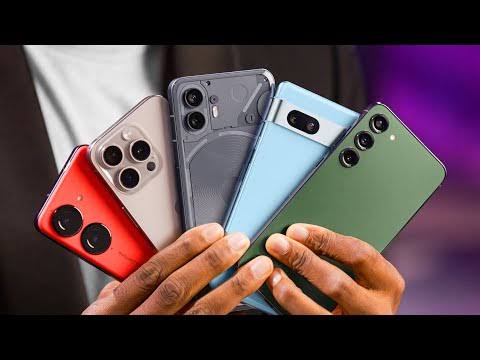
The competition among smartphone manufacturers has intensified in 2026, with leading brands pushing the limits of processing power, artificial intelligence integration, and mobile productivity. As consumers increasingly rely on smartphones for work, entertainment, content creation, and gaming, performance has become one of the most important factors influencing purchasing decisions.
Industry rankings released this year place several flagship devices from Samsung, Apple, Google, Xiaomi, OnePlus, Motorola, Asus, and Nothing among the fastest smartphones currently available, reflecting a broader shift toward AI-powered computing and premium mobile experiences.
At the top of many performance comparisons is the Samsung Galaxy S26 Ultra, which combines advanced processing capabilities with AI-driven features designed to improve multitasking, photography, and productivity. The device has emerged as one of Samsung's strongest flagship offerings, appealing to users who require high-end performance for demanding applications.
Close behind is Apple's iPhone 17 Pro Max. The device continues Apple's strategy of combining custom-designed hardware with tightly integrated software, allowing users to handle gaming, video editing, and other processor-intensive tasks efficiently. Industry observers note that Apple's ecosystem advantage remains a key factor in maintaining its position among premium smartphone buyers.
Foldable devices have also gained significant ground. Samsung's Galaxy Z Flip 7 and Galaxy Z Fold 7 feature prominently in performance discussions, demonstrating how foldable technology has evolved from a niche category into a serious competitor to traditional flagship smartphones.
Advertisement
Technology reviewers across different platforms have largely focused on benchmark performance, AI capabilities, battery efficiency, and software optimization when evaluating 2026 smartphones.
While some publications emphasize raw processing speed, others place greater importance on real-world usage, including gaming performance, multitasking efficiency, camera processing, and battery management. This distinction often explains why different rankings place devices in varying positions despite similar hardware specifications.
Most industry comparisons highlight Samsung and Apple as the primary competitors at the premium end of the market. However, Chinese manufacturers such as Xiaomi and OnePlus continue to challenge established brands by offering flagship-level performance at comparatively lower prices.
A notable trend in 2026 is the increasing role of artificial intelligence in smartphone performance.
Google's Pixel 10 has gained attention not only for its processing capabilities but also for AI-powered features involving voice recognition, photography enhancement, and smart assistant functionality. Similarly, Samsung and Apple have expanded AI integration across their flagship devices, shifting the conversation beyond traditional processor benchmarks.
This change reflects a broader industry transition. Consumers are no longer evaluating smartphones solely based on speed tests. Instead, manufacturers are competing to provide smarter devices capable of automating tasks, improving productivity, and enhancing user experiences through machine learning.
The Asus ROG Phone 10 Pro remains one of the strongest options for mobile gaming enthusiasts. Unlike mainstream flagship devices, gaming-focused smartphones prioritize thermal management, sustained performance, and software features designed specifically for competitive gaming.
Motorola's Razr Ultra has also attracted attention by combining foldable design with flagship-grade hardware, demonstrating how manufacturers are attempting to differentiate themselves in an increasingly crowded premium market.
Advertisement
Meanwhile, the Nothing Phone 3a Pro continues to attract consumers seeking a balance between design innovation, performance, and affordability.
The composition of this year's fastest smartphone rankings highlights several major industry shifts. Foldable devices are becoming mainstream, artificial intelligence is emerging as a critical performance category, and manufacturers are increasingly focusing on specialized user experiences rather than raw processing power alone.
These trends suggest that future smartphone competition may depend less on benchmark scores and more on how effectively companies integrate AI, productivity tools, and software ecosystems into everyday mobile experiences.
The next phase of the smartphone race will likely be determined not only by faster chips but also by how well manufacturers adapt to changing consumer expectations in an AI-driven technology landscape.
You must log in to comment or reply.
Comments