
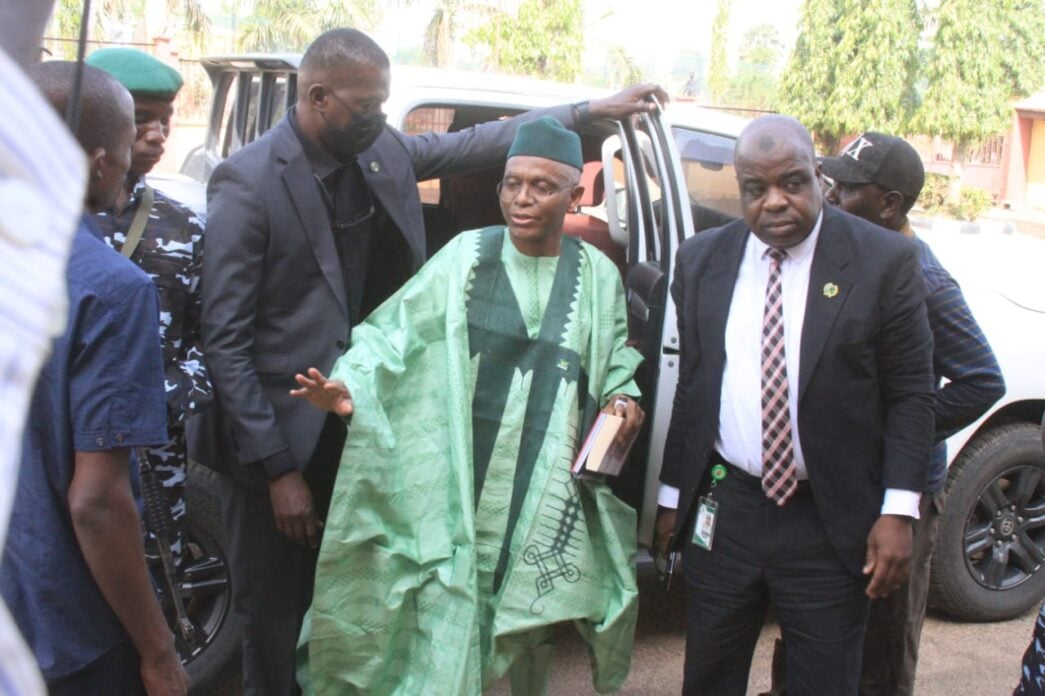
A tense legal standoff in Kaduna has pushed back a pivotal bail decision for former Governor Nasir El‑Rufai, deepening uncertainty around one of Nigeria’s highest‑profile corruption cases. Tuesday’s court session underscored fractures in prosecutorial strategy, defense rights, and public expectations of judicial transparency.
On March 24, a Federal High Court sitting in Kaduna State adjourned the bail application of Nasir El‑Rufai, the state’s former governor, to March 31, 2026. Both the prosecution and defense presented arguments, but no ruling was issued. Defense counsel Ukpon Akpan argued passionately for El‑Rufai’s constitutional rights, emphasizing his need to prepare a defense outside custody. Prosecutors opposed bail, citing the gravity of the charges and potential interference with ongoing investigations.
The March 31 date is not just procedural. It represents a high‑stakes juncture in Nigeria’s efforts to balance anti‑corruption enforcement with due process. El‑Rufai is a prominent political figure whose legal fate will be watched across the country. How the court handles bail — a constitutional right — could influence public trust in judicial fairness.
Advertisement
The deeper issue is the perceived politicization of corruption cases. When bail arguments hinge on interpretations of constitutional rights versus prosecutorial urgency, the judiciary’s role becomes a lightning rod for wider debates about power, accountability, and rule of law.
You must log in to comment or reply.
Comments