
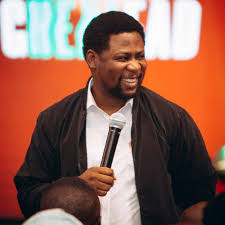
Nigeria’s latest religious controversy raises a question that goes beyond Apostle Arome Osayi’s disputed sermon: can a public figure’s argument be challenged forcefully without turning the person behind it into the subject of ridicule? The intervention by Pastor Femi Lazarus suggests that, even where disagreement is legitimate, the method of criticism can become a separate issue.
Apostle Arome Osayi, founder of the Remnant Christian Network, attracted widespread attention after a sermon circulated online in late September 2026 in which he argued that Nigeria has a distinctive spiritual calling centred on revival and missionary activity.
Osayi contrasted that calling with the manufacturing and technological achievements of countries such as China. Reports on the sermon said he argued that Nigeria should not define its national purpose solely through economic or technological development.
The comments triggered criticism on social media, including from Martins Vincent Otse, popularly known as VeryDarkMan. VDM challenged the emphasis on spiritual revival and argued that Nigeria also needs practical development, innovation and productive use of its human capacity.
The controversy subsequently moved beyond the substance of the sermon after VDM was reported to have mocked Osayi's facial appearance while criticising him. Other Christian figures also condemned that aspect of the response.
Pastor Femi Lazarus then entered the debate. In an Instagram post published on September 28, Lazarus acknowledged that preachers can be wrong and that people will not always agree with them, but objected to the personal mockery directed at Osayi. He described the attack as unacceptable and argued that Christians can disagree honourably.
There is an important distinction in this controversy that can easily disappear once a debate moves onto social media.
Arome Osayi's argument is open to criticism. Whether Nigeria has a divine national calling is fundamentally a matter of religious belief, while the question of whether spiritual revival should receive greater emphasis than manufacturing, technology and economic development is a legitimate subject for public debate.
Advertisement
VeryDarkMan's criticism therefore sits within a broader argument about what Nigerians need from religion and public institutions. His position, as reported by several outlets, is that religious emphasis should not become a substitute for technological progress, productive activity and practical solutions to national problems.
But challenging an argument and ridiculing a person's physical condition are not necessarily the same thing.
That distinction appears to be the central point of Lazarus's intervention. Importantly, Lazarus did not claim that Osayi was incapable of being wrong. In fact, he explicitly acknowledged that preachers are not always right and that context matters. His position was that disagreement should not require personal humiliation.
That makes the debate more complicated than a simple defence of one preacher against one critic.
One side of the argument is concerned primarily with Nigeria's material development.
Critics of Osayi's sermon have questioned the wisdom of describing spiritual revival as the country's defining national purpose when Nigerians are simultaneously dealing with economic hardship, weak infrastructure, unemployment, technological gaps and other practical challenges. VDM's criticism reflects this perspective: spiritual activity, in his view, should not displace the pursuit of innovation and development.
The other side places greater emphasis on spiritual identity and religious purpose.
Osayi's reported argument is not necessarily that manufacturing or technology has no value. Rather, his sermon presents Nigeria's role through a Christian theological framework in which different nations can have different purposes. His supporters therefore interpret his comments as an argument about spiritual identity rather than a conventional economic development programme.
Lazarus occupies a somewhat different position. His response does not require Nigerians to accept Osayi's interpretation of Nigeria's future. Instead, it draws a boundary around how the disagreement should be conducted.
That distinction matters because a person can reject a preacher's argument without necessarily endorsing ridicule of the preacher.
The controversy exposes a recurring tension in Nigerian public life: the relationship between faith and practical development.
Religion is deeply embedded in Nigerian society, and religious leaders frequently speak about national identity, morality, governance and social problems. At the same time, Nigeria's development challenges require measurable progress in areas such as education, industry, infrastructure, science and technology.
These priorities do not automatically have to be mutually exclusive. A religious vision of national purpose can coexist with an economic argument for industrialisation. The real disagreement is over what should be prioritised, how those priorities should be pursued and whether one should be presented as more fundamental than the other.
There is also a broader lesson about social media criticism. Viral platforms reward sharp reactions and personal confrontation, but the attention generated by ridicule can easily overwhelm the original argument.
In this case, the discussion began with a substantive question about Nigeria's national purpose. It then expanded into arguments about technology, religion, physical appearance and personal conduct. That shift risks making the original question harder, rather than easier, to examine.
Advertisement
For Nigerian religious communities, the episode is a reminder that internal disagreement does not necessarily weaken a faith community. Lazarus's own statement acknowledged that preachers can be wrong, while still defending the principle of respectful disagreement.
For critics of religious leaders, the episode illustrates the importance of separating criticism of ideas from attacks on personal characteristics. The former can advance public debate; the latter can move the conversation away from the issue being contested.
And for the wider Nigerian public, the more consequential question remains unresolved: what combination of spiritual values, economic productivity, scientific innovation and institutional reform can actually improve the country's future?
That question cannot be answered by a viral clip alone.
Ultimately, the disagreement between Arome Osayi and his critics is bigger than one sermon or one social-media personality. It touches on competing ideas about what Nigeria is, what Nigeria should become and what role religion should play in that journey.
Femi Lazarus's intervention adds another dimension to the debate: disagreement does not have to disappear for respect to remain.
The real test is whether Nigerians can challenge powerful ideas vigorously without reducing the people behind those ideas to objects of ridicule. If the conversation returns to that question, the controversy may yet produce something more useful than another viral confrontation.
You must log in to comment or reply.
Comments