
Nigeria’s mining reforms are facing an unexpected challenge on the diplomatic stage. Ahead of President Bola Tinubu’s state visit to the United Kingdom, the Federal Government has accused Jupiter Ltd of orchestrating a disinformation campaign designed to misrepresent ongoing mining sector actions to international audiences.
The Ministry of Solid Minerals Development has publicly accused Jupiter Ltd, an embattled mining company, of preparing a campaign of calumny against Nigeria during President Tinubu’s visit to the UK from 18–19 March 2026.
According to the government, Jupiter Ltd has attempted to propagate claims that Nigeria seized a British lithium project under armed guard. The ministry, however, emphasized that there is no legal or contractual relationship with any company known as Jupiter Lithium, and that Nigerian mining laws prohibit foreign companies from directly holding mineral titles.
The controversy originates from the revocation of mineral titles held by Basin Mining Ltd, a Nigerian firm linked to Australian national Steve Davis, due to unpaid statutory annual service fees totaling N2.494bn for the 2024–2025 fiscal years. The ministry dismissed allegations that these licences were reassigned to foreign companies, calling such claims fabricated and misleading.
Advertisement
Beyond the headline accusation lies a deeper tension between governance, investment, and international perception. Nigeria’s mining sector, particularly lithium and other strategic minerals, is increasingly central to its economic diversification away from oil.
What makes this complex is the intersection of domestic regulatory enforcement and foreign investment scrutiny. Foreign companies or intermediaries sometimes exploit loopholes in licensing laws, while speculative ownership structures can give the impression of mismanagement or expropriation. These structural weaknesses can easily be weaponized in global media to damage Nigeria’s reputation, especially when diplomatic attention is high.
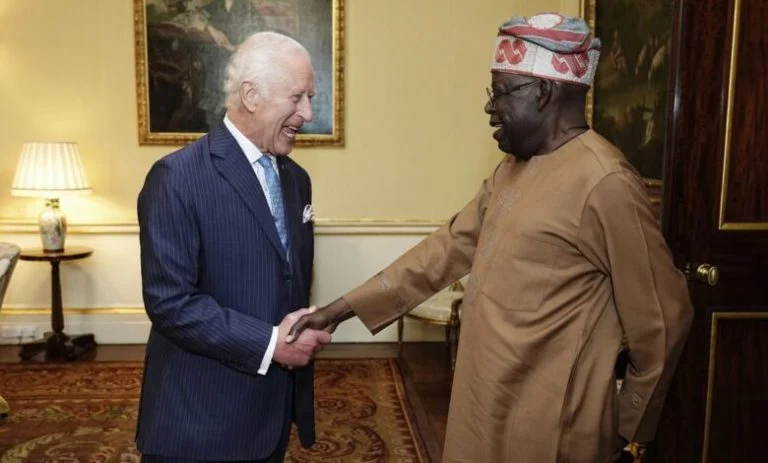
Moreover, the timing — coinciding with President Tinubu’s high-profile visit to Windsor Castle and engagement with King Charles III — adds geopolitical weight. International investors and partners are watching closely, and misinformation could complicate bilateral relations or deter foreign investment.
Analysts has it that;
• Nigeria has intensified efforts to exploit lithium, gold, iron ore, and rare earth elements as part of a diversification strategy.
• Unpaid fees led to the revocation of five key mineral titles: 45454ML, 45117ML, 45118ML, 40532ML, and 40533ML.
Advertisement
• The government estimates that dormant or improperly held licences contribute to illegal mining and speculative trading, hampering sector growth and reducing potential GDP contributions.
These reforms aim to ensure that mining contributes meaningfully to the economy, while preventing “paper companies” from claiming mineral wealth without actual development or compliance.
You must log in to comment or reply.
Comments