
Nigeria’s banking sector could be heading into another major capital race as FirstHoldCo Plc moves to significantly strengthen its balance sheet beyond current regulatory requirements. The development comes at a time when competition among top-tier banks is intensifying, while investors closely watch how financial institutions position themselves for a larger and more volatile economy.
Beyond the headline figures, the proposed move reflects a broader shift inside Nigeria’s banking industry: stronger capital buffers are increasingly being viewed not just as regulatory necessities, but as strategic tools for survival, expansion, and investor confidence.
FirstHoldCo Plc, parent company of First Bank of Nigeria, disclosed ahead of its 14th Annual General Meeting scheduled for May 29, 2026, that shareholders would consider a proposal to raise fresh capital aimed at increasing the group’s paid-up capital base to ₦1 trillion.
According to the company’s notice to the Nigerian Exchange, the capital raise could involve multiple instruments, including public offers, rights issues, private placements, bonus issues, script dividends, and other equity market transactions.
The proposal comes only months after First Bank reportedly met the Central Bank of Nigeria’s ₦500 billion minimum capital requirement for banks with international banking licences.
However, a closer look shows the group is not merely trying to satisfy regulators. The institution appears to be positioning itself ahead of a possible industry-wide shift toward stronger capital thresholds, especially as Nigerian banks face increasing pressure from exchange-rate instability, rising non-performing loans, and growing financing demands from infrastructure and energy sectors.
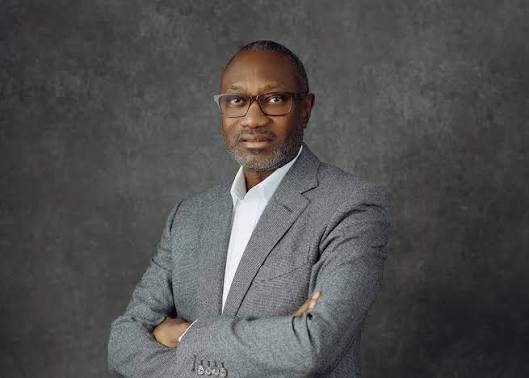
Otedola has repeatedly argued that Nigeria cannot build a trillion-dollar economy on what he described as “weakly capitalised banks.” His position has increasingly shaped discussions around the future of Nigeria’s financial sector.
Advertisement
While several media platforms focused mainly on the fundraising target itself, other financial reports highlighted a deeper restructuring effort already underway inside the group. Independent market reports confirmed that FirstHoldCo recently completed a ₦45 billion private placement and cleaned up roughly ₦826 billion in legacy debt obligations in 2025.
That framing leaves out an important implication: stronger capital reserves could significantly improve banks’ ability to finance large industrial projects, absorb economic shocks, and compete for foreign investment flows.
The timing is also notable. Nigerian banks are navigating one of the most volatile financial periods in recent years, driven by naira depreciation, tighter monetary policy, and inflationary pressure affecting both consumers and businesses.
Part of the momentum behind the proposed capital raise is linked to FirstHoldCo’s recent earnings performance.
The group reported a 72 percent year-on-year increase in Profit Before Tax for Q1 2026, reaching approximately ₦321.1 billion. Financial analysts tracking tier-one banks say the performance places the company among the strongest performers in the so-called “FUGAZ” banking category — a term commonly used for FirstHoldCo, UBA, GTCO, Access Holdings, and Zenith Bank.
More significantly, the company posted an annualised Return on Equity of 31.6 percent for the quarter, outperforming several major competitors.
Yet the deeper issue is not simply profitability. Nigerian banks are increasingly under pressure to prove they can generate sustainable returns while managing credit risk in an economy facing high borrowing costs and weaker consumer spending.
Under Group Managing Director Wale Oyedeji and First Bank CEO Olusegun Alebiosu, the institution has intensified loan recovery efforts and tightened internal risk controls. Reports indicate the bank recovered approximately ₦19 billion in delinquent loans during the first quarter of 2026 alone.
Nigeria previously experienced a major banking recapitalisation exercise in 2004 under former Central Bank Governor Charles Soludo, when the minimum capital requirement was raised from ₦2 billion to ₦25 billion.
That reform triggered mergers, acquisitions, and the collapse of weaker institutions, fundamentally reshaping the banking landscape.
Today’s environment is different but equally challenging.
Inflation remains elevated, the naira continues to face pressure, and foreign investors remain cautious about currency risks. Against that backdrop, stronger capital buffers are increasingly viewed as essential for long-term banking stability.
Advertisement
What makes this more complex is that larger capital bases alone may not solve governance problems or weak lending practices. Analysts note that transparency, risk management, and regulatory discipline will remain critical regardless of balance-sheet size.
The broader investment climate also appears to be shifting.
Separate reports confirmed that Aliko Dangote recently met with Nicolai Tangen, whose institution manages Norway’s sovereign wealth fund worth roughly $1.9 trillion.
The discussions reportedly explored possible investment partnerships across energy, fertiliser, agriculture, renewables, and infrastructure in Africa.
Beyond the official statement, the significance lies in what global investors may now be seeking: financially stronger African institutions capable of handling large-scale projects and long-term partnerships.
That broader trend could further increase pressure on Nigerian banks to strengthen their capital positions rapidly.
You must log in to comment or reply.
Comments