
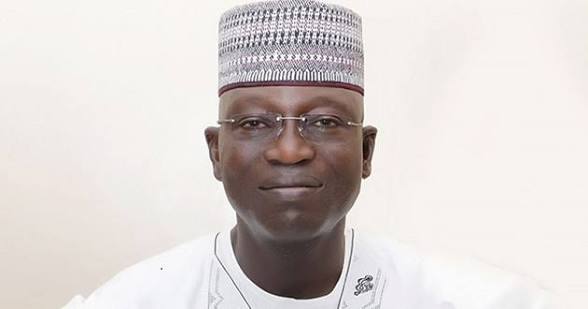
As political realignments gather pace ahead of Nigeria's 2027 general election, the defection of former Inspector-General of Police Suleiman Abba from the All Progressives Congress (APC) to the Peoples Democratic Party (PDP) underscores how parties are positioning themselves for an increasingly competitive electoral cycle. Beyond the symbolism of a high-profile defection, the move reflects the growing contest for influence in northern Nigeria.
Former Inspector-General of Police Suleiman Abba formally announced his defection from the APC to the PDP on Saturday during a political rally in Bamaina, the hometown of former Jigawa State Governor Sule Lamido.
Addressing party supporters, Abba said his decision was driven by his ambition to represent Jigawa South-West Senatorial District in the National Assembly.
"I have left the APC for the PDP because I believe this is the platform to deliver real representation for Jigawa South West," he told supporters.
He pledged that, if elected, his legislative priorities would include strengthening security, improving agricultural development, creating employment opportunities for young people, and amplifying the voices of women and farmers.
The event also served as Abba's formal reception into the PDP, with senior party officials and supporters welcoming his entry ahead of preparations for the 2027 elections.
Former Governor Sule Lamido described the development as a significant gain for the opposition party, arguing that Abba's public service background would strengthen the PDP's political appeal across Jigawa State.
Advertisement
Jigawa PDP Chairman Babandi Gumel similarly assured supporters that party structures at ward, local government and zonal levels were ready to integrate Abba and those joining him.
Meanwhile, PDP governorship candidate Mustapha Lamido expressed confidence that the former police chief's arrival would improve the party's electoral prospects in the state.
Most Nigerian media outlets focused primarily on Abba's decision to leave the APC and his senatorial ambition.
Punch highlighted the political significance of the rally and the enthusiastic reception by PDP leaders, presenting the event as part of the party's preparations for 2027.
Other reports placed greater emphasis on the broader trend of defections occurring across northern Nigeria, where political alliances are increasingly shifting long before official campaign activities begin.
What several reports only briefly addressed is the strategic importance of Jigawa within northern electoral politics. The state remains influential in regional voting dynamics, making every high-profile defection politically significant beyond state boundaries.
Abba's move reflects a broader pattern that often emerges before Nigerian general elections, as politicians reassess party platforms based on electoral calculations, internal party dynamics and perceived chances of securing nominations.
Having previously served as Nigeria's Inspector-General of Police, Abba enters partisan politics with national visibility that differs from many first-time senatorial aspirants. While public service experience does not automatically translate into electoral success, it provides political recognition that parties often seek during competitive election cycles.
For the PDP, recruiting prominent figures strengthens efforts to rebuild support in states where electoral contests have become increasingly competitive. For the APC, however, every notable defection raises questions about party cohesion, even though Nigerian politics has historically witnessed movement in both directions between major political parties.
The development also highlights how preparations for 2027 are already extending beyond campaign messaging into strategic recruitment, coalition-building and grassroots mobilisation across northern Nigeria.
Context and Political Background
Political defections have remained a recurring feature of Nigeria's democratic landscape. In previous election cycles—including those preceding the 2015, 2019 and 2023 general elections—several governors, senators and influential political figures changed party affiliations as nomination contests intensified.
Advertisement
Jigawa has frequently played a prominent role in northern political alignments due to its electoral weight and the influence of long-standing political figures such as Sule Lamido.
While individual defections rarely determine election outcomes on their own, they can reshape local party structures, influence campaign strategies and alter calculations in closely contested constituencies.
With more than a year before major party primaries are expected, analysts anticipate further political realignments across Nigeria as aspirants position themselves for nominations and alliances evolve.
Abba's decision marks an early chapter in what is expected to be a prolonged period of political repositioning before the 2027 elections. Whether his defection ultimately translates into electoral success will depend not only on his personal popularity but also on how effectively the PDP consolidates support in Jigawa and responds to future political shifts.
The coming months are likely to reveal whether this move remains an isolated high-profile defection or signals a broader restructuring of political loyalties across northern Nigeria.
You must log in to comment or reply.
Comments