
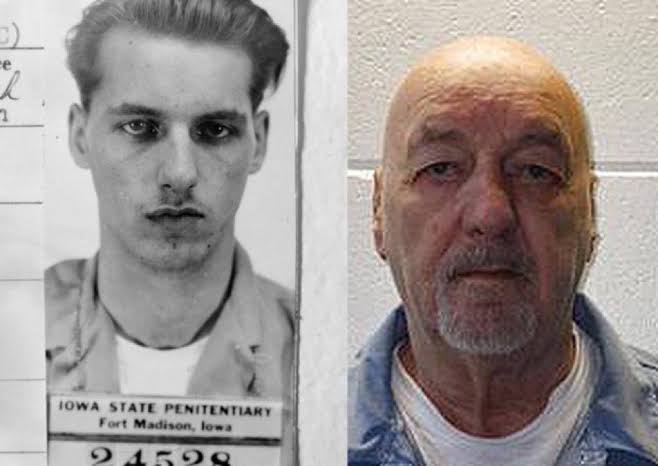
Francis Clifford Smith, the Connecticut man who spent roughly seven decades in state custody after being convicted of a 1949 yacht-club murder, has died at 101.
Smith died on Wednesday, while living under supervised parole at 60 West, a nursing facility in Rocky Hill, Connecticut, according to the Connecticut Department of Correction. His death closes one of the longest prison stories in modern American history, but it does not resolve the central question that followed him for decades: whether he was actually responsible for killing night watchman Grover Hart.
Smith was convicted in 1950 and initially sentenced to death. His sentence was later commuted to life imprisonment after doubts surrounding the prosecution emerged. He continued to maintain his innocence until the end of his life. Importantly, however, his conviction was never overturned, meaning the available record does not establish that he was legally exonerated.
The case began with the July 1949 killing of Grover Hart, a night watchman at the Indian Harbor Yacht Club in Greenwich, Connecticut.
Smith was one of the men arrested in connection with the robbery and killing. Another participant, George Lowden, ultimately accepted a plea arrangement and provided evidence implicating Smith. Smith was subsequently convicted of first-degree murder and sentenced to death.
The prosecution's case did not remain free from doubt.
Over the years, witnesses changed or withdrew parts of their accounts. Another prisoner claimed responsibility for the shooting, while Leo Carroll, an officer involved in Smith's arrest and interrogation, eventually told Connecticut's Board of Pardons that he was not convinced Smith had even been present when Hart was murdered.
Those developments did not produce a new trial or a judicial declaration that Smith was innocent. Instead, his death sentence was ultimately commuted to life imprisonment in 1954.
That distinction is important. There is substantial historical material questioning Smith's conviction, but questioning a conviction is not the same thing as proving wrongful conviction in court.
Smith's case became particularly unusual because Connecticut scheduled him for execution eight times.
The eighth occasion came close to becoming final. According to the Boston Globe's reconstruction of the case, Smith's head was shaved in preparation for the electric chair and a chaplain spent the night with him. The Board of Pardons then considered a final plea for clemency. Carroll's intervention helped persuade the board to spare his life.
The result was a transformation from death-row prisoner to a man serving life imprisonment.
Smith therefore did not literally survive eight completed execution attempts. He was scheduled for execution eight times, with each execution ultimately prevented.
Advertisement
That distinction matters because there was never an execution from which he had to be physically rescued. The repeated execution dates represented successive moments when the state was preparing to carry out the death sentence before legal or clemency developments stopped it.
The most difficult part of Smith's story is the gap between the doubts surrounding the conviction and the absence of a legal exoneration.
There were several developments that raised questions about the original prosecution, including recanted testimony and Carroll's later doubts about Smith's involvement. Another inmate also claimed to have been responsible for the killing.
But none of those developments resulted in Smith receiving a new trial that overturned his conviction.
This leaves two facts existing at the same time:
Smith consistently said he was innocent.
The legal system never formally overturned his murder conviction.
Consequently, describing Smith as an “exonerated prisoner” would go beyond the evidence available in the public record.
A prison sentence that became a lifetime
Smith entered prison as a young man and spent most of his adult life inside the Connecticut correctional system.
There were brief interruptions. In 1967, he escaped from a prison farm and was recaptured after 12 days. He was later released on parole, but returned to custody after violating the conditions of his release.
By the time officials reconsidered his situation decades later, the question was no longer simply how long he should remain incarcerated.
It had become a question of what imprisonment means when a person has become elderly and requires substantial care.
Connecticut reporting says Smith was released from state custody in 2022 and placed at 60 West, a facility that provides housing and care for elderly parolees. Earlier reporting from the same newspaper group stated that the Department of Correction recorded his release in September 2020, illustrating why the precise chronology of his transition from prison to supervised care requires care when reported.
Smith's story is unusual in length, but the problem it illustrates is much broader.
The population of older prisoners in the United States has increased dramatically. A 2025 policy paper reported that people aged 55 and above represented about 15% of the state and federal prison population in 2021, compared with about 3% in 1991.
Research published in JAMA Network Open also found that the number of people aged 55 and older in US prisons increased from an estimated 102,700 in 2008 to about 171,700 in 2022.
Ageing creates challenges that conventional prison systems were not necessarily designed to handle.
Older prisoners have higher rates of chronic illness, disability and cognitive difficulties. A JAMA Network Open study of more than 32,000 incarcerated people aged 55 and older found cognitive difficulty in 15.2% of the prison population studied, compared with 7.1% among older adults in the community after adjustment for demographic characteristics.
That makes cases such as Smith's relevant beyond the question of one man's conviction.
They raise a broader policy question: how should governments balance punishment, public safety, rehabilitation, medical care and compassionate release when imprisonment extends into advanced old age?
The case contains competing considerations that should not be reduced to a simple innocent-versus-guilty narrative.
From Smith's perspective, he maintained that he did not commit the murder. The later changes in testimony and Carroll's intervention provide documented reasons why doubts about his conviction persisted.
From the legal system's perspective, however, Smith remained a convicted murderer. His conviction was not judicially overturned, and his later release was through supervised parole rather than a court declaring him innocent.
There is also a separate public-policy argument.
Advertisement
Officials and researchers have increasingly had to consider how correctional systems should care for people who become extremely old and medically vulnerable while serving very long sentences. Research on older prisoners shows that this is a growing US-wide issue rather than a problem unique to Smith's case.
What Smith's death does not answer
Smith's death means that some questions surrounding the 1949 killing may never receive a definitive answer.
The public record does not establish beyond dispute who fired the fatal shot. It also does not provide a later court judgment overturning Smith's conviction.
There is therefore an important difference between saying “Smith was wrongfully convicted” and saying “there was substantial evidence and testimony that raised doubts about his conviction.”
The second statement is supported by the historical record. The first remains a conclusion that was never established through a successful legal exoneration.
His death also means there will be no further opportunity for Smith himself to provide new testimony or pursue another legal challenge.
There is no indication that Smith's death will produce a new criminal proceeding. His conviction remained legally intact when he died.
The wider issue, however, continues. The number of older people in US prisons has grown substantially, and correctional authorities increasingly have to deal with ageing, disability, chronic illness and end-of-life care inside or alongside the prison system.
Smith's final years illustrate one response: supervised release combined with placement in a facility capable of caring for an elderly former prisoner.
The unresolved historical question is more difficult. More than seven decades after Grover Hart was killed, Smith died without a court formally declaring him innocent.
That leaves his case in an unusual category: a conviction surrounded by longstanding doubts, a death sentence repeatedly stopped, and a life largely spent in custody — but no final judicial answer to the question Smith had asked for most of his adult life.
You must log in to comment or reply.
Comments