
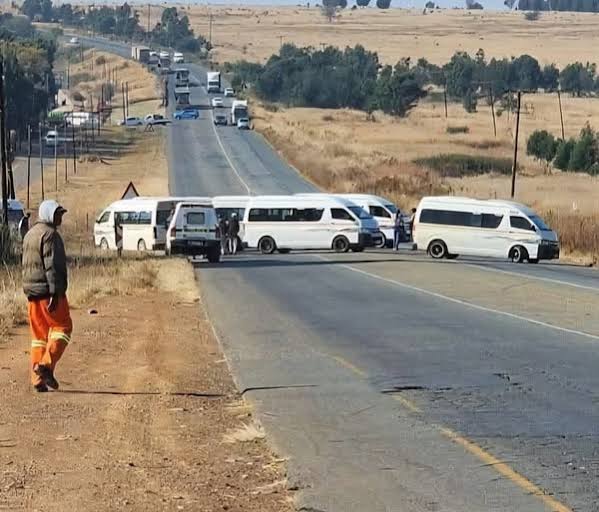
Commuters in Benin City woke up to gridlock and uncertainty as transport operators reportedly took matters into their own hands over rising fuel costs. What appears to be a localized protest signals a deeper strain spreading across Nigeria’s urban transport system.
On March 31, 2026, commercial drivers operating along Upper Sakponba Road in Benin City, Edo State, reportedly blocked sections of the road in protest against the sharp increase in petrol prices, now hovering around ₦1,300 to ₦1,350 per litre.
The disruption, observed at key points including Aifuwa Street and Pioneer Junction, left many commuters stranded, forcing some to trek long distances. Passengers travelling through major routes such as Ring Road, Oka Market, and Idogbo were particularly affected as drivers allegedly demanded immediate fare adjustments or asked passengers to disembark.
Transport fares across affected routes have already risen significantly. Trips previously costing between ₦500 and ₦700 are now priced between ₦800 and ₦1,000, reflecting the pressure on operators struggling to stay afloat.
Advertisement
However, a closer look shows this is not just about a single protest—it reflects a broader economic tension building within Nigeria’s informal transport sector.
Beyond the roadblocks, the real pressure point is economic survival. Commercial drivers operate on thin margins, balancing fuel costs, vehicle maintenance, and daily remittances to vehicle owners.
With petrol prices jumping from around ₦870 to over ₦1,300 per litre in a short period, the cost structure of urban transport has fundamentally shifted. Yet passenger income levels have not adjusted at the same pace, creating a direct conflict between affordability and sustainability.
What makes this more complex is the absence of a coordinated pricing system in Nigeria’s transport sector. Fare increases are often enforced informally, leading to friction between drivers and commuters.
This dynamic is not unique to Edo. Similar tensions have surfaced in cities like Lagos, Ibadan, and Abuja whenever fuel prices spike sharply, often resulting in sudden fare hikes, route disruptions, or protests by transport unions.
Nigeria has faced repeated fuel-related shocks, particularly following subsidy removals and supply disruptions. In previous cycles—such as in 2016, 2020, and 2023—sharp increases in petrol prices triggered immediate transport fare adjustments and, in some cases, protests.
Current trends suggest a familiar pattern:
• Fuel price volatility drives transport cost inflation
Advertisement
• Transport inflation feeds into food and commodity prices
• Urban households absorb the shock through reduced mobility or higher daily expenses
In practical terms, a ₦300–₦500 increase in daily commuting costs can significantly impact low- and middle-income earners, especially in cities where public transport is the primary mode of movement.
You must log in to comment or reply.
Comments