
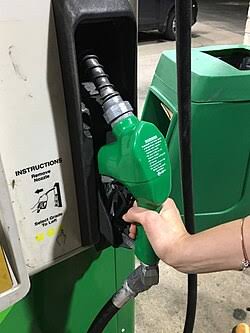
Motorists in parts of Nigeria are beginning to see modest relief at the pump after several months of steep increases in petrol prices. A number of retail stations have quietly adjusted their pump prices downward, reflecting competitive pressure in the downstream market and shifts in global crude oil prices.
While the reductions are small, they highlight how quickly local fuel prices can react to international energy dynamics and domestic market competition.
Recent checks across several fuel stations show that some marketers have reduced the price of Premium Motor Spirit (petrol) in a move largely driven by competition.
Stations operated by Ranoil and Empire Energy reportedly lowered their pump prices to about ₦1,370 and ₦1,383 per litre, respectively. The adjustments represent reductions of roughly ₦70 and ₦37 per litre compared with their previous prices.
Industry operators say such price changes are common in Nigeria’s deregulated downstream sector, where retailers frequently adjust prices to remain competitive.
At other stations, petrol is currently selling at similar levels. Outlets operated by Nigerian National Petroleum Company Limited have been dispensing petrol at around ₦1,361 per litre, while MRS Oil Nigeria Plc stations sell at approximately ₦1,367 per litre in several locations.
Advertisement
However, prices still vary widely across cities and independent filling stations depending on supply costs and transportation expenses.
Fuel marketers say the price reductions reflect intense competition in Nigeria’s retail fuel market.
A station manager who declined to be named explained that retailers are under pressure to keep prices attractive to motorists, especially in major urban centres where customers can easily compare prices between nearby stations.
Nigeria’s petrol market has become increasingly competitive since the removal of fuel subsidies, with marketers adjusting prices frequently in response to depot costs, exchange rates, and supply conditions.
This means pump prices are no longer fixed nationwide but instead fluctuate depending on market realities.
The adjustments also come as international oil prices show signs of easing.
Benchmark crude prices recently declined, with Brent crude trading around $100 per barrel and West Texas Intermediate (WTI) around $88.85 per barrel, according to global energy market data.
Analysts say the drop was partly linked to diplomatic signals suggesting possible de-escalation in Middle East tensions, including talks involving the United States and Iran.
Because petrol sold in Nigeria is tied to global crude prices and import costs, any sustained decline in oil prices could gradually translate into lower fuel costs domestically.
The slight reductions have also triggered speculation that supply prices from the Dangote Refinery could ease if crude prices continue to decline.
The refinery’s petrol loading price reportedly stood at about ₦1,245 per litre in recent weeks following several adjustments earlier in March.
Advertisement
Any change at the refinery level often cascades through the supply chain, influencing depot prices and eventually retail pump prices.
However, energy analysts caution that exchange-rate volatility and logistics costs remain major factors that could limit how much prices fall in the short term.
Despite the modest reductions, petrol prices remain significantly higher than levels seen before subsidy removal, continuing to weigh heavily on households and transport costs.
Fuel remains one of the most influential price drivers in Nigeria’s economy, affecting transportation, food distribution, and overall inflation.
Even small adjustments therefore attract significant public attention.
You must log in to comment or reply.
Comments