
Fear is spreading quietly across parts of Gombe State after authorities confirmed that 48 young children have been taken out of the state under suspicious circumstances. The children, aged between two and five, are now unaccounted for, raising fresh concerns about trafficking and internal security.
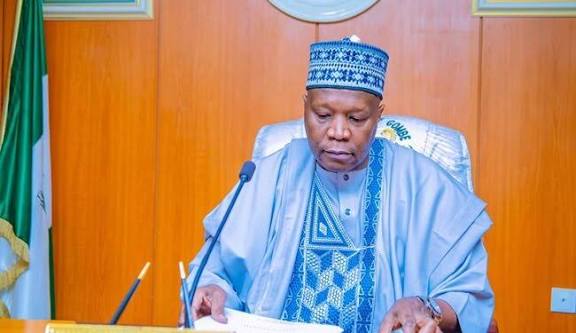
Governor Muhammadu Yahaya disclosed the figures during a Ramadan palliative distribution event on Friday, warning that the children were reportedly moved to unknown destinations while their parents remain in Gombe.
According to the governor, state records show that 48 toddlers were removed from Gombe and transported outside the state. Their current whereabouts remain unclear.
He also linked rising insecurity to the recent relaxation of the motorcycle ban in some areas, citing a separate abduction incident at Orji Estate where a boy was kidnapped but later rescued.
Beyond the security concerns, Yahaya announced that 70,000 residents would benefit from this year’s Ramadan food distribution programme, continuing a welfare initiative his administration says began in 2019.
Advertisement
Child trafficking in parts of northern Nigeria often overlaps with poverty, informal adoption rings, forced labor networks, and illegal migration pipelines. When children as young as two to five disappear, it raises urgent red flags about organized coordination rather than random incidents.
What makes this more complex is that Gombe has not traditionally ranked among the most high-profile trafficking hotspots compared to some border states. If confirmed, this case could signal that trafficking routes are shifting or expanding.
The governor’s linkage of insecurity to motorcycle movement suggests mobility remains a key enabler in abduction cases. However, restricting motorcycles alone may not dismantle trafficking networks if deeper surveillance, border monitoring, and intelligence-sharing systems are weak.
Nigeria has battled trafficking for decades, with thousands of victims identified annually by anti-trafficking authorities. Yet convictions remain relatively low compared to reported cases — a gap that continues to fuel impunity.
Beyond the official statement, parents now face a more immediate fear: whether the children are still within Nigeria or moved beyond its borders. That distinction determines which agencies take control — state police, federal security forces, or international cooperation channels.
Meanwhile, the Ramadan palliative distribution to 70,000 beneficiaries highlights a different side of governance — welfare intervention. But economic hardship itself is often a driver of trafficking vulnerability. In fragile communities, financial desperation can create openings for exploitative recruitment disguised as opportunity.
The intersection of poverty relief and trafficking risk is not accidental. It is structural.
Will investigations identify transport routes and facilitators?
Advertisement
Will inter-state security coordination be strengthened?
Will there be public updates to reassure affected families?
The credibility of the state’s response will depend not just on speeches, but on arrests, recoveries, and transparency.
For now, 48 families in Gombe are waiting.
You must log in to comment or reply.
Comments