
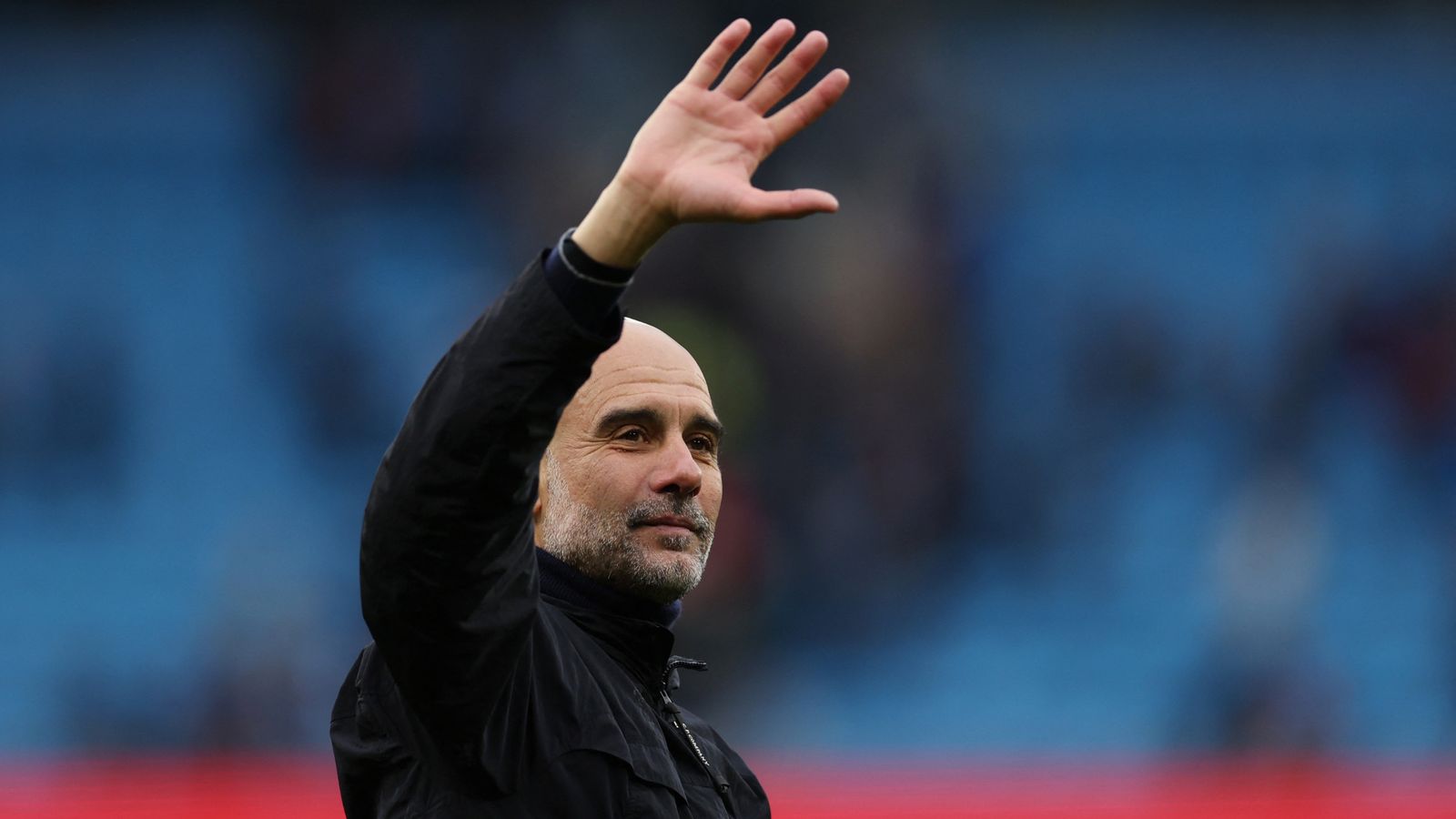
For nearly two decades, teams managed by Pep Guardiola have dominated domestic football across Spain, Germany and England. That dominance is why the small group of managers who have finished above him in a league season continues to attract attention across the football world.
The latest additions to that list — Arsenal manager Mikel Arteta and Liverpool boss Arne Slot — have reignited debates about whether European football is entering a post-dominance phase after years of Manchester City’s control.
A statistical breakdown published by multiple football platforms this week highlighted that only six managers have ever finished a full league season above Guardiola since he began his senior managerial career in 2008.
The managers are:
• José Mourinho – Real Madrid (2011/12)
• Antonio Conte – Chelsea (2016/17)
• Mauricio Pochettino – Tottenham Hotspur (2016/17)
• Jürgen Klopp – Liverpool (2019/20)
Advertisement
• Arne Slot – Liverpool (2024/25)
• Mikel Arteta – Arsenal (2025/26)
According to football statistics reviewed by several European outlets, Guardiola has won 12 league titles in 17 seasons while never finishing below third place.
That consistency across FC Barcelona, Bayern Munich and Manchester City F.C. explains why finishing above him is often treated as a defining achievement for rival managers.
What makes this more complex is that Mikel Arteta is not simply another rival manager. He is Guardiola’s former assistant.
Arteta spent years learning under Guardiola at Manchester City before taking over at Arsenal F.C.. His rise from apprentice to title-winning challenger reflects a broader tactical shift happening in the Premier League.
Unlike Mourinho’s confrontational rivalry or Klopp’s high-intensity pressing revolution, Arteta’s approach mirrors many Guardiola principles while adapting them to a younger Arsenal squad built around aggressive pressing, positional discipline and rapid transitions.
Several football analysts now see Arsenal’s recent success as evidence that Guardiola’s tactical ideas have become so influential that his own football philosophy is now being used to challenge him.
That framing was largely missing from early reports.
Arne Slot’s inclusion on the list also carries wider significance.
After years of Jürgen Klopp versus Guardiola defining the Premier League era, Liverpool’s ability to remain competitive under a new manager suggests the club has successfully navigated one of football’s hardest transitions — replacing a legendary coach without collapsing competitively.
At Liverpool F.C., Slot inherited pressure, expectations and a fanbase accustomed to title races. Yet his success during Manchester City’s downturn has strengthened discussions about whether Guardiola’s current squad cycle is reaching its limits.
Beyond the headline statistic, the real football story may be the growing vulnerability of a City side once considered almost untouchable domestically.
Despite the growing list of challengers, Guardiola’s overall numbers remain extraordinary.
Across Spain, Germany and England, he has consistently built title-winning sides while influencing modern football tactics globally. From Barcelona’s possession-heavy dominance to City’s positional control system, Guardiola’s teams have shaped how elite football is coached.
Historically, very few managers in modern football have maintained league dominance across multiple countries for this long.
Advertisement
That context matters because it explains why managers who finish above Guardiola are immediately elevated into major football conversations.
José Mourinho’s 2011/12 Real Madrid side remains remembered for breaking Barcelona’s dominance with a record 100-point La Liga campaign. Klopp’s Liverpool title in 2019/20 ended City’s domestic control after one of the closest Premier League races in history the previous year.
Now Arteta and Slot are becoming part of that same conversation.
Yet the deeper issue is no longer whether Guardiola can win another title. It is whether Manchester City can successfully rebuild while rivals continue evolving.
The Premier League has become younger, tactically sharper and more financially competitive. Arsenal have matured into consistent contenders, Liverpool remain structurally stable, and other clubs continue investing heavily in recruitment and analytics.
What authorities at City do next — particularly in recruitment, squad renewal and tactical evolution — may determine whether this period becomes a temporary decline or the beginning of a broader power shift in English football.
For Guardiola, the statistic may still favor him overwhelmingly. But the fact that more managers are beginning to break through suggests the gap is narrowing.
You must log in to comment or reply.
Comments