
For Nigerian households already dealing with the cost of transportation, food and other daily expenses, the debate over petrol pricing is more than a political argument. It is a question of how much families, workers and businesses ultimately spend to move people and goods.
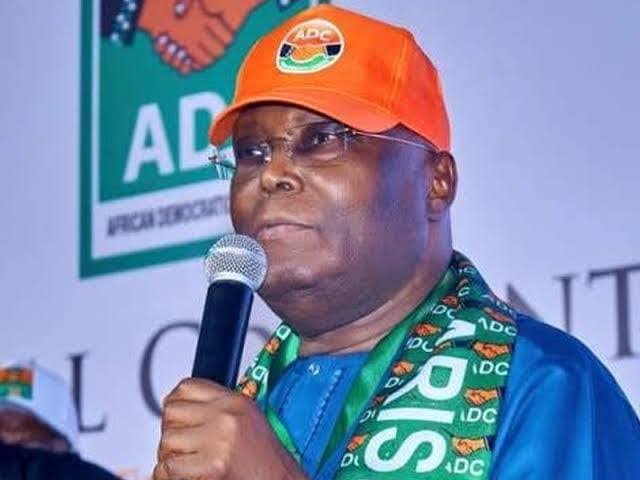
That debate has returned to the spotlight after former Vice President Atiku Abubakar defended his proposal for a targeted fuel subsidy and challenged President Bola Tinubu’s position that petrol subsidy had been removed.
Atiku says his proposed intervention would be different from Nigeria’s previous subsidy system, which he described as opaque and prone to abuse. He is proposing a system that would be capped, transparently budgeted, independently audited and eventually phased out.
Atiku, the presidential candidate of the African Democratic Congress, made the argument in a statement issued in Abuja on Sunday through his Senior Special Assistant on Public Communication, Phrank Shaibu.
He challenged the Federal Government's description of subsidy removal by pointing to figures contained in the Nigerian National Petroleum Company Limited's audited accounts.
According to Atiku, NNPCL recorded approximately ₦4.84 trillion in energy-security expenses in 2023 and about ₦7.13 trillion in 2024.
Atiku argued that part of these expenses represented government intervention in the petroleum pricing system, particularly the difference between the regulated petrol price and the cost associated with importing the product.
He said the terminology used by government did not change the economic effect on public finances.
“Nigerians do not eat semantics.”
Atiku's position is that whether such expenditure is described as subsidy, under-recovery, shortfall or energy security, the important question is whether public funds were being used to bridge a gap between the economic cost of petrol and the price paid by consumers.
However, the figures should not automatically be interpreted as proof that the entire ₦7.13 trillion was a petrol subsidy. The NNPCL expense is broader, and Atiku is using the accounts to challenge the government's characterization of the subsidy issue.
Fuel prices affect more than motorists.
Advertisement
Petrol is an important input into Nigeria's transportation system and many small businesses. When transport costs change, the effect can reach workers travelling to their jobs, students commuting to school, traders moving goods and businesses paying for logistics.
That means the disagreement over whether government should provide targeted assistance is ultimately connected to household budgets.
Atiku's argument is that government intervention should focus on consumers facing high costs rather than returning to the broad subsidy arrangement of the past.
His proposal would be targeted, capped and budgeted, with independent auditing and a defined exit mechanism.
He also linked the proposal to increased domestic refining, greater competition, mass transportation and measures intended to improve household purchasing power.
The argument over oil-industry incentives
Atiku also questioned the government's use of fiscal incentives for oil producers while opposing wider consumer support.
He pointed to Nigeria's deep-offshore oil and gas incentive framework, under which qualifying petroleum developments can receive production tax credits subject to the applicable rules.
The former vice president used those incentives to argue that government already intervenes in the market when it believes intervention can encourage investment.
His criticism is that similar consideration should be given to Nigerian households dealing with high energy and transportation costs.
That comparison, however, is Atiku's political and economic argument, not an established finding that the two policies have identical purposes or fiscal effects.
No independently verified personal testimony from affected Nigerian families, workers or businesses was included in the material reviewed for this report.
It would therefore be misleading to attribute specific experiences or financial difficulties to unnamed Nigerians.
The clearest verified position comes from Atiku himself.
He said his proposed model would be different from the previous subsidy regime because it would have spending limits, transparency requirements and independent oversight.
He also called for disclosure of petroleum tax concessions, including their beneficiaries and the amount of revenue the government had forgone.
Nigeria's petrol-subsidy debate has continued since President Tinubu announced the removal of the subsidy in May 2023.
The disagreement has increasingly shifted from the simple question of whether subsidy should exist to a more complicated question: what form, if any, should government assistance take when fuel and transportation costs place pressure on households?
Atiku's proposal attempts to distinguish targeted consumer assistance from the previous system.
His stated approach combines temporary support with policies intended to expand domestic refining and transportation alternatives.
The distinction matters because a broad subsidy can require substantial public expenditure, while completely leaving consumers exposed to market prices can increase pressure on household and business budgets.
The challenge for policymakers is therefore not simply choosing between “subsidy” and “no subsidy”, but determining how any intervention would be financed, monitored, targeted and eventually withdrawn.
The issue is relevant to anyone whose daily expenses are affected by transportation and energy costs.
Advertisement
For workers, fuel prices can influence commuting expenses. For students, transportation costs can affect the cost of getting to school. For traders and small businesses, changes in logistics expenses can affect operating costs.
But government support also has a cost.
Money used to support fuel prices is money that could otherwise be allocated to other public priorities. That makes transparency and accountability central to any new subsidy programme.
Atiku's proposal therefore raises two questions for Nigerians: who would receive the benefit, and how would the government prevent the problems associated with earlier subsidy arrangements?
The immediate development is a continuing political and economic debate between Atiku and the Tinubu administration over the appropriate approach to petrol pricing and consumer relief.
Atiku has called for greater disclosure of petroleum tax concessions and has continued to defend his targeted subsidy proposal.
The available reports do not establish that the Federal Government has accepted Atiku's proposal or that a new targeted subsidy programme is being implemented.
For now, the proposal remains part of Atiku's economic policy platform.
The subsidy debate ultimately reaches beyond political speeches and accounting terminology.
Whether government calls an intervention a subsidy, energy-security expense or another form of support, the questions that matter to Nigerians are practical: how much will they pay for transportation and essential goods, who will receive government assistance, how much will it cost taxpayers, and how transparently will the system be managed?
Those questions will remain central as the debate over Nigeria's fuel-pricing policy continues.
You must log in to comment or reply.
Comments