
For Nigerians who cast their ballots expecting their votes to determine who represents them, an election does not necessarily end when polling closes. Disputes can continue through legal proceedings, with courts sometimes asked to determine whether an election complied with electoral rules and who should ultimately hold office.
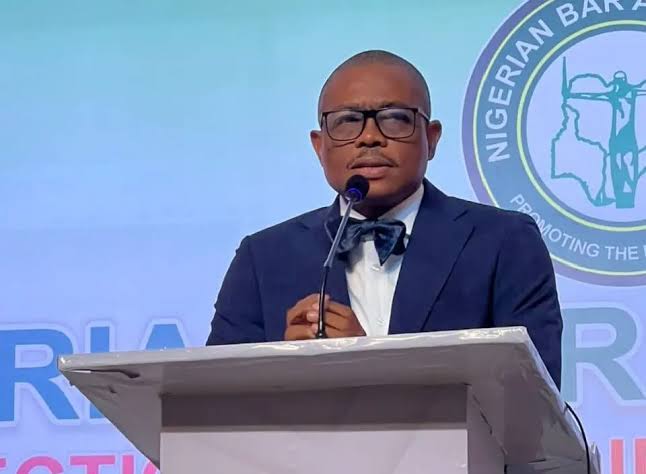
Former Nigerian Bar Association president, Afam Osigwe, SAN, has raised concerns about this growing reliance on the courts, saying Nigeria is among the countries with the highest numbers of election petitions and warning that the electoral process should ultimately allow voters, rather than prolonged litigation, to determine their representatives.
Osigwe spoke on September 24, 2026, at the 22nd Annual All Nigeria Editors Conference in Enugu, where he presented a paper on “Election Petition in the Digital Age: Independence, Evidence, BVAS and the Courts.”
He said the difficulty of proving alleged electoral malpractice and non-compliance with electoral laws has contributed to the increasing involvement of courts in election disputes.
“I see that Nigeria is one of the countries with the highest number of election petitions, and all because the courts are very frequently involved in determining either the outcome or who won,” Osigwe said.
He also referred to what he called the “judicialization of the electoral process”, a situation in which courts increasingly become involved in determining electoral outcomes rather than simply resolving legal questions arising from elections.
The statement is Osigwe's assessment; the reports reviewed do not provide an independent global dataset establishing Nigeria's exact ranking in election petitions.
The issue matters to voters because the outcome of an election can remain contested after ballots have been cast and results announced.
Advertisement
Osigwe linked declining voter participation partly to a perception among some citizens that their votes may not ultimately determine who takes office. He also raised concerns about violence, voter suppression, vote-buying and the recruitment of young people for electoral violence, saying such practices can weaken confidence in elections.
For voters, the wider issue is therefore not only who wins an election. It also concerns whether citizens believe the voting process, counting, collation and legal review provide a credible route from the ballot box to political representation.
Election technology has added another layer to the process.
Nigeria introduced smart-card readers in 2015 and later deployed the Bimodal Voter Accreditation System (BVAS) and the INEC Result Viewing Portal (IReV) as part of its electoral technology.
Osigwe argued that technology intended to improve transparency should not create additional difficulties for people challenging an election result.
He particularly questioned the evidentiary requirements surrounding BVAS records. The Sun reported his example that a petitioner challenging a state-wide election could face demands involving BVAS records from numerous polling units while operating under strict legal timelines.
He also argued that IReV should receive greater recognition as evidence in election litigation, although he did not say it should replace the primary evidence of election results.
Election petitions operate under strict legal deadlines. That means candidates who believe an election was improperly conducted may have a limited period to gather documents, witnesses and other evidence needed to support their cases.
Osigwe questioned how petitioners could obtain records held by public institutions when access to some material may depend on court orders, while the petition itself is already subject to statutory deadlines.
He also criticised the treatment of subpoenaed evidence, arguing that judicial interpretations in some cases had reduced the practical usefulness of subpoenas when documents or witnesses could not be included within the initial filing period.
These issues affect more than the politicians involved in an election dispute. They can determine what evidence reaches the court when the validity of an election is being challenged.
The dispute over election petitions ultimately concerns the connection between a citizen's vote and political representation.
If election disputes are frequently resolved through lengthy legal proceedings, voters may have to wait for courts to determine whether the declared result stands. Osigwe argues that this can contribute to public frustration and declining confidence in the electoral process.
At the same time, election petitions remain an important legal mechanism for candidates and political parties seeking to challenge alleged violations. Courts have a constitutional and legal role in determining electoral disputes, meaning the issue is not whether courts should handle election cases at all, but how electoral disputes can be resolved fairly while preserving the importance of the ballot.
Osigwe also questioned the independence of the Independent National Electoral Commission (INEC), saying the way members of the commission are appointed could affect public confidence in its autonomy.
Advertisement
For voters, confidence in the electoral commission matters because INEC is responsible for administering federal and state elections and managing important parts of the electoral process.
Osigwe's argument is that reforms should address not only the voting process itself but also the institutions and legal rules that determine how disputes are handled afterwards.
Osigwe called for reforms aimed at restoring confidence in Nigeria's electoral and judicial systems. Among the issues he raised were the evidentiary treatment of BVAS and IReV records, the role of INEC regulations, the handling of subpoenas and the broader relationship between voters, electoral institutions and the courts.
No specific government reform arising from his speech was announced in the reports reviewed. His remarks were presented as recommendations and concerns about the existing electoral and judicial framework.
A system that connects the ballot to representation
The central issue raised at the conference is straightforward: after Nigerians vote, how effectively does the system translate those votes into trusted political representation?
Osigwe's position is that courts should resolve genuine electoral disputes without gradually becoming a substitute for the voters themselves. The broader debate now concerns how Nigeria can strengthen its electoral institutions, evidence rules and dispute-resolution processes while preserving the legal right to challenge an election.
You must log in to comment or reply.
Comments