
 For voters in Osun State, the August 15 governorship election ended with a result that changed who would lead the state. For supporters of the ruling All Progressives Congress, it also meant accepting a defeat in a state where the party had hoped to win.
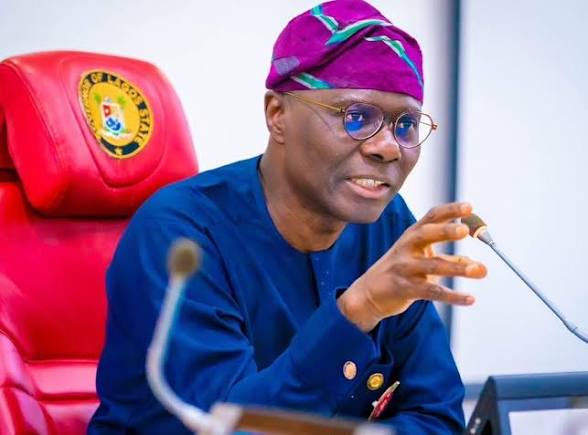
Lagos State Governor Babajide Sanwo-Olu says President Bola Tinubu’s response to that outcome is important because, in his view, it shows that Nigeria’s democratic process is becoming stronger.
Governor Ademola Adeleke, who contested on the platform of the Accord Party, defeated the APC candidate, Bola Oyebamiji, in the August 15 Osun governorship election.
Adeleke secured 511,067 votes against Oyebamiji’s 444,815, winning by 66,252 votes.
After the election, Tinubu congratulated Adeleke and urged him to unite the people of Osun State. Adeleke later acknowledged Tinubu’s role in providing what he described as a level playing field during the election.
Sanwo-Olu highlighted the episode on Thursday, September 3, during the seventh annual lecture of Freedom Online in Lagos.
He argued that the ability of an opposition candidate to defeat the governing party in a South-West state without the result being overturned demonstrated what he described as a maturing democracy.
Advertisement
“There was a time in this country when ‘federal might’ was a phrase that a ruling party used without irony,” Sanwo-Olu said.
He added that under Tinubu, “the ruling party can lose a state, in the South-West, in an election year, and the sky does not fall.”
For ordinary voters, the significance of the election lies in whether their votes determine who governs them.
The Osun result meant that voters who supported Adeleke helped return him to office despite the APC being the governing party at the federal level.
Tinubu's acceptance of the result and congratulatory message to Adeleke also became part of the political discussion surrounding the election.
However, the claim that the development proves Nigeria's democracy is growing remains Sanwo-Olu's political assessment. It should not be treated as an independently established measure of the country's democratic progress.
Sanwo-Olu described Tinubu as a “lifelong democrat” and said the President intended to leave behind a stronger democratic system.
Adeleke has also publicly acknowledged Tinubu's role in the electoral process, describing the President's conduct as significant to the outcome.
No independent personal testimony from Osun voters was provided in the available source material, so there is no basis for attributing individual voter experiences to the election beyond the confirmed results.
Elections matter to communities because they determine who controls state institutions and makes decisions affecting public services, infrastructure, employment policies, education and other areas of daily life.
The Osun election also demonstrated that an incumbent governor could retain office after contesting under a different political platform from the party controlling the Federal Government.
For voters, the practical issue is not simply which party wins, but whether electoral results are respected and transferred into government through the constitutional process.
Advertisement
The development is relevant to voters because confidence in elections depends partly on whether citizens believe their votes can influence political leadership.
For political parties, the Osun result also shows that electoral competition can produce an outcome different from the preference of the party controlling the Federal Government.
For communities across Nigeria, what follows an election can therefore be as important as the campaign itself: whether the declared result is accepted, whether political leaders call for unity and whether governance continues after the contest.
Adeleke remains the governor of Osun State following his victory, while the political parties involved continue their activities ahead of future elections.
Sanwo-Olu's comments are part of the continuing national debate over the state of Nigeria's democracy and the conduct of elections.
The Osun election has become more than a contest between two candidates in the eyes of political observers. For Sanwo-Olu, the acceptance of the result by the Federal Government represents an important democratic development. For voters, the central issue remains whether elections consistently provide a credible way for them to choose who governs them.
You must log in to comment or reply.
Comments