
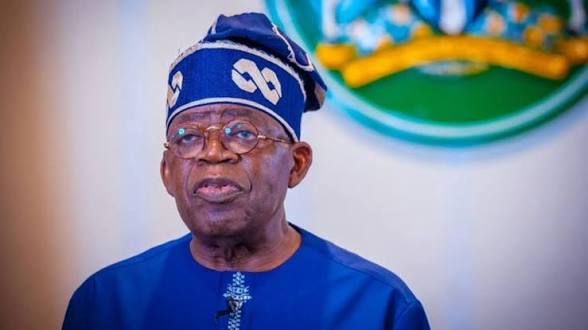
For Nigerians preparing to choose their leaders in 2027, the latest political argument is not only about who will win the next election. It is also about whether the ruling APC can convince the country that its hold on power will continue beyond President Bola Tinubu’s possible second term.
Former Zamfara State governor Abdul’Aziz Yari triggered the debate after saying the All Progressives Congress (APC) would remain in power beyond 2031, shortly after being appointed Director-General of Tinubu’s 2027 Presidential Campaign Council.
Yari made the statement at the Nnamdi Azikiwe International Airport in Abuja after returning from an overseas trip.
His comments came shortly after his unveiling as Director-General of Tinubu’s campaign council and were presented as a strong expression of confidence in the President’s 2027 re-election bid and the APC’s longer-term political prospects.
The statement immediately drew responses from opposition parties, which rejected the suggestion that the 2027 election—or APC’s political future beyond it—had already been decided.
The PDP National Publicity Secretary, Jungudo Haruna Mohammed, said Yari should concentrate on delivering the assignment he had been given.
“At the moment, he should focus more on how he can deliver on the mandate given to him before talking about 2031,” Mohammed said.
Advertisement
He also rejected any suggestion that the opposition had conceded the next election to Tinubu or APC.
“As to whether the opposition has already conceded 2027 to Mr President or is even conceding power to the APC beyond 2031, no, no, no, not at all,” he said.
The African Democratic Congress (ADC) also challenged Yari’s prediction.
ADC National Publicity Secretary Bolaji Abdullahi said Yari was trying to justify his new appointment, describing the 2031 projection as part of that effort.
“He’s one of those lying to the President. We understand he needs to justify his new appointment,” Abdullahi said.
ADC National Chairman David Mark, through his media aide Kola Ologbondiyan, described Yari’s projection as “wishful thinking” and questioned what APC would present to Nigerian voters during the 2027 election.
“APC and its president, Bola Ahmed Tinubu, have no message to present to Nigerian voters. How can he fathom a win in an election where they can’t communicate with the people?” Mark asked.
These statements represent political positions from opposition figures and should not be treated as independent assessments of APC’s electoral strength.
The argument matters because political parties are already positioning themselves for the 2027 presidential election.
For voters, the immediate issue is not whether any party can guarantee victory in 2027 or beyond. Nigeria’s elections are ultimately decided through votes, and political predictions made before an election cannot determine the result.
For politicians and political organisations, however, public confidence can influence how parties present themselves, recruit supporters and build campaign structures.
Yari’s statement therefore forms part of the early political contest over which party can project itself as capable of winning.
The opposition's response shows that PDP and ADC do not want APC's confidence to become accepted as evidence that the 2027 contest is already settled.
The 2027 election will affect the government that makes decisions on issues that directly touch Nigerians, including jobs, education, healthcare, infrastructure, security and the cost of living.
Advertisement
That makes the political debate more than a disagreement between party officials.
However, claims about which party will remain in power should be treated as campaign positions rather than established outcomes. Nigerians will ultimately assess the competing parties, candidates and their policies before casting their votes.
The confirmed development is that APC has begun organising its campaign structure ahead of the 2027 presidential election, with Yari serving as Director-General of Tinubu’s campaign council.
Opposition parties are also responding and positioning themselves for the coming contest.
The political debate over APC’s future beyond 2031 is therefore likely to remain part of the wider campaign conversation, but the eventual electoral outcome remains undecided.
Yari’s prediction has started an early argument over political dominance, but neither a campaign official’s confidence nor an opposition party’s rejection can determine what Nigerian voters will decide at the ballot box.
You must log in to comment or reply.
Comments