
Hiring thousands of teachers can address a visible staffing problem, but recruitment alone does not determine whether pupils and students will receive better education. Imo State’s latest move therefore deserves attention not only for its scale, but also for what follows: deployment, classroom performance, funding and the ability of the school system to retain the gains.
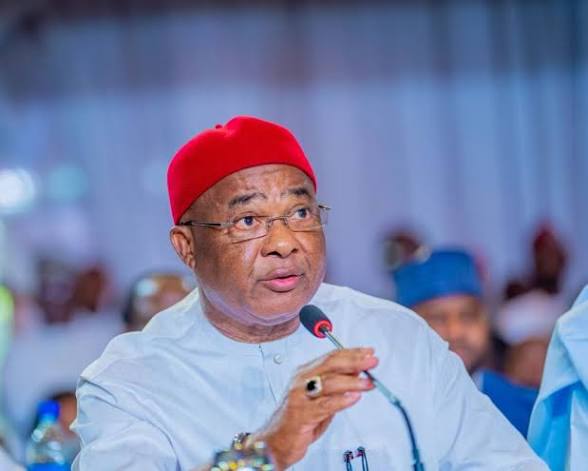
Imo State Governor, Hope Uzodimma, has approved the recruitment of 6,030 teachers for public primary and secondary schools across the state.
The development was announced in Owerri on September 23, 2026, by the Commissioner for Information, Public Orientation and Strategy, Declan Emelumba.
According to the commissioner, the recruitment is intended to fill existing vacancies and prevent gaps in teaching and learning across Imo State’s 27 local government areas.
The newly recruited teachers had completed a six-week intensive training programme at the state-owned Ben Uwajumogu College of Education, Ihitte Uboma.
Emelumba said the governor would personally address the teachers at the Emmanuel Iwuanyanwu International Conference Centre in Owerri on September 24 at 10am. Attendance, according to the announcement, is restricted to teachers who participated in the training programme at Ihitte Uboma.
The September announcement follows an earlier government disclosure that the wider employment exercise covers 6,375 teaching and non-tutorial staff. Of that figure, 6,030 are teachers, with the teacher appointments previously described as subject to further internal verification.
Advertisement
The scale of the recruitment matters because teacher shortages can directly affect classroom sizes, workload and the ability of schools to provide regular instruction.
But the number of recruits should not become the only measure of the policy's success.
A teacher added to the payroll does not automatically translate into improved learning outcomes. The more consequential questions are whether teachers are posted to schools where vacancies actually exist, whether the subjects they teach correspond with student needs, and whether schools have the infrastructure and learning materials required to make additional staffing effective.
The six-week training programme is therefore a significant part of the story. It indicates that the state has attempted to place training between selection and deployment rather than treating recruitment as purely an administrative exercise. The longer-term value of that preparation, however, will ultimately depend on how the teachers perform once they enter classrooms.
The distinction between 6,030 teachers and 6,375 total teaching and non-tutorial personnel is also important. Reporting the larger figure simply as teacher recruitment would blur the composition of the exercise. The available reports make clear that the two numbers refer to different categories of workers.
The state government's framing is straightforward: existing vacancies need to be filled, and bringing thousands of trained teachers into the system should strengthen teaching and learning across the 27 LGAs. Emelumba described the exercise as part of a broader effort to strengthen education in Imo State.
The alternative policy perspective is that recruitment should be judged alongside what happens after appointment. From that standpoint, questions about transparent verification, deployment, remuneration, supervision, school facilities and measurable learning outcomes become just as important as the headline number of recruits.
There is no necessary contradiction between the two perspectives. A state can increase its teaching workforce while still needing to demonstrate that the additional personnel are reaching the classrooms where they are required and producing sustainable improvements.
The earlier announcement also provides an important qualification: the 6,030 teacher figure was reported as subject to internal verification. That means the recruitment process should be followed through its documentation and deployment stages before the final impact can be assessed.
For Imo families, the immediate significance is practical. More teachers could mean greater staffing capacity in schools, particularly where existing personnel are carrying heavy workloads or where vacancies have disrupted instruction.
For the state government, the exercise also creates a continuing financial and administrative obligation. Recruiting thousands of workers is not a one-time education intervention. Salaries, training, supervision, postings and professional development become recurring responsibilities.
That makes implementation particularly important.
If recruitment is followed by effective deployment and adequate support, the additional workforce could strengthen the capacity of public schools. If teachers are recruited but schools remain constrained by inadequate facilities, materials or uneven distribution, the numerical increase may not produce the same level of improvement expected from the headline figure.
The issue therefore extends beyond Imo. Across Nigeria, debates about education frequently focus on how many teachers are employed, while the harder question is how recruitment translates into classroom outcomes.
Advertisement
The immediate next stage is the transition from training and recruitment to actual deployment.
The September 24 meeting between Governor Uzodimma and the newly recruited teachers will provide an opportunity for the state to communicate expectations and the next steps in the process. More important for the public, however, will be the details that emerge afterward: where the teachers are posted, when they formally begin work and how the state monitors their performance.
The government's earlier announcement also indicates that the wider exercise involves 6,375 teaching and non-tutorial personnel. Clear communication about the categories, verification process and employment documentation will therefore remain important as the exercise progresses.
Ultimately, the significance of Imo's 6,030-teacher recruitment will not be settled by the size of the announcement.
The real test will take place inside classrooms across the state's 27 local government areas. If the new teachers reach genuine vacancies, receive the support required to work effectively and remain part of a properly managed school system, the recruitment could become a meaningful investment in public education.
What happens after the employment letters and official ceremonies will therefore matter as much as the recruitment itself.
You must log in to comment or reply.
Comments