
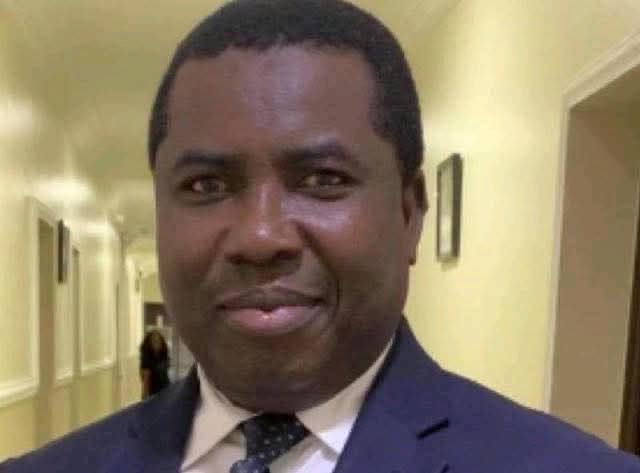
Questions about the political neutrality of Nigeria’s electoral body have resurfaced after an AI-generated response linked the chairman of the Independent National Electoral Commission to a controversial social media account. Yet beyond the online uproar, the absence of verifiable proof is raising deeper concerns about misinformation and public trust ahead of future elections.
On April 12, 2026, a wave of online reactions followed a response from Grok, an artificial intelligence tool developed by xAI. The AI was asked by Bashir Ahmad to verify the origin of a specific X (formerly Twitter) account linked by some users to the INEC chairman, Joash Amupitan.
In its reply, Grok stated that the account—identified by a numerical ID—was created in September 2022 under a username matching the chairman’s name, before later being changed in April 2026. The response quickly fueled speculation that the account may have been operated by the electoral chief prior to his appointment.
However, INEC has publicly denied the claim, insisting that its chairman does not operate any personal X account, directly contradicting the narrative gaining traction online.
Advertisement
However, a closer look shows that the real issue extends beyond the identity of a single X account. It touches on public confidence in democratic institutions and the growing influence of AI in shaping political narratives.
AI tools like Grok are designed to interpret publicly available data, not access private account ownership records. This means their responses can reflect patterns or assumptions, but cannot definitively establish identity. Treating such outputs as proof risks blurring the line between verification and speculation.
For Nigeria, where trust in electoral processes has been repeatedly tested, the implications are significant. Allegations—proven or not—can:
• Undermine confidence in election management
• Fuel partisan narratives
• Deepen political polarization, especially in urban centres like Lagos and Abuja where digital discourse shapes opinion rapidly
Yet the deeper issue is how quickly unverified claims can gain legitimacy when amplified by technology and social media. What begins as a query can evolve into a perceived fact within hours.
Advertisement
Nigeria has faced similar credibility challenges in past electoral cycles, particularly during the 2019 and 2023 elections, where misinformation and digital propaganda played a growing role.
Recent studies show that over 60% of Nigerian internet users rely on social media for political news, increasing exposure to unverified claims. At the same time, AI-generated content is becoming more influential, often outpacing traditional fact-checking mechanisms.
The combination of these trends creates a volatile information environment—one where institutional responses, like INEC’s denial, compete directly with viral narratives.
You must log in to comment or reply.
Comments