
Internal authority struggles inside separatist movements often reveal as much about structure as they do about ideology. In the case of the Indigenous People of Biafra (IPOB), the latest dispute over leadership of its Directorate of State once again raises questions about centralized control, legitimacy, and long-standing fractures within the organisation.
On Friday, IPOB issued a warning against members it accused of defying the authority of its detained leader, Nnamdi Kanu. In a statement signed by its Media and Publicity Secretary, Emma Powerful, the group said disciplinary measures—including suspension, removal from office, and expulsion—would be taken against any faction acting contrary to Kanu’s directives or the organisation’s Code of Conduct.
The statement followed a leadership dispute triggered by the dissolution of the third Directorate of State (DOS), previously led by Chika Edoziem, and the subsequent appointment of a new leadership structure headed by US-based Chris Nwaọgụ. IPOB maintained that Kanu exercised constitutional authority within the movement to carry out the restructuring and reaffirmed that he remains the only figure empowered to appoint or remove principal officers.
The group also declared that the dissolved administration no longer exists and that any decisions made after its dissolution are “null and void.”
This episode reflects a recurring pattern in IPOB’s internal governance structure: the tension between centralized authority and factional autonomy. While IPOB consistently presents itself as a highly structured organisation operating under a strict command hierarchy, periodic leadership disputes suggest a more complex internal reality.
Advertisement
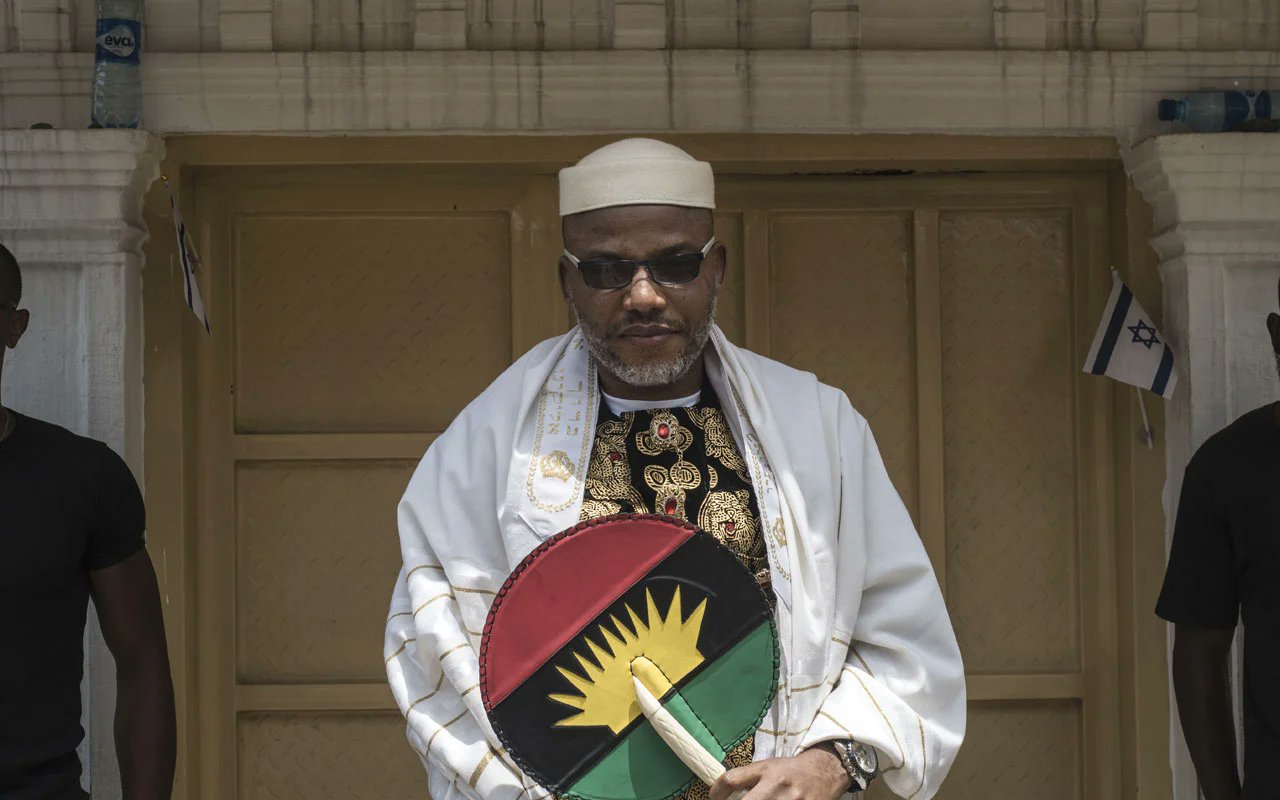
At the centre of the issue is the symbolic and operational weight of Nnamdi Kanu’s leadership from detention. Despite being in custody since his arrest and extradition to Nigeria in 2021, Kanu continues to function as the movement’s ultimate authority figure. This creates a paradox: a leader physically absent but politically central, issuing directives that shape organisational direction across continents.
The current dispute over the Directorate of State is not simply administrative—it is about legitimacy. Control over DOS effectively determines who speaks for the organisation, who enforces discipline, and who shapes its public messaging.
IPOB’s official position
The organisation insists that its internal constitution vests Kanu with supreme authority. From this perspective, the dissolution of the Edoziem-led DOS and appointment of a new leadership is a lawful correction of internal dysfunction and insubordination.
However, rival factions within IPOB and external observers view repeated restructurings as evidence of deepening fragmentation. Critics argue that such disputes expose competing centres of influence, particularly among diaspora-based leaders and ground operatives in Nigeria’s South-East.
While IPOB frames the move as constitutional enforcement, opponents interpret it as a power consolidation strategy that risks further alienating factions already sceptical of central command from detention.
The implications extend beyond internal politics. IPOB remains a significant actor in Nigeria’s South-East security and political landscape. Any internal instability can affect:
• Regional coordination of separatist activities
• Security dynamics in the South-East, already marked by tension and mistrust
Advertisement
• Public perception of IPOB’s cohesion and negotiating strength
For Nigerian authorities, leadership disputes within IPOB may appear to weaken organisational unity, but they can also complicate engagement strategies. Fragmentation often leads to unpredictable actors rather than a single negotiable leadership structure.
At a broader level, the crisis underscores a persistent challenge for long-distance political movements: sustaining command integrity when leadership is physically removed from operational ground realities.
Ultimately, the question is not only who controls IPOB today, but how long a movement built around a detained leader can maintain coherent authority without institutional drift or factional competition redefining its direction. What happens next within the Directorate of State may offer a clearer answer to whether IPOB remains a unified structure—or an increasingly contested network of influence.
You must log in to comment or reply.
Comments