
Thirty-one worshippers abducted during an Easter service in Kaduna have been rescued, highlighting both the speed of military response and the persistent threat facing religious communities in Nigeria’s north.
The rescue operation, confirmed by the Nigerian Army, followed a reported terrorist invasion of a church in Ariko Village, located in Kachia Local Government Area of Kaduna State. While the outcome signals a tactical success, the circumstances surrounding the attack reveal deeper security concerns.
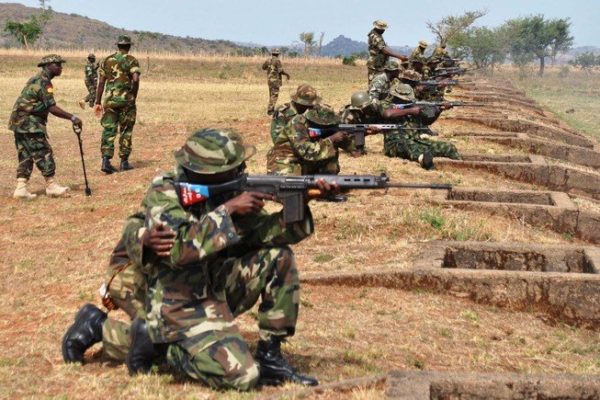
On April 5, 2026, troops responded to a distress call indicating that armed attackers had stormed an ECWA church during an Easter service, abducting dozens of worshippers. According to the Army, soldiers quickly mobilised and, with support from local residents, pursued the attackers into nearby areas. The operation led to a confrontation, forcing the assailants to abandon 31 hostages, including one injured victim who is currently receiving medical attention.
Advertisement
However, a closer look shows that the rescue came at a cost. The military also confirmed the recovery of the bodies of five victims who were killed during the attack, underscoring the violence that preceded the successful intervention. Blood trails along escape routes suggest that some of the attackers may have sustained injuries during the engagement, though no official casualty figures for the assailants were released.
While Punch Newspapers emphasized the successful rescue, other security-focused reports on similar incidents in Kaduna often highlight a recurring pattern: swift military response can save lives, but attacks continue to occur with alarming frequency. That framing leaves out a critical reality — communities in parts of southern Kaduna remain vulnerable despite increased military presence.
Beyond the official statement, the reliance on community intelligence played a decisive role in this operation. Local guidance enabled troops to track fleeing attackers quickly, reinforcing a growing security trend in Nigeria where civilian cooperation is becoming essential in counter-terrorism efforts. Yet the deeper issue is that such collaboration often happens after attacks have already occurred, raising questions about preventive intelligence and early warning systems.
Kaduna State has witnessed repeated attacks on religious gatherings in recent years, particularly in rural communities. In previous incidents, mass abductions during church services resulted in prolonged captivity for victims, with some released only after weeks or months. Compared to those cases, the rapid recovery of 31 worshippers marks a significant operational improvement — but not necessarily a strategic breakthrough.
Advertisement
What makes this situation more complex is the psychological and economic impact on affected communities. In areas like Kachia, recurring attacks disrupt local economies, displace families, and create fear around communal activities, including worship. Farmers, traders, and small business owners often suspend activities after such incidents, compounding hardship in already vulnerable regions.
The Nigerian Army says additional troops have been deployed to reinforce security in the area and prevent further attacks, while pursuit operations are ongoing to track down the fleeing assailants. However, the bigger risk is that without sustained intelligence-led operations and long-term stabilization efforts, such attacks may continue in cycles.
You must log in to comment or reply.
Comments