
Political alliances often begin to take shape long before campaign posters appear on the streets. In Nigeria, declarations of loyalty are rarely just symbolic; they are signals of shifting power structures and preparations for future electoral contests.
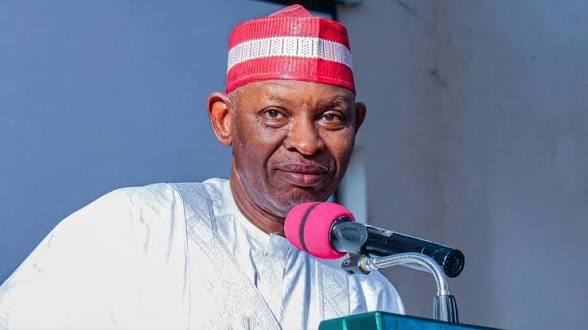
That is why Kano State Governor Abba Kabir Yusuf's public commitment to President Bola Ahmed Tinubu's re-election bid in 2027 deserves attention beyond the immediate headlines. The statement is not merely an endorsement—it is an indication that political forces in one of Nigeria's most influential states are already positioning themselves for the next presidential contest.
Governor Yusuf made the declaration during an interactive meeting with elected and appointed government officials at the Coronation Hall of the Government House in Kano on Saturday.
According to a statement issued by his spokesperson, Sunusi Bature Dawakin Tofa, the governor said Kano would play a leading role in delivering massive votes for President Tinubu and the All Progressives Congress (APC) in the 2027 general elections.
"We have no apology for supporting President Bola Ahmed Tinubu. His re-election is a collective responsibility of every party member and government official," Yusuf reportedly said.
The governor also directed all political appointees who had not yet registered with the APC to do so immediately and reiterated his administration's commitment to securing victory for the party across presidential, governorship, legislative and local government elections.
Advertisement
As part of the meeting, Yusuf approved the allocation of plots of land and a payment of N100,000 each to more than 300 political aides.
Meanwhile, Speaker of the Kano State House of Assembly, Ismail Falgore, said the APC had no reason to apologise for promoting the achievements of President Tinubu, while Kano APC Chairman Umar Haruna Doguwa declared that "the battle line has been drawn" with the Kwankwasiyya movement.
Kano is not just another state in Nigeria's electoral map. It is one of the country's most populous states and has historically played a decisive role in presidential elections.
By publicly aligning himself with President Tinubu's re-election effort, Governor Yusuf appears to be sending two messages simultaneously. The first is directed at the presidency—that Kano remains politically valuable and intends to maintain strong ties with the federal government. The second is aimed at local political actors, signalling that preparations for 2027 have effectively begun.
The endorsement also reflects the increasing importance of political realignments in Nigeria's democracy. Governors often serve as major vote mobilisers, and their support can influence party structures, campaign funding and grassroots organisation.
However, political endorsements made years before an election are also strategic calculations. They are intended to shape narratives, consolidate alliances and discourage potential challengers.
Supporters of the governor's position argue that backing President Tinubu is a practical political decision. They point to ongoing federal projects and the need for strong cooperation between Kano and the central government. From this perspective, early mobilisation could help the APC maintain its dominance and provide political stability.
Critics, however, may view the declaration differently. They could argue that it is too early to frame the 2027 election as a settled contest, especially when Nigerians are still debating economic reforms, inflation, unemployment and the broader impact of government policies.
There is also the question of whether public officials should focus on electoral calculations so far ahead of an election cycle. Opponents may contend that governance, rather than campaign preparation, should remain the immediate priority.
The contrasting narratives underline a recurring feature of Nigerian politics: political endorsements often generate as much debate about timing and motivation as they do about electoral prospects.
The governor's statement may have consequences beyond Kano.
Politically, it could accelerate the formation of alliances and counter-alliances across northern Nigeria as parties begin positioning for 2027.
Advertisement
Within the APC, it strengthens the perception that President Tinubu is already securing support from influential political figures ahead of any formal campaign season.
For opposition movements, the declaration may serve as a reminder that the battle for voter mobilisation has already begun, particularly in strategic states where electoral margins can determine national outcomes.
For ordinary Nigerians, however, the larger question remains whether political energy devoted to future elections will translate into improved governance, economic recovery and better living conditions before voters return to the polls.
Ultimately, the question is not whether politicians are preparing for 2027—that process has clearly begun. The real issue may be whether early political manoeuvring will produce better governance or simply intensify the competition for power.
What happens in Kano over the next year could offer an early indication of how Nigeria's next presidential race will unfold, and whether political endorsements today can genuinely shape the electoral realities of tomorrow.
You must log in to comment or reply.
Comments