
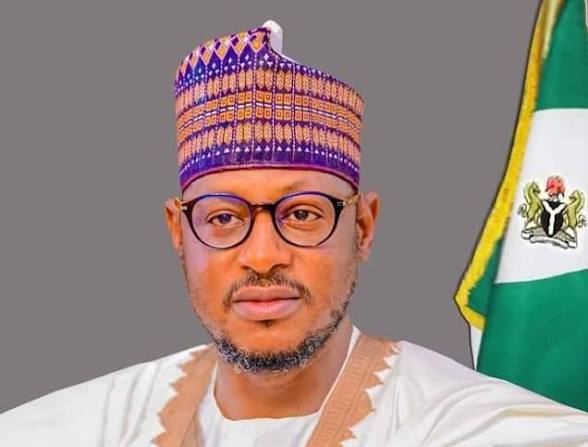
 A budget is ultimately judged less by the size of its headline figure than by what citizens can see after the money has been spent. Katsina Governor Dikko Radda’s proposed ₦828.64 billion 2027 budget makes a clear choice in favour of capital investment, but that choice also raises a harder question: can the state convert ambitious allocations into projects and services that materially improve everyday life?
The answer will depend not only on how the House of Assembly considers the proposal, but on the state's ability to finance and execute it consistently.
Governor Dikko Radda presented the proposed ₦828.64 billion 2027 budget to the Katsina State House of Assembly on Tuesday, September 8, 2026.
The proposal, titled “Building Your Future IV,” allocates ₦637.91 billion, or 76.98 per cent, to capital expenditure, while ₦190.73 billion, or 23.02 per cent, is earmarked for recurrent spending.
The proposed budget is about ₦69.23 billion lower than Katsina's approved 2026 budget. Radda said the reduction reflected a more cautious assessment of expected revenue and expenditure.
The governor said the budget was developed using a “pragmatic, disciplined and realistic” approach, with government agencies required to justify spending against available resources and the administration's development priorities.
The proposal was also influenced by citizen consultations conducted across the state's 361 wards, according to the governor. He said each ward would receive a special project selected by residents.
The largest sectoral allocation is ₦317.73 billion for the Social Sector, followed by ₦303.17 billion for the Economic Sector. Administration receives ₦198.55 billion, while Law and Justice receives ₦9.19 billion.
Five priority areas account for ₦325.45 billion of capital spending:
- Basic and Higher Education — ₦83.82 billion
- Works and Housing — ₦71.60 billion
- Agriculture and Livestock — ₦65.88 billion
Advertisement
- Health — ₦53.64 billion
- Rural Development — ₦50.51 billion
The governor also reviewed implementation of the 2026 budget, reporting total expenditure of ₦295.19 billion, or 32.88 per cent of the approved budget, as of August 28, including ₦193.02 billion in capital expenditure.
The most striking feature of Katsina's proposal is not simply its ₦828.64 billion price tag. It is the decision to put nearly three-quarters of the spending plan into capital projects.
That suggests a government attempting to prioritise physical infrastructure and development rather than allowing recurrent expenditure to dominate the budget.
On paper, the priorities are straightforward. Education, healthcare, agriculture, roads, housing and rural infrastructure are areas where government investment can have direct consequences for households and businesses.
The proposed allocation also reflects the economic structure of the state. Agriculture remains important to livelihoods, while better roads and rural infrastructure can determine how easily farmers reach markets and how communities access public services.
But a capital-heavy budget creates its own test.
Large allocations are meaningful only if government can procure, execute and complete projects. A road that remains unfinished, a school rehabilitation programme that stops midway or medical equipment that cannot be maintained does not deliver the same value as the budget allocation suggests.
That is why the governor's own review of the 2026 budget is important. With only 32.88 per cent of the approved budget reportedly spent by August 28, the administration still faces the challenge of accelerating implementation before the end of the fiscal year.
The government's explanation is that spending will rise as projects progress through the third and fourth quarters. That is possible, but it also makes execution the central measure against which the administration's fiscal claims should be assessed.
The government's argument is that the 2027 budget is more realistic because it was prepared around available resources rather than simply setting an ambitious spending target. Radda also presents the citizen consultation process as evidence that the budget reflects demands from communities rather than decisions made solely within government offices.
There is another way to read the same figures.
A smaller overall budget does not automatically mean greater fiscal discipline. What matters is whether projected revenue materialises and whether capital projects are completed within their budgets and timelines. Similarly, asking residents what they want does not by itself guarantee that those priorities will be delivered.
The administration can therefore point to the consultation process, the capital allocation and its sectoral priorities as evidence of a development-oriented budget.
Critics, however, would reasonably focus on implementation, transparency and measurable outcomes rather than allocations alone.
Both perspectives can be true at the same time. A government can have sound priorities and still struggle with execution.
There is also a political layer to the presentation.
Speaker Nasir Yahaya Daura praised the administration and said the Assembly would move quickly to consider the proposal. He also expressed support for Radda's second-term ambition as well as President Bola Tinubu and APC candidates ahead of the 2027 elections.
That makes the budget presentation more than a technical fiscal exercise. It arrives less than a year before the next general election, when infrastructure delivery, security and public services will inevitably become part of the political argument.
That does not mean the budget itself should be dismissed as an electoral document. The proposed spending priorities existed before the presentation and address genuine development needs.
But the timing means residents and political observers are likely to pay close attention to which projects are completed, where they are located and whether promised improvements become visible before voters make their next decisions.
Advertisement
For ordinary residents, the most important numbers are unlikely to be the total budget figure.
They are more likely to be whether schools improve, whether healthcare becomes more accessible, whether roads make farming and commerce easier, whether rural communities receive reliable infrastructure and whether security conditions allow farmers to work.
Radda said more than ₦7.5 billion had been spent on security assets, allowances and operations in 2026, while improved security had allowed some farmers to return to their fields.
The government also reported significant spending on education, healthcare, agriculture and rural roads during the year. These claims provide a basis for measuring future progress, but they also make transparent reporting of outcomes increasingly important.
The 2027 proposal therefore presents both an opportunity and a risk.
The opportunity is that concentrating spending on development could help address infrastructure and human-capital deficits.
The risk is that a capital-heavy plan can create impressive budget documents without producing equivalent results if revenue falls short or implementation is weak.
Ultimately, Katsina's ₦828.64 billion proposal should not be judged by whether the figure sounds large or small. Nor should its credibility rest solely on the government's description of it as realistic or citizen-driven.
The more consequential test will come after the speeches, approvals and budget releases: what gets built, who benefits, how much is actually spent, and whether the promised projects improve life in Katsina's 361 wards.
Radda has put execution at the centre of his administration's argument for the 2027 budget. The coming fiscal year will show whether that argument can survive contact with the realities of revenue, procurement, implementation and public scrutiny.
You must log in to comment or reply.
Comments