
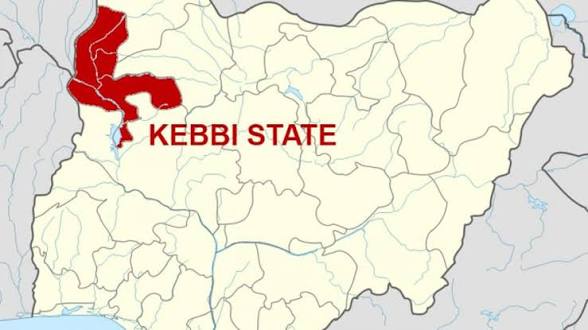
When governments suspend education in the name of security, they are often forced to choose between two difficult responsibilities: protecting lives and safeguarding the future. Kebbi State's decision to keep schools in bandit-affected communities closed highlights that dilemma, raising questions not only about security but also about the long-term impact on thousands of children.
The Kebbi State Government has reaffirmed that schools located in communities affected by bandit attacks will remain closed until security conditions improve.
In a statement issued on Thursday by the Special Adviser to the Governor on Communication and Strategy, Abdullahi Idris, the government said the policy, introduced about seven months ago, remains necessary because the safety of students and teachers cannot be guaranteed.
The government stressed that it would not reopen affected schools under political pressure, insisting that protecting lives remains its highest priority.
Officials also pointed to ongoing efforts by Governor Nasir Idris to strengthen security through the deployment of operational vehicles, motorcycles, additional military personnel, mobile police officers, and logistical support for security agencies.
Advertisement
The administration further disclosed that northern governors recently agreed to establish a Joint Security Fund, with participating states expected to contribute ₦1 billion monthly to strengthen regional security coordination.
Few decisions illustrate Nigeria's security crisis more clearly than keeping classrooms closed because attending school has become too dangerous.
From an administrative perspective, Kebbi's position is understandable. Northern Nigeria has witnessed repeated attacks on schools over the past several years, making educational institutions attractive targets for criminal groups seeking ransom or publicity. In that context, reopening schools without sufficient protection could expose children and teachers to unacceptable risks.
Yet the longer schools remain closed, the greater the educational damage becomes. Interrupted learning often translates into higher dropout rates, increased child labour, early marriage for girls in some communities, and widening inequality between safer urban centres and conflict-affected rural areas.
The government's challenge is therefore no longer simply about preventing attacks—it is also about preventing a generation of children from becoming long-term victims of insecurity.
The Kebbi State Government argues that no educational objective is worth risking children's lives. Officials insist that security must come before classroom activities and maintain that reopening schools prematurely would be irresponsible.
Critics, however, may argue that prolonged closures represent a failure of governance if alternative learning systems are not introduced. While acknowledging genuine security threats, education advocates often contend that governments should invest simultaneously in secure school infrastructure, community-based learning programmes, digital education where possible, and faster security interventions to minimise disruption.
Both perspectives recognise the seriousness of the security crisis. Their disagreement lies in how long emergency measures should continue before broader educational solutions become necessary.
The immediate consequence is that thousands of students in affected Kebbi communities will remain outside the classroom for an extended period.
Advertisement
For Nigeria, this carries wider implications. Every additional month of disrupted education risks widening regional educational disparities, reducing future workforce productivity, and slowing national development goals.
Politically, the announcement also underscores how insecurity continues to shape governance priorities across northern Nigeria. The proposed Joint Security Fund signals growing recognition that state governments may need stronger regional cooperation rather than isolated responses.
Whether that initiative delivers measurable improvements will likely influence future decisions on reopening schools—not only in Kebbi but across other states facing similar threats.
Ultimately, the question is no longer whether schools should remain closed when lives are at risk. The more pressing issue is how quickly governments can create conditions that make reopening possible. Protecting children should never be negotiable, but neither should preserving their right to an education. What happens next will determine whether today's security measures become temporary sacrifices or the beginning of a deeper educational crisis.
You must log in to comment or reply.
Comments