
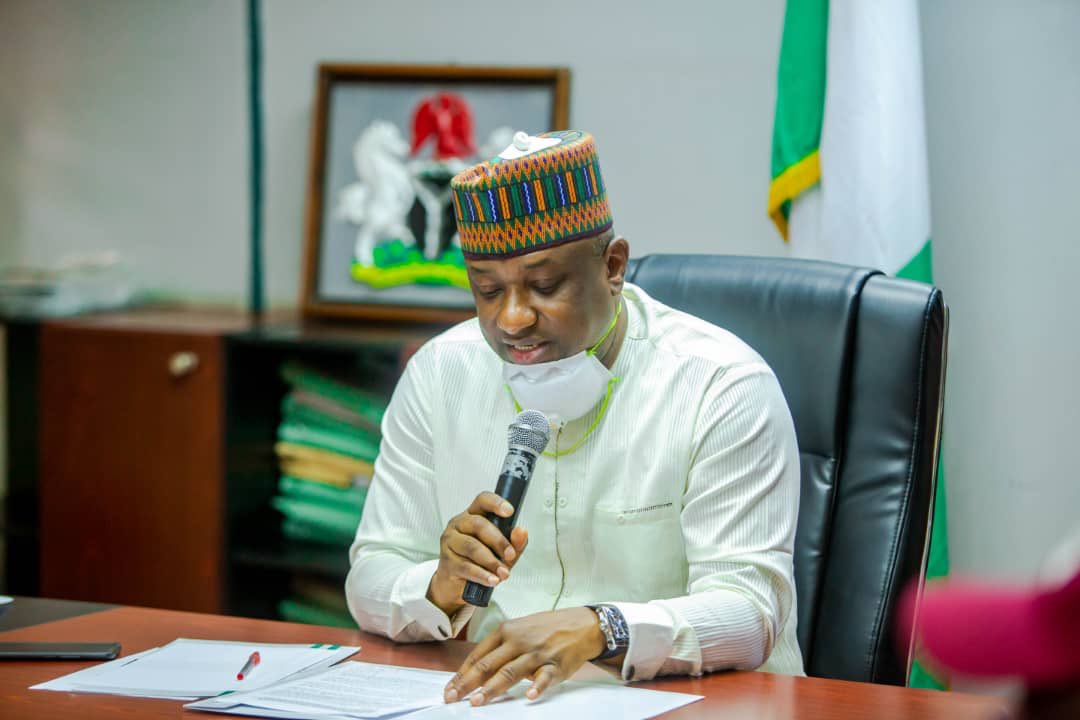
Nigeria’s growing political realignments ahead of the 2027 presidential election took another dramatic turn on Sunday after Minister of Aviation and Aerospace Development, Festus Keyamo, publicly called on former President Goodluck Jonathan to reject a presidential nomination reportedly offered to him by a faction of the Peoples Democratic Party.
The development highlights the widening internal divisions within the PDP and raises fresh questions about the party’s ability to present a unified challenge in the next general election.
Speaking through a post on X, Keyamo reacted to reports that a faction of the PDP led by former Minister of Special Duties Tanimu Turaki had endorsed Jonathan as its presidential candidate for the 2027 election.
The endorsement came only weeks after another PDP faction reportedly aligned with supporters of Federal Capital Territory Minister Nyesom Wike announced Senator Sandy Onor as its preferred presidential candidate.
Reacting to the latest nomination, Keyamo described the situation as a “bizarre comedy,” arguing that the group behind Jonathan’s nomination lacks official recognition by the Independent National Electoral Commission.
According to the minister, offering a presidential ticket to a former Nigerian president through a faction not formally recognised by electoral authorities risks damaging both the credibility of the process and Jonathan’s reputation.
Keyamo went further by urging Jonathan to publicly reject the nomination, insisting that silence could encourage speculation about his political intentions ahead of 2027.
As of Sunday afternoon, Jonathan had not issued any public response to the nomination or Keyamo’s remarks.
Advertisement
Most Nigerian news platforms focused on Keyamo’s criticism and his call for Jonathan to distance himself from the nomination.
Punch highlighted the minister’s attack on the legitimacy of the faction and his warning about Jonathan’s public image.
BusinessDay and other political outlets placed greater emphasis on the ongoing dispute over which PDP faction holds legitimate authority within the opposition party.
Meanwhile, reports covering the Turaki-led convention concentrated on the symbolic significance of selecting Jonathan, portraying the move as an attempt to reposition the former president as a consensus figure capable of uniting opposition forces.
However, many reports paid less attention to a critical issue: the growing fragmentation within Nigeria’s opposition landscape. The emergence of multiple presidential candidates from competing factions of the same party reflects a deeper struggle for control ahead of a highly anticipated electoral cycle.
Beyond the exchange between Keyamo and the PDP faction lies a broader political challenge facing Nigeria’s opposition parties.
Historically, successful presidential campaigns in Nigeria have depended heavily on party cohesion. The APC’s victory in 2015 was largely built on a coalition of previously competing political blocs that united behind a single candidate.
The PDP now appears to be facing the opposite challenge.
Instead of consolidating around one political direction, multiple groups are staking competing claims to leadership and candidate selection. Such fragmentation could weaken the party’s negotiating power, confuse supporters, and complicate efforts to build a nationwide campaign structure.
Jonathan’s name also carries significant political weight.
As Nigeria’s former president from 2010 to 2015, he remains one of the country’s most internationally recognised political figures. His concession of defeat after the 2015 election is frequently cited as a landmark moment for democratic stability in Africa.
Yet his potential return to frontline politics remains a subject of debate. Supporters view him as an experienced statesman capable of bridging regional and political divides, while critics argue that a return bid could reopen old political battles rather than offer a fresh alternative.
Keyamo’s intervention therefore appears aimed not only at challenging the legitimacy of the nomination but also at shaping the public narrative before Jonathan clarifies his position.
Nigeria has experienced internal party crises before major elections on several occasions.
Ahead of the 2019 and 2023 elections, disputes over leadership, zoning arrangements, and candidate selection generated prolonged tensions within major political parties.
Political analysts have often warned that unresolved factional conflicts can significantly affect electoral performance by weakening grassroots mobilisation and creating uncertainty among voters.
Advertisement
The PDP’s current challenges emerge at a time when Nigeria’s political environment is already undergoing significant changes. New alliances, coalition talks, and realignments involving major political figures continue to reshape calculations for the 2027 contest.
At the same time, public attention remains focused on economic concerns such as inflation, unemployment, currency stability, and living costs. These issues are expected to dominate voter priorities regardless of which candidates eventually emerge.
Against that backdrop, internal party disputes could become a major distraction for opposition groups seeking to convince voters they are prepared to govern.
The immediate focus now shifts to Goodluck Jonathan.
Whether he accepts, rejects, or ignores the nomination could influence how the controversy develops in the coming weeks.
Equally important will be the response of electoral authorities and recognised party leadership structures as disputes over legitimacy continue to unfold.
With political maneuvering for 2027 accelerating earlier than many expected, the PDP’s ability to resolve its internal divisions may ultimately determine whether it remains a formidable national opposition force or enters the next election cycle weakened by competing factions and conflicting ambitions.
You must log in to comment or reply.
Comments