
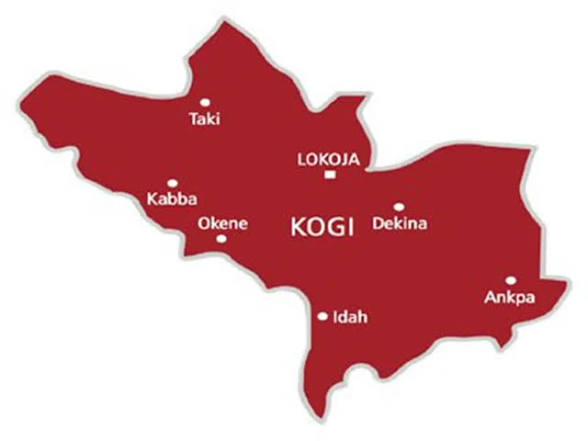
A violent early-morning attack on the Ayegunle–Bunu road in Kogi State has once again exposed the fragility of security on key rural transport corridors in north-central Nigeria. Nigerian Army troops say they rescued 23 kidnapped passengers after armed assailants blocked the highway, abducted travelers, and fled under military pressure. The incident left behind dead bodies, injured victims, and abandoned vehicles—underscoring the recurring danger on inter-community roads.
Troops of the 12 Brigade, Nigerian Army, have confirmed the rescue of 23 kidnapped passengers following a coordinated response to an armed attack along the Ayegunle–Bunu road in Kabba-Bunu Local Government Area of Kogi State.
According to an operational update made available to the News Agency of Nigeria, the attack occurred in the early hours of Monday, June 1, 2026, when suspected bandits reportedly blocked the highway and intercepted multiple commercial vehicles.
Security personnel said the attackers abducted an unspecified number of passengers before fleeing the scene as troops approached in response to a distress call.
When soldiers arrived, they discovered:
• Two dead bodies
Advertisement
• Five injured victims
• Two Toyota commercial buses
• One HOWO truck all abandoned along the roadside.
Following a pursuit operation along the escape route, troops reportedly pressured the attackers into abandoning some of the victims, leading to the rescue of 23 passengers.
The injured victims were evacuated to St. Joseph Hospital, Kabba, for treatment, while the military says search-and-rescue operations are still ongoing for remaining missing persons and fleeing suspects.
The Ayegunle–Bunu incident is part of a widening pattern of highway abductions across Nigeria’s north-central region, where rural roads connecting smaller communities have become frequent targets for armed groups.
Kogi State, due to its geographic position linking the North and South, has repeatedly experienced spillover violence from surrounding conflict zones. Security analysts have long warned that kidnappers exploit:
• Poor surveillance on inter-state rural roads
• Delayed emergency response systems
• Sparse security presence in forest-linked corridors
Similar incidents have been recorded in previous years along highways in Kogi, Niger, and Kaduna, where armed groups use roadblocks to intercept commercial vehicles before retreating into nearby forested terrain.
Advertisement
The recurring nature of these attacks highlights a broader structural challenge: Nigeria’s security response often remains reactive rather than preventive, arriving after civilians have already been abducted or harmed.
Nigeria has witnessed sustained kidnapping activity on highways over the past decade, particularly in regions bordering forest reserves and inter-state travel routes. According to multiple security trend reports, kidnapping-for-ransom remains one of the most frequently reported violent crimes in rural Nigeria, often targeting commuters, traders, and transport operators.
Kogi State’s road network has been repeatedly flagged in past security advisories due to its proximity to forest corridors used as escape routes by armed groups. Despite periodic military operations, the persistence of similar incidents suggests that enforcement gains are often temporary unless paired with sustained surveillance and intelligence-driven policing.
As troops continue search operations in the area, attention is shifting to whether the attackers can be intercepted before dispersing deeper into forested territories—a recurring challenge in Nigeria’s anti-kidnapping operations.
What happens next in Kogi will likely depend on how quickly intelligence is gathered and whether coordinated security pressure can be maintained beyond the initial rescue phase, rather than fading after immediate response success.
You must log in to comment or reply.
Comments