
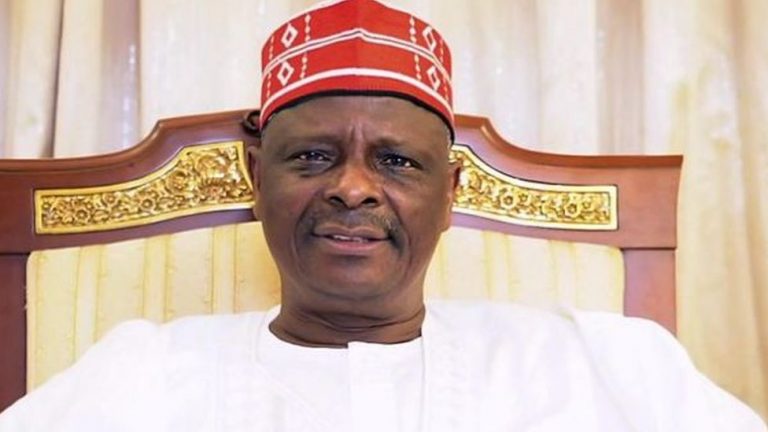
Fresh political tensions are emerging within Nigeria’s opposition camp after former Kano State governor Rabiu Kwankwaso publicly denied allegations that he is secretly supporting President Bola Tinubu ahead of the 2027 election.
The remarks come at a critical moment for opposition politics, as new alliances, defections and coalition talks continue to reshape the race for power long before campaigns officially begin.
Kwankwaso’s latest comments reveal growing distrust and internal friction within Nigeria’s opposition landscape, particularly among parties trying to build a united front against the ruling APC. While the former NNPP presidential candidate dismissed claims of backing Tinubu’s re-election, his comments also exposed deeper divisions over strategy, loyalty and political survival ahead of 2027.
Speaking during an interview on Global TV on Wednesday night, Rabiu Kwankwaso rejected allegations that he is working to support President Tinubu’s second-term ambition.
Kwankwaso was responding to comments made by Sanusi Bature, spokesperson to Kano State Governor Abba Yusuf, who had alleged during an Arise Television interview that the former Kano governor was indirectly helping Tinubu politically.
Rejecting the accusation, Kwankwaso said:
“I think only foolish people would believe that. We are not working for anybody. We are only working for NDC.”
Advertisement
He also acknowledged his longstanding personal relationship with Tinubu but insisted friendship should not be confused with political alliance.
“Bola Tinubu has been my senior brother and good friend up till now. But that doesn’t mean we shall pull all our political ideologies together with him. He is doing his own, and I am doing my own.”
The former Minister of Defence further criticised the current administration, suggesting the President may not fully understand the realities facing ordinary Nigerians because of those surrounding him.
“Most of the people around him are actually the ones creating the problems.”
Kwankwaso also confirmed ongoing coalition talks within the Nigeria Democratic Congress (NDC), saying party leaders had agreed to support Peter Obi as the preferred southern presidential candidate.
According to him:
“We looked around across the zones, and we realised that Peter Obi is the best candidate.”
Kwankwaso’s remarks come amid intense political repositioning across Nigeria’s major parties.
Over the past several months, opposition figures including Peter Obi and Kwankwaso have shifted political alliances multiple times, moving through coalition talks involving the ADC before later aligning with the NDC.
That instability has fueled speculation, mistrust and accusations from rival camps.
What makes this more politically sensitive is Kwankwaso’s influence in Kano and parts of northern Nigeria. Kano remains one of the country’s largest voting blocs, making any perceived alliance or division politically significant ahead of 2027.
Political analysts also note that Tinubu still benefits from incumbency, federal political structures and growing defections from opposition parties. Reuters recently reported that opposition disunity could once again strengthen the APC’s electoral advantage if rival camps fail to consolidate support.
Yet the opposition’s challenge is not only about unity. It is also about credibility, structure and voter trust at a time when Nigerians continue to struggle with inflation, unemployment and rising living costs.
Nigeria’s opposition politics has historically struggled with coalition management.
Advertisement
The country’s most successful opposition merger came in 2015, when multiple parties united to form the APC and defeat then-President Goodluck Jonathan.
Since then, attempts to build a similar united opposition movement have repeatedly faced internal rivalries, legal disputes and ideological disagreements.
The current reshuffling involving the NDC, ADC, Obi and Kwankwaso reflects how difficult it remains to build a stable national coalition capable of challenging an incumbent president.
The real issue now is whether opposition leaders can move beyond public accusations and personal rivalries to build a coherent political structure before the 2027 campaign season fully begins.
Kwankwaso’s denial may calm immediate speculation about his relationship with Tinubu, but it also highlights the growing suspicion within opposition politics itself.
What party leaders do over the next several months — particularly regarding coalition agreements, zoning arrangements and candidate selection — could determine whether the opposition becomes a serious national force or remains politically fragmented heading into another high-stakes election cycle.
You must log in to comment or reply.
Comments