
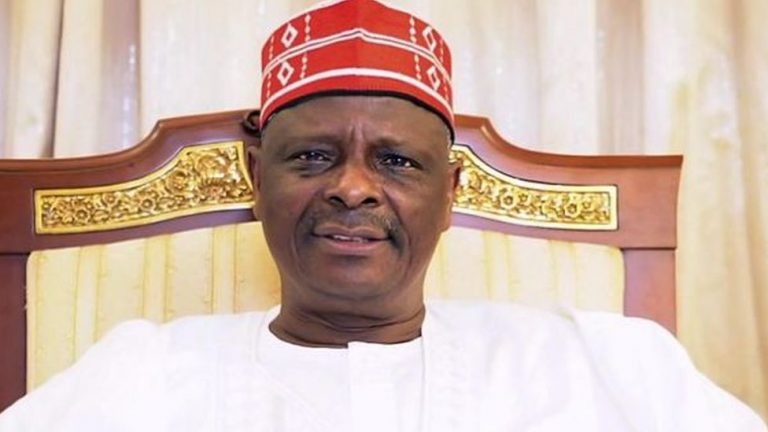
Political tensions in Kano State have resurfaced as Senator Rabiu Musa Kwankwaso publicly reaffirmed his influence over two of the state’s most prominent figures. His remarks, delivered during a Kwankwasiyya gathering in Kano, have reignited debate over political mentorship, loyalty, and succession within Nigeria’s Northwest political structure. The exchange underscores a deepening struggle over narrative control in one of the country’s most politically strategic states.
On Wednesday in Kano, Senator Rabiu Musa Kwankwaso addressed members of the Kwankwasiyya movement at his Miller Road residence, where he reiterated that Governor Abba Kabir Yusuf and former Governor Abdullahi Umar Ganduje remain his political protégés.
Responding to recent public pushback—reportedly linked to Governor Yusuf questioning the idea of being referred to as a “boy” despite his age—Kwankwaso addressed the controversy in a light tone before reinforcing his position.
“I was made to understand that a few don’t want to be referred to as my boy,” he said, drawing laughter from supporters.
He later stated more directly in Hausa:
Advertisement
“If it is not out of disrespect, will Abba Kabir Yusuf say he is not my political son? If it is not out of disrespect, will Abdullahi Umar Ganduje say he is not my political son?”
The gathering reportedly responded with applause, reinforcing his long-standing influence within the Kwankwasiyya political structure.
Beyond the surface-level exchange, the remarks expose a recurring feature of Nigerian subnational politics: the struggle between political godfatherism and institutional independence.
Kwankwaso’s political identity has long been tied to the Kwankwasiyya movement, a structure that has produced governors, senators, and party leaders in Kano. However, as beneficiaries of that system rise to higher offices, questions of loyalty versus autonomy have become increasingly sensitive.
Governor Yusuf’s reported discomfort reflects a broader generational shift in Nigerian politics, where successors are increasingly resisting being defined strictly through mentorship labels. This tension is not unique to Kano—it mirrors similar patterns in Lagos, Rivers, and other politically dominant states where godfather-protégé relationships have fractured over time.
At the same time, Ganduje’s historical connection to Kwankwaso adds another layer of complexity. Once allies, their relationship deteriorated into political rivalry, illustrating how mentorship narratives in Nigerian politics often evolve into contested histories depending on present-day alignments.
Economically and politically, such internal disputes within dominant blocs like Kwankwasiyya can affect policy cohesion in Kano State, Nigeria’s most populous northern state and a key electoral battleground. Political fragmentation at this level often reshapes party strength, voter loyalty, and governance stability.
Nigeria’s political landscape has repeatedly shown that mentorship-based structures often face internal rupture once protégés attain independent power.
Advertisement
A similar pattern was observed in Lagos politics in the early 2000s, where godfather-protégé tensions reshaped party dominance and governance direction. In Kano, Kwankwaso’s influence has remained strong for over two decades, but recent political realignments suggest increasing fragmentation within once-unified alliances.
Kano State, with over 15 million residents, remains one of Nigeria’s most influential electoral states, meaning internal political disputes often carry national implications, particularly during election cycles.
The real test now is whether Kwankwaso’s Kwankwasiyya structure can maintain cohesion as its key figures continue to evolve politically and assert independence.
What emerges from this tension may not just define relationships between individuals, but could also reshape the broader political alignment in Kano ahead of future elections, where loyalty, legacy, and leadership authority are increasingly being renegotiated in real time.
You must log in to comment or reply.
Comments