
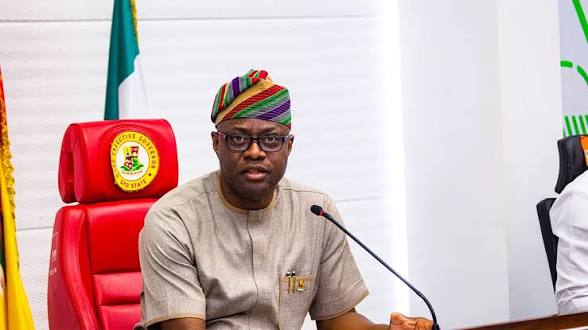
Nigeria does not lack political promises; it struggles to ensure that promises translate into measurable improvements in people's lives. As the 2027 presidential election approaches, Seyi Makinde's reported pledge to serve for only four years and his demand for transparency in fuel pricing raise two important questions: what would change under a new administration, and how would Nigerians measure its success?
The answers will depend less on campaign declarations than on the policies, institutions and accountability mechanisms behind them.
Oyo State Governor Seyi Makinde, identified in Vanguard's October 10, 2026 report as the presidential candidate of the Allied Peoples Movement (APM), reportedly pledged to establish a transitional government of national unity if elected president in 2027.
Speaking at the party's North-East town hall meeting in Yola, Adamawa State, Makinde said his proposed administration would not last beyond four years. He also challenged President Bola Tinubu's administration to publish the Federal Government's petroleum pricing template, arguing that Nigerians deserved greater transparency over how petrol prices were determined.
Makinde criticised aspects of the government's policies on compressed natural gas (CNG), electric vehicles and the naira-for-crude initiative. He also questioned the administration's progress on electricity supply and other policy commitments.
According to Vanguard, Makinde said his party had delayed publishing its manifesto to obtain input from stakeholders before finalising its proposals.
The report also quoted APM National Leader Bala Mohammed as describing the party as an emerging opposition force. The party's vice-presidential candidate, Lawal Daura, called for a fundamental reset of Nigeria's political direction.
Makinde's broader four-year governance proposal has also been reported by other Nigerian media organisations. However, the specific claim that he has ruled out seeking a second presidential term should be distinguished from his general promise of a transitional administration lasting four years.
A four-year presidency can be presented as a commitment to urgency and national renewal. Yet a limited tenure does not automatically guarantee better governance.
Nigeria's problems, including insecurity, unreliable electricity, inflationary pressure and weaknesses in public services, are interconnected. Addressing them requires clear priorities, adequate funding, competent implementation and institutions capable of sustaining reforms beyond an individual administration.
A government that promises to accomplish a national reset within four years would therefore need to explain what it intends to achieve first, how it would pay for its plans and which indicators would demonstrate progress.
For example, improvements in electricity supply could be assessed through generation, transmission and distribution performance, alongside the reliability and affordability of power for households and businesses. Economic progress could be evaluated through inflation, employment, real incomes and the cost of essential goods.
Such measures would give voters a basis for assessing the difference between campaign rhetoric and actual results.
Advertisement
There is also a practical question about continuity. A transitional government of national unity might seek cooperation across political, regional and ethnic divisions. But assembling a broad coalition is only the beginning. Its members would still need to agree on priorities, share responsibility for difficult decisions and resolve disagreements without undermining the administration's objectives.
A one-term pledge, if explicitly confirmed, could signal an intention to prioritise delivery over a second-term campaign. It would not, by itself, establish that the proposed government could overcome these challenges.
Makinde's reported demand for the publication of the Federal Government's petroleum pricing template addresses an issue with direct consequences for Nigerian households and businesses.
Fuel prices affect transportation, food distribution, manufacturing and the operating costs of small enterprises. When petrol prices rise, the additional costs can spread through supply chains, placing pressure on consumers whose incomes may not increase at the same rate.
Greater transparency could help Nigerians understand how changes in crude oil prices, exchange rates, refining costs, transportation, distribution margins and applicable charges influence the pump price.
It could also improve public scrutiny of government decisions and the commercial arrangements within the petroleum sector.
However, transparency alone cannot guarantee lower petrol prices.
A published pricing framework might clarify how prices are calculated without necessarily reducing the underlying cost of supplying fuel. If crude oil becomes more expensive, the naira weakens or logistics costs increase, prices could remain high even when the calculation is publicly available.
The more useful policy debate, therefore, should address both transparency and affordability.
What information should the government publish? How frequently should the pricing components be updated? Which agencies should verify the figures? And what measures, if any, could reduce costs without creating unsustainable public expenditure or new market distortions?
These are the questions that would turn a political challenge into a practical policy discussion.
For Makinde, the demand also creates an obligation to explain his alternative. If his position is that the current framework is inadequate, voters would benefit from seeing a detailed proposal showing how his administration would improve price transparency, protect consumers and maintain a viable petroleum supply chain.
The Tinubu administration, meanwhile, should be judged on the information it makes available, the policies it implements and the results those policies produce—not solely on how opposition politicians characterise its performance.
The debate reflects two broad political approaches.
The opposition argument, as represented by Makinde's reported statements, is that Nigerians need greater transparency, a different approach to governance and a stronger commitment to national inclusion. From this perspective, publishing the petroleum pricing framework would allow citizens and independent experts to examine the assumptions behind fuel prices rather than relying entirely on official explanations.
The administration's wider policy approach has involved changes to Nigeria's petroleum market and efforts to alter how fuel is supplied and priced. Supporters of market-oriented reforms may argue that prices must reflect underlying supply costs and that government intervention cannot sustainably eliminate every increase in the cost of fuel.
These perspectives are not necessarily incompatible on every issue. A market-based pricing system can still operate with transparent rules, while a government seeking to protect consumers must explain how any intervention would be funded and sustained.
The disagreement is therefore not simply about whether petrol should be expensive or affordable. It is also about how prices are determined, which costs consumers should bear, what responsibilities the government retains and how citizens can verify the decisions being made on their behalf.
Neither political criticism nor official assurances should substitute for evidence. A credible assessment requires accessible data, clear policy explanations and a willingness to acknowledge both the benefits and costs of government decisions.
Makinde's reported proposal for a transitional government of national unity also raises questions about Nigeria's political structure and the practical meaning of inclusion.
Nigeria's regional, ethnic, religious and economic diversity makes national cooperation important. A government that consults different communities and political interests may be better positioned to understand competing needs and build support for difficult reforms.
But inclusion should not be measured only by the number of regions or political groups represented in government.
It should also be assessed through the quality of public services, fairness in the application of laws, access to economic opportunities and whether citizens can participate meaningfully in decisions affecting their lives.
A national unity administration could still struggle if its coalition partners cannot agree on policy or if appointments become more important than performance. Conversely, an administration with a clearly defined programme and credible accountability systems could pursue inclusive policies without relying on political representation alone.
Makinde's proposal would therefore require further explanation. How would the coalition be formed? What principles would guide appointments? How would disagreements be resolved? And what safeguards would prevent the pursuit of political balance from weakening administrative efficiency?
These questions matter because Nigerians need more than assurances that different interests will be accommodated. They need confidence that public institutions will serve citizens fairly and effectively.
Advertisement
For households already managing transportation costs, food prices, school expenses and unreliable electricity, presidential campaign promises are not abstract political arguments. They concern the amount of money left after essential bills have been paid and the opportunities available to improve living standards.
In Lagos, for example, transport costs and the price of goods can be affected by fuel expenses throughout the supply chain. Businesses also need reliable electricity and predictable operating costs to plan investment, retain workers and remain competitive.
The same pressures affect traders, farmers, manufacturers and households across Nigeria, although their experiences differ by location, income and access to infrastructure.
A change in administration would not automatically resolve these difficulties. What matters is whether proposed policies address the causes of the problems, whether implementation is financially realistic and whether progress can be measured.
For voters, the approaching election offers an opportunity to compare competing programmes rather than relying only on candidates' criticisms of their opponents.
Makinde's reported pledge invites questions about what a four-year administration could realistically accomplish. His demand for petroleum pricing transparency invites questions about the information the government should disclose and the alternatives opposition parties would implement.
The Tinubu administration's record and future proposals should face the same scrutiny.
The central standard should be consistent: political leaders must explain their decisions, provide evidence for their claims and accept responsibility for measurable outcomes.
Nigeria's 2027 presidential debate should be about more than who promises a fresh start. It should examine how that start would be financed, how its results would be measured and what safeguards would keep public institutions accountable.
Makinde's reported four-year proposal and challenge over fuel pricing introduce issues worthy of public scrutiny. But their value will ultimately depend on the detail behind them and the evidence available to support the claims made by both opposition figures and the government.
Ultimately, the question is not simply whether a president serves one term or two. It is whether the government uses its time in office to improve people's lives, strengthen public institutions and make decisions that citizens can understand and evaluate.
As the 2027 election approaches, Nigerians deserve clear commitments, transparent calculations and realistic plans from every contender. A national reset, if it is to mean anything beyond a campaign phrase, must begin with accountability.
You must log in to comment or reply.
Comments