
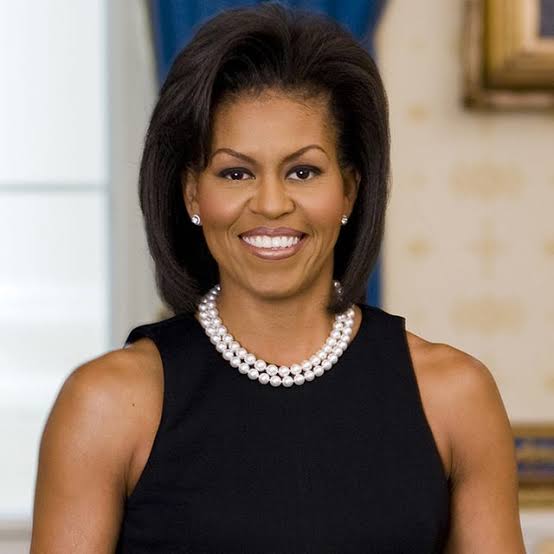
There is a revealing difference between not missing the daily demands of parenting and not missing one's children. Michelle Obama's comments about her adult daughters have become controversial largely because that distinction is easy to lose when a conversational remark is reduced to a headline.
Former US First Lady Michelle Obama discussed life after raising her daughters, Malia and Sasha, during an appearance by Jon Stewart on her “IMO” podcast in August 2026.
Asked about whether she missed the routine of having her daughters at home, Obama said she was “good” with her current life and later stated: “I don’t miss them. I don’t. I love them.” She added that she was going to see them for dinner.
Obama also contrasted her response with that of her husband, former President Barack Obama, saying he cried when their daughters left for college while she was more comfortable with the transition. She said she enjoys having control over her own schedule.
The remarks subsequently drew criticism from some commentators, including California Republican Party delegate Elizabeth Barcohana, who argued that Obama's comments sounded less like an acknowledgement of the difficulties of parenting and more like resentment toward motherhood.
The interpretation: what exactly did Michelle Obama mean?
The controversy is understandable, but the strongest criticism depends on a particular interpretation of her words.
Taken literally, “I don't miss them” sounds blunt. But the surrounding comments provide important context: Obama immediately followed the statement by saying “I love them”, explained that she would see them for dinner and spoke positively about having her own schedule.
That makes the more reasonable reading less about whether she loves her daughters and more about whether she misses the daily structure and responsibilities of having children at home.
Those are not necessarily the same thing.
Advertisement
Parenting can involve years of routines, school schedules, household responsibilities, emotional demands and constant concern about children's safety and wellbeing. Reaching the point where adult children become independent can therefore produce mixed emotions: pride, affection and even relief can coexist.
Obama's comments are particularly interesting because they challenge the familiar cultural expectation that parents—especially mothers—should publicly describe an empty nest almost exclusively in terms of sadness and longing.
Her answer was unconventional. That does not automatically make it evidence of resentment.
Critics have focused on the language itself.
From that perspective, saying “I don't miss them” about one's children can sound dismissive, particularly when motherhood has traditionally been presented as one of the central emotional identities of a parent. Barcohana's criticism reflects that interpretation, arguing that there is a difference between acknowledging the difficulty of raising children and appearing unhappy that those years have ended.
There is another interpretation, however.
Obama's supporters can reasonably point to the rest of her comments. She did not say that she stopped loving her daughters, did not suggest that she wanted them out of her life and did not describe estrangement. On the contrary, she explicitly said she loved them and expected to have dinner with them.
The disagreement, therefore, is less about a disputed fact than about how a candid statement should be interpreted.
That distinction matters. Criticism of the wording is legitimate; turning the wording into proof of a damaged mother-daughter relationship goes beyond the available evidence.
Michelle Obama is not simply another parent speaking about an empty nest. As a former First Lady and one of the world's most recognisable public figures, ordinary comments about her family are routinely treated as statements about values, parenting and gender.
That helps explain why a relatively personal observation can become a wider cultural debate.
There is also a gender dimension worth considering without overstating it. Mothers are often expected to demonstrate a particular emotional attachment to the role of parenting. A mother who openly says she enjoys regaining personal freedom may be judged differently from a father expressing the same sentiment.
Obama's comparison with Barack Obama makes that tension more visible. Her description of his emotional reaction to their daughters leaving home was almost playful, while she presented herself as someone comfortable with the next stage of life.
Whether people find that refreshing or cold will depend partly on their own assumptions about what a parent is supposed to feel.
The discussion also has relevance beyond American celebrity culture.
In Nigeria, where extended family relationships and parental involvement in children's lives can remain strong well into adulthood, the transition from active parenting to greater independence can carry its own expectations.
A parent expressing relief at having more personal freedom could similarly be interpreted as a lack of affection, even when the two things are not mutually exclusive.
That is perhaps the more useful lesson from the Obama controversy: love does not necessarily require constant physical proximity, and independence does not necessarily mean emotional distance.
Advertisement
At the same time, public figures cannot control how audiences receive unusually blunt remarks. Obama's statement was sufficiently stark to invite criticism, and it is fair for audiences to debate whether the wording was insensitive.
What is less defensible is presenting an interpretation as though it were an established fact.
The real debate is not whether Michelle Obama loves Malia and Sasha. Nothing in the reported exchange establishes that she does not.
The more interesting question is why society often treats a parent's willingness to embrace independence as evidence of diminished love.
Obama's comments offer a reminder that family relationships change. Children eventually become adults, parents recover time for themselves, and the emotional meaning of that transition can differ from one person to another.
Some parents will miss every part of having children at home. Others may miss the people but not the routine. Many will probably feel both things at different moments.
There is no reliable evidence from one podcast exchange to determine which category Michelle Obama belongs to in every respect.
Ultimately, Michelle Obama's comments are worth examining precisely because they are uncomfortable without necessarily being scandalous. She chose unusually direct language to describe a transition many parents experience, and critics are entitled to dislike that language. But the evidence also shows that she paired it with an explicit declaration of love and a reference to spending time with her daughters.
The better question, then, may not be whether Michelle Obama misses her daughters, but whether we are willing to accept that loving one's adult children and enjoying life after full-time parenting can exist at the same time.
You must log in to comment or reply.
Comments