
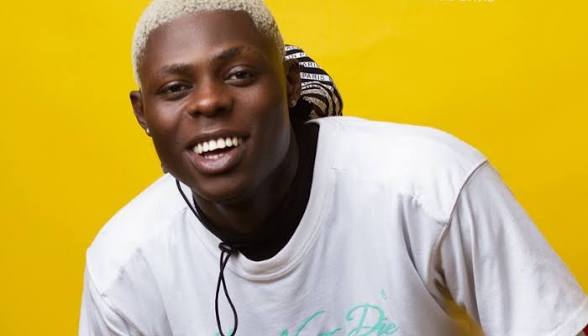
 Nearly three years after Mohbad's death shocked Nigeria and sparked nationwide protests, the courts are once again being asked a difficult question: Has everything possible been done to uncover what really happened to the late singer?
A Federal High Court in Abuja has fixed September 29, 2026, to deliver judgment in a suit seeking to compel the police to reopen investigations into the circumstances surrounding Mohbad's death, a case that continues to stir emotions among fans and justice campaigners.
Justice James Omotosho fixed the date after hearing arguments in a suit filed by the Break the Silence Foundation, a non-governmental organisation pushing for a fresh investigation.
The suit, marked FHC/ABJ/CS/363/2026, lists the Inspector-General of Police, the Nigeria Police Force and the Commissioner of Police, Lagos State Command as respondents.
When the matter came up on Thursday, none of the respondents was represented in court.
Counsel to the foundation, Tunde Falola, urged the court to grant the reliefs sought, arguing that the previous police investigation left important questions unanswered.
Advertisement
The court also dismissed an application by Samson Obaboye, who sought to join the suit as an interested party. Justice Omotosho ruled that he failed to demonstrate sufficient legal interest in the matter.
Mohbad, whose real name was Ilerioluwa Aloba, died on September 12, 2023, at the age of 27. His death triggered one of Nigeria's biggest social justice movements in recent years, with millions demanding answers under the hashtag #JusticeForMohbad.
His body was exhumed nine days later for an autopsy, but nearly three years later, many Nigerians still believe crucial questions remain unresolved.
The delay in reaching a definitive conclusion has also meant that the late singer's remains have not been finally buried, turning the case into more than a criminal investigation. For many supporters, it has become a symbol of the slow pace of justice and public distrust in high-profile investigations.
Supporters of a fresh probe argue that the earlier investigation failed to adequately examine all possible leads and the roles of individuals reportedly among the last people seen with Mohbad.
"The circumstances surrounding his death remain mysterious and deserve public attention," Falola told journalists after the hearing.
Others, however, note that the legal process has already produced significant outcomes. In February 2025, a Lagos Magistrate Court discharged and acquitted singer Naira Marley, music promoter Sam Larry and others after legal advice from the Lagos State Directorate of Public Prosecutions found no evidence linking them to Mohbad's death.
That legal development closed one chapter of the case but did not end public demands for further answers.
The case now goes beyond one musician or one investigation.
Advertisement
It highlights a larger issue in Nigeria's justice system: how authorities handle cases that attract enormous public attention and whether families and citizens can be convinced that every possible step has been taken to establish the truth.
The court's decision on September 29 could determine whether police authorities must reopen investigations or whether the previous findings remain the final official position.
Either way, the judgment is likely to reopen a national conversation that has never completely gone away.
For Mohbad's family, fans and supporters, the wait for answers continues.
You must log in to comment or reply.
Comments