
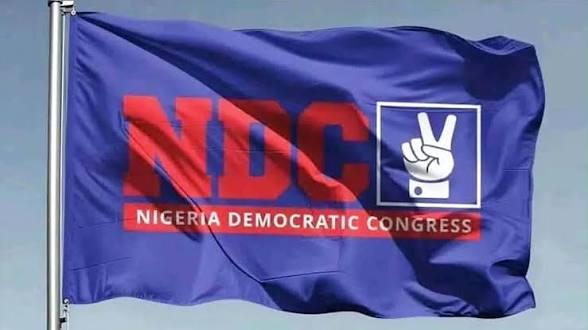
Nigeria’s evolving opposition landscape is facing another early organisational test after the Nigeria Democratic Congress confirmed that its nationwide primaries will proceed on May 29 despite widespread Eid-el-Kabir travel disruptions affecting party officials and aspirants.
The decision highlights the growing logistical pressure political parties are beginning to face ahead of the 2027 elections, particularly as holiday congestion, transportation bottlenecks, and internal coordination challenges complicate nationwide political exercises.
In a statement issued in Abuja on Wednesday, NDC National Chairman Senator Moses Cleopas said the party would maintain its original timetable for presidential, governorship, National Assembly, and State Assembly primaries despite adjustments caused by the Sallah holidays.
According to the party, May 28 would now serve as a preparatory day dedicated to documentation with the Independent National Electoral Commission, consultations with stakeholders, and coordination meetings involving party teams deployed across the states.
Cleopas explained that transportation difficulties triggered by the Eid celebrations, including limited flight availability, left many aspirants and members of the screening committee stranded in Abuja after the party’s screening exercise.
“However, in view of the Eid-el-Kabir celebrations and the resulting public holidays, major transportation and logistical challenges have arisen, including the non-availability of flights,” he said.
“Consequently, many aspirants who were in Abuja for the screening exercise, as well as members of the screening team, are currently stranded in Abuja.”
The party insisted, however, that the actual primaries would still hold nationwide on May 29 as originally scheduled.
Advertisement
“The primaries are still scheduled to be held nationwide on May 29, 2026, in keeping with the original May 28 and 29 timetable,” Cleopas added.
However, a closer look at the statement suggests the issue extends beyond holiday travel disruptions.
The NDC’s strong warning against unauthorised participation by security agencies and state institutions has drawn attention to growing concerns among political parties over control, legitimacy, and coordination ahead of the 2027 election cycle.
Cleopas specifically warned that no police, DSS, or INEC participation was expected during May 28 preparatory activities, adding that any unauthorised engagement outside approved guidelines would be considered illegal.
That framing reflects increasing sensitivity within opposition parties over parallel meetings, unofficial gatherings, and conflicting claims during internal electoral processes.
The party also directed that only its National Working Committee would have the authority to announce results from the primaries after collation from all states.
“No state executive or team has the mandate to announce any results,” the statement said.
While Punch focused primarily on the scheduling adjustment, other political platforms highlighted the wider organisational implications for emerging opposition parties attempting to build nationwide structures under tight timelines.
Leadership Newspaper and The Nation both emphasised how interstate travel congestion and flight shortages disrupted party logistics, particularly for aspirants and officials moving between Abuja and state chapters.
Yet the deeper issue is that smaller political parties are increasingly operating under the same high-pressure electoral conditions traditionally associated with larger parties such as the APC and PDP.
As coalition talks, defections, and new political alignments continue ahead of 2027, parties like the NDC are being forced to demonstrate not only political relevance, but administrative discipline and internal coordination.
What makes the situation more complex is the timing.
Nigeria’s political atmosphere has already intensified following recent presidential primary contests within opposition circles, including the ADC primary that produced former Vice President Atiku Abubakar as its presidential candidate.
Against that backdrop, even relatively smaller party activities are now receiving closer scrutiny from observers monitoring potential coalition dynamics before the general election.
The Eid-el-Kabir period itself has also amplified logistical strain nationwide.
Advertisement
Transport operators across Lagos, Abuja, Kano, Port Harcourt, and other major cities have reported increased passenger movement and flight pressure linked to holiday travel, affecting business operations and interstate mobility.
For political parties attempting to coordinate nationwide exercises simultaneously, the disruptions expose how dependent electoral operations remain on transportation reliability and centralised coordination.
Nigeria has experienced similar election-season logistical difficulties in previous political cycles, especially during periods of overlapping religious celebrations, fuel scarcity, or transportation disruptions.
In several past primaries across different parties, delayed materials, absent delegates, and conflicting announcements triggered legal disputes and factional crises that later weakened party structures before general elections.
The NDC appears determined to avoid similar internal controversies by centralising result announcements and tightening procedural control.
The real test now is whether the party can successfully conduct orderly primaries across all states without disputes, logistical breakdowns, or legitimacy concerns emerging afterward.
As the 2027 election season gradually accelerates, what may appear like a scheduling adjustment today could ultimately become an early indicator of how prepared Nigeria’s growing opposition platforms are for the far more demanding national contest ahead.
You must log in to comment or reply.
Comments